Twelve people were killed and dozens injured on Tuesday morning after a series of massive multi-vehicle pile-ups occurred in heavy fog on the Trakia motorway in southeastern Bulgaria. The disaster, which took place near the town of Zimnitsa and the city of Yambol, involved between 50 and 86 vehicles according to various official reports, leaving the arterial road connecting Sofia to the Black Sea coast littered with wreckage. Prime Minister Rumen Radev confirmed the death toll and immediately declared Wednesday a national day of mourning following what local officials have described as one of the deadliest traffic events in the nation’s history.
How did the Trakia motorway collisions occur?
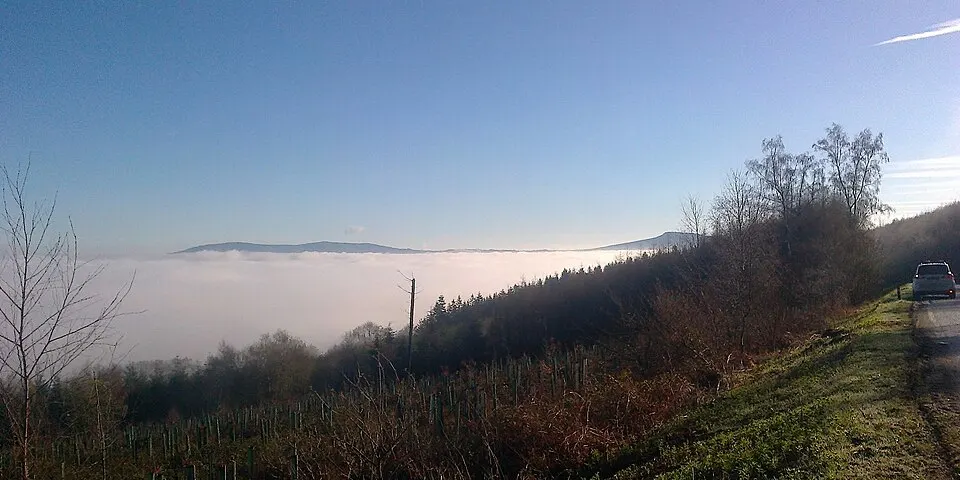
The Trakia motorway collisions began shortly after 7:00 a.m. local time on Tuesday when visibility dropped to approximately 30 meters due to rapidly forming dense fog. According to the Interior Ministry, the initial catastrophe was triggered on the eastbound lanes when a grain truck collided with a passenger bus, setting off a chain reaction. A secondary pile-up then occurred on the opposite, Sofia-bound carriageway; authorities suggest these drivers may have been distracted by the first accident or were unable to stop in time due to the same visibility issues and wet road surfaces. Chief Secretary of the Interior Ministry Lyubomir Nikolov noted that high speeds unsuitable for the weather conditions likely exacerbated the severity of the impact across both sides of the highway.
"The real horror was inside the bus. Grain was falling on us from above, through the windows... some had fallen, others were injured, and some were trapped," a survivor told Euronews.
What is the extent of the casualties and the rescue effort?
The casualty figures from the Trakia motorway disaster include 12 confirmed fatalities and at least 50 injuries, though exact numbers varied slightly across government departments. Health Minister Katya Ivkova reported that 11 people died at the crash site while one victim succumbed to injuries after being transported to a hospital; she noted that nearly 50 others are receiving treatment in Sliven, Yambol, and Burgas. Emergency responders, including firefighters and police, were forced to use hydraulic cutting equipment to reach passengers trapped in crushed cars and tankers. Regional Governor Georgi Chalakov told the BTA news agency that the fog was so impenetrable it prevented the use of helicopters for medical evacuations, requiring rescue teams to dismantle motorway crash barriers to allow ground ambulances better access to the victims.

How has the Bulgarian government and the international community reacted?
The Bulgarian government responded to the tragedy by cancelling high-level political sessions and diplomatic engagements. Prime Minister Rumen Radev was hosting European Commission President Ursula von der Leyen when news of the pile-up broke; Radev cut short their joint briefing in Varna to visit the site, while Von der Leyen expressed her deepest condolences to the victims and praised the courage of the first responders. In Sofia, the Bulgarian Parliament suspended its planned legislative votes, and Vice President Iliana Iotova announced she would return early from the Paris Peace Forum. The tragedy has reignited intense domestic debate regarding road safety standards in Bulgaria, following National Statistical Institute data showing that over 460 people died in more than 6,600 serious traffic accidents during 2025.
What is the significance of the Trakia motorway?
The Trakia motorway, also designated as the A1, is the primary transport artery of Bulgaria, spanning 360 kilometers from the capital city of Sofia through Plovdiv to the strategic port of Burgas on the Black Sea. Named after the historical region of Thrace, the road serves as a critical corridor for both domestic travel and international freight moving through Southeastern Europe. Construction on the motorway began in the 1970s and was only fully completed in 2013. Because it facilitates high-speed travel across the Bulgarian interior, the route is frequently the site of heavy commercial traffic, which contributed to the high number of lorries and grain trucks involved in Tuesday's disaster.

What remains unconfirmed about the disaster?
What remains unconfirmed is the exact number of vehicles involved, as regional officials cited 70 vehicles while other reports, including those from The Independent and AOL, placed the figure as high as 86. While the primary cause is attributed to fog and speed, investigators have not yet determined if mechanical failure in the initial grain truck played a role in the first collision. The Trakia motorway is currently closed in both directions between the Zimnitsa and Kabile junctions, and authorities have not provided a specific time for when the road will reopen to traffic. Future steps include a full forensic investigation by the Interior Ministry and a scheduled press briefing by Health Minister Katya Ivkova to update the condition of the survivors currently in critical care.
Sources: This report draws on coverage by BBC News, Balkan Insight, Euronews, New York Post, Daily Sabah, Al Jazeera, Sky News, Reuters. The wording is our own.