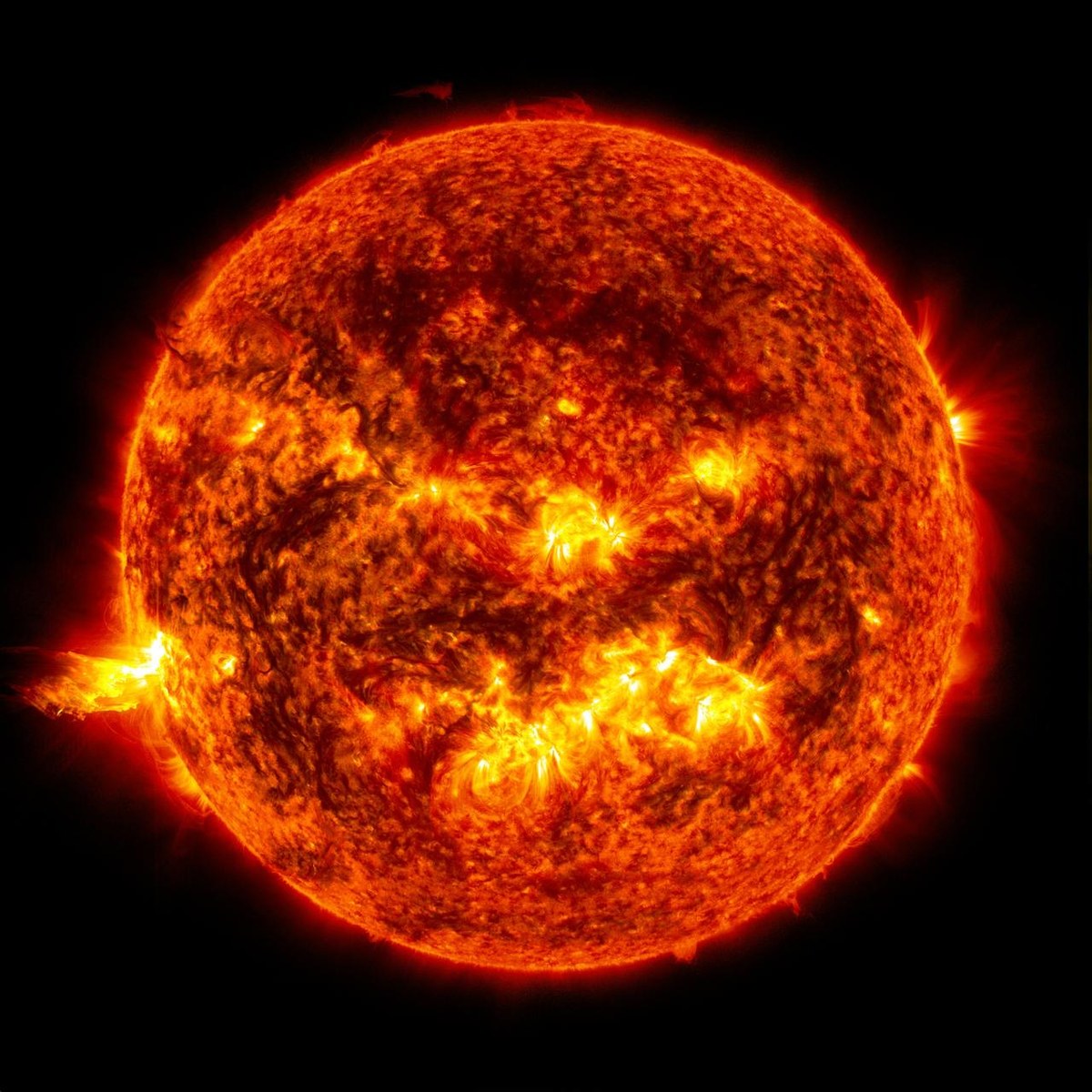
Imagine the impossible for a moment: the Sun is instantly erased from space by the sleight of hand of a magician. There is no explosion and no black hole; simply emptiness. Your first instinct is likely that Earth is plunged into darkness instantly, loses its orbit, and hurtles off into space. Physics does not shoot this film at that pace, however. Because what you see when you look at the Sun is not the Sun as it is right now, but rather the Sun as it was approximately eight minutes and twenty seconds ago. Light travels. But what about gravity?
- If the Sun disappears, the sky does not darken immediately; the journey of light takes approximately eight minutes and twenty seconds.
- Newton considered gravity to be instantaneous, but Einstein upended this: gravitational information also propagates at the speed of light.
- The collision of two neutron stars in 2017 measured that gravitational waves and light arrived at nearly the exact same time.
- The result: darkness and the disruption of orbit arrive simultaneously; there is no hidden race between them.
How long does it take for the delay of light and gravity?
The average distance between the Sun and Earth is 149.6 million kilometers. Light travels at approximately 300,000 kilometers per second; therefore, a photon leaving the Sun takes roughly 500 seconds, or eight minutes and twenty seconds, to reach here.1 For this reason, even if the Sun were truly gone right now, you would still see it in the sky. The Moon would also carry the light reflected from the Sun for a while longer. Darkness arrives only when that journey finishes.
The part that causes genuine confusion is gravity. In Newton's classical law of gravitation, masses attract each other as if "instantly": wherever the Sun goes, the force felt by Earth updates at the same time. This assumption worked well for calculating planetary orbits in the 18th and 19th centuries. But carrying information faster than light runs up against one of the harshest laws of modern physics: causality. The effect of an event cannot reach another place faster than light.
How did Einstein prove that gravity is delayed?
When Albert Einstein formulated general relativity in 1915, he described gravity not as an "instantaneous tether," but rather as the curvature of spacetime. Mass bends space; another mass travels along that curved geometry. If this geometry changes, the change itself propagates like a wave. The speed of those waves is theoretically equal to the speed of light.2
Therefore, the honest answer to this thought experiment is this: if the Sun were to vanish in an instant (though the magic-like erasure of mass is forbidden in known physics), Earth would continue along its old orbit for approximately eight minutes and twenty seconds more. Once that duration elapses, both the sky darkens and the gravitational effect of the Sun ceases; Earth veers off onto a path close to a straight line.3 There is no race between light and gravity. Both are bound by the same speed limit.
How was the speed of gravity measured in astronomy?
For a long time, the statement "the speed of gravity equals the speed of light" was merely a theoretical prediction. The situation changed in 2017. LIGO and Virgo detectors captured the gravitational wave originating from the merger of two neutron stars: GW170817. A short gamma-ray burst emitted by the same event was observed by the Fermi satellite approximately 1.7 seconds later. The source was hundreds of millions of light-years away from Earth. Over such a long journey, the fact that the two signals arrived virtually together narrowed the difference between the speed of gravity and the speed of light down to an infinitesimally small interval on the order of a quadrillionth.4
In other words, the universe had already answered your question of "what happens if the Sun disappears?" Gravitational information is delayed, just like light. It is not instantaneous. Even without this measurement, general relativity would have given the same answer; GW170817 sealed that answer across the sky.
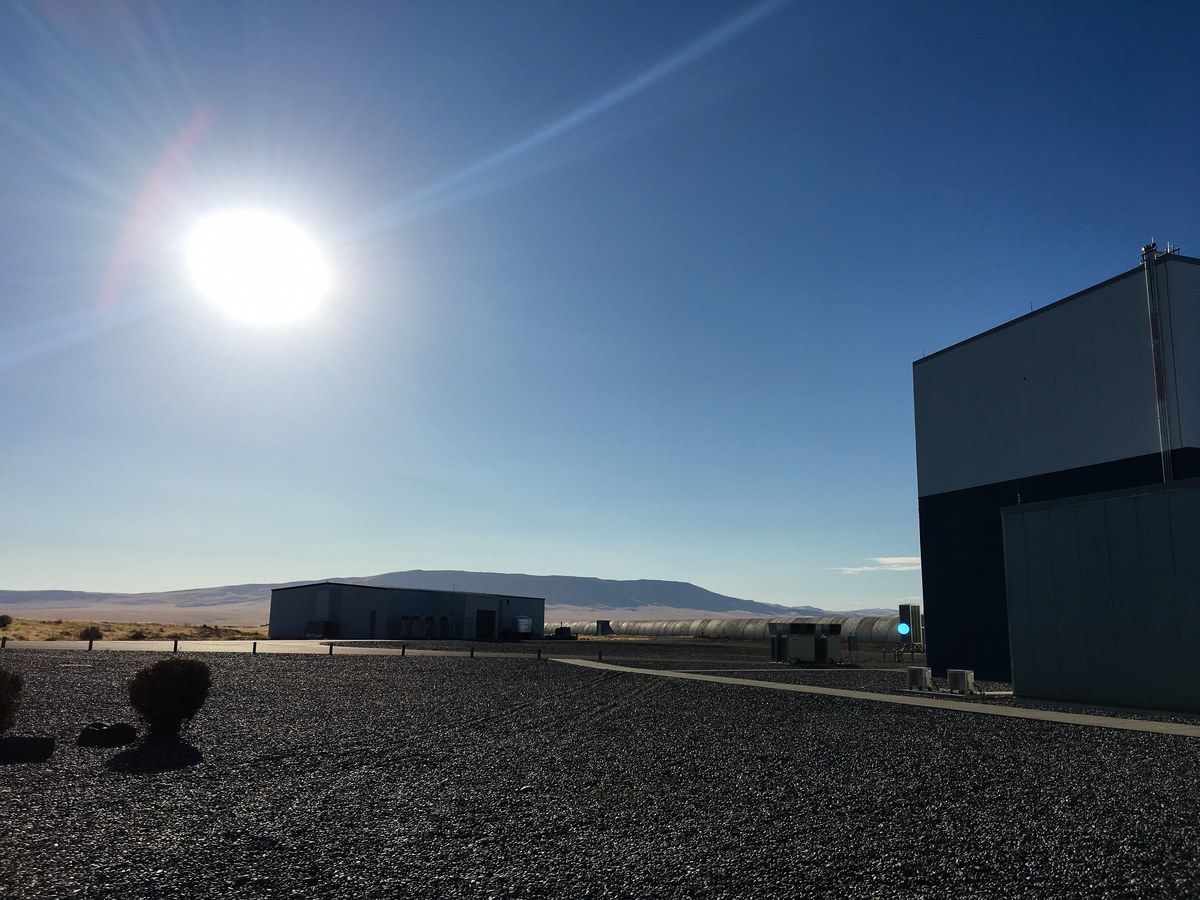
What happens to Earth after eight minutes?
Once that duration expires, the concept of day and night collapses: the Sun is gone, and the Moon remains dark as well, because the light of the Moon also originates from the Sun. The stars remain, but Earth no longer orbits the Sun, setting off on an almost straight path at its instantaneous velocity.3 Cooling is a matter of a different timescale: the atmosphere and oceans retain heat for a while longer, but that is not the subject of this article. The subject is how the two answers to the question "when do we notice?" are actually a single answer.
There is also an honest limitation: making the Sun vanish in an instant violates the very rules of general relativity. Energy and momentum are conserved locally; mass cannot evaporate by magic. Therefore, physicists use this scenario as a measurement tool: "if it were to happen, how large would the delay be?" The end of the real Sun is a much slower and much more distant story; roughly five billion years from now, it will become a red giant and threaten Earth in a different way. Today's thought experiment is not a disaster scenario, but a lens that lets us feel what speed truly means.
So the next time you look at the Sun, know this: the light you see is coming from the past. And the gravity holding you in orbit comes from that same past. The universe does not send news faster than light. Therefore, if the Sun were to vanish in an instant, Earth's realization of it is locked to the exact same clock: approximately eight minutes and twenty seconds.
Notes and Sources
- Average Sun-Earth distance ≈ 1 AU = 149,597,870.7 km; speed of light c ≈ 299,792,458 m/s → light travel time ≈ 499 s ≈ 8 min 19 s. International Astronomical Union (IAU) AU definition. ↩
- Einstein, A. (1915/1916). General relativity field equations; the propagation of gravitational waves at the speed of light is a consequence of the theory. Popular summary: NRAO, Jeff Mangum, "If the Sun Suddenly Disappeared Would We Notice It Immediately?" ↩
- Astronomy.com / Marc Kuchner (NASA Goddard): If the Sun vanished, the absence of gravity would also be felt in the exact same timeframe as light, because gravitational waves propagate at the speed of light. NRAO gives the same duration as ≈ 8 min 20 s. ↩
- Abbott, B. P. et al. (LIGO Scientific Collaboration & Virgo Collaboration) (2017). "Gravitational Waves and Gamma-Rays from a Binary Neutron Star Merger: GW170817 and GRB 170817A". The Astrophysical Journal Letters, 848, L13. With an observed delay of ≈ 1.74 s, the difference |vg − c|/c was constrained to the order of 10−15. ↩