Insects dominate almost every terrestrial and freshwater environment, yet they are conspicuously absent from the open ocean's water column. While a few surface-skimming species like Halobates exist, no insect communities have established themselves in the depths. For decades, biology textbooks provided a straightforward explanation: the air-filled respiratory system of an insect would inevitably collapse under deep-sea pressure.
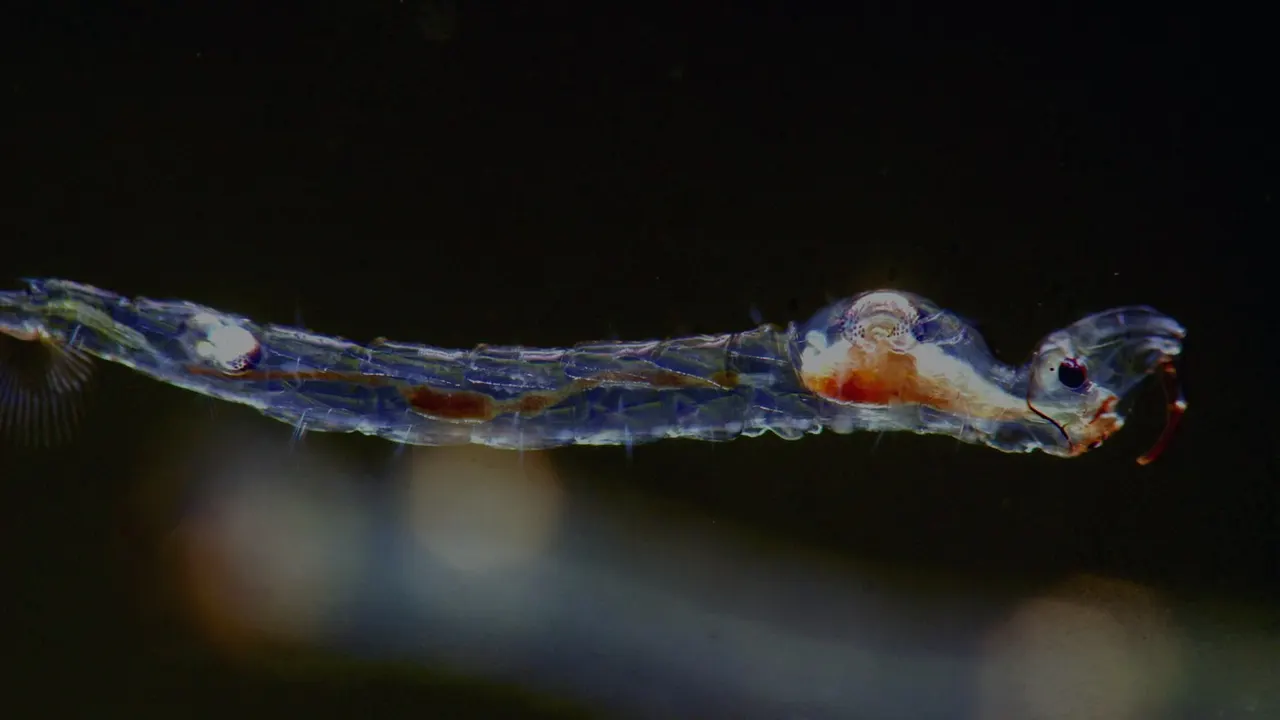
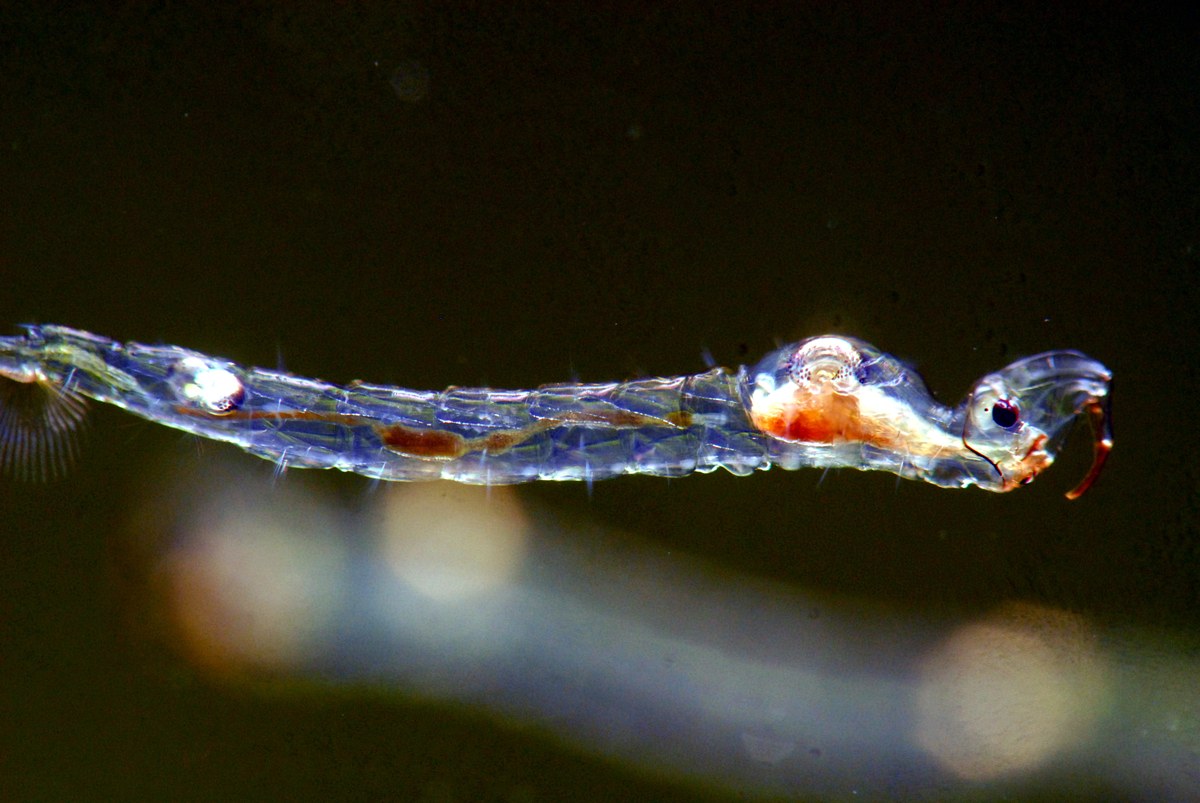
In the summer of 2026, researchers Philip Matthews and Evan McKenzie from the University of British Columbia tested this hypothesis in Lake Malawi, East Africa. Their findings, published in Science, demonstrate that the larvae of the lake fly (Chaoborus edulis) descend more than 200 meters daily. In laboratory settings, their air sacs proved capable of withstanding pressures equivalent to 400 meters of depth. Consequently, pressure alone cannot account for the total absence of insects in the ocean.1
- Lake fly larvae in Lake Malawi regularly dive deeper than 200 meters.
- Air sacs function using resilin rings that expand and contract based on pH levels.
- In laboratory pressure chambers, these air sacs resisted collapse at pressures equivalent to 400 meters.
- Pressure is not the sole barrier to oceanic colonization; salinity and ecological niches remain primary candidates.
How do these insect larvae conduct their daily deep-sea migrations?
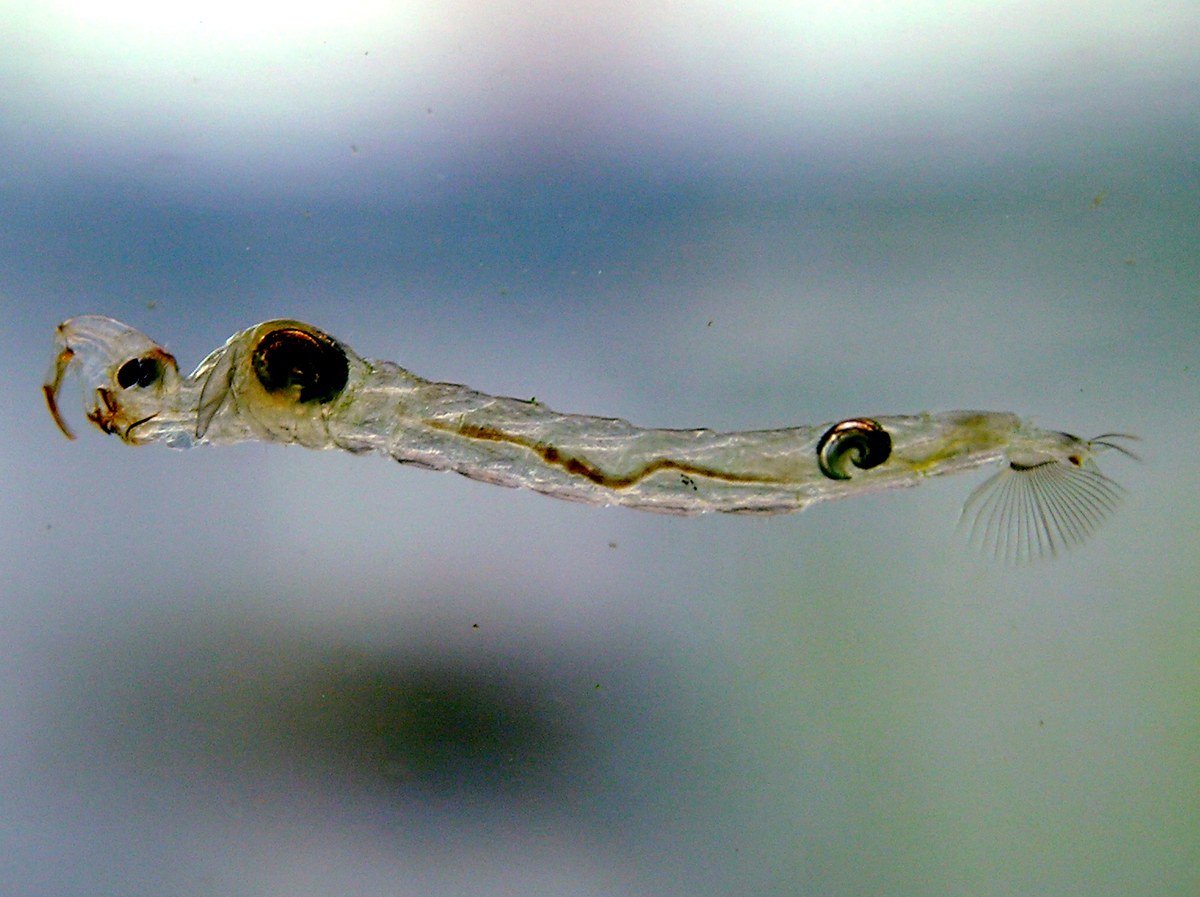
Billions of Chaoborus edulis larvae follow a rigorous daily route in Lake Malawi. During the day, they descend into oxygen-poor "dead zones" to evade predators, as fish cannot survive at those depths for long. At night, they return to the surface to feed, navigating through shoals of fish. By placing sonar at the lake bed, the team tracked these "clouds" of larvae with unprecedented resolution. Their daily journey exceeding 200 meters defies the traditional textbook consensus that their air sacs should have collapsed long ago.
The secret to the larva's survival lies in two pairs of air sacs that act like the ballast tanks of a submarine. The walls of these sacs contain resilin, an elastic protein typically found in insect wing hinges and tendons. In this context, however, it serves a different purpose. As the larva adjusts the pH balance of the sac wall, the resilin rings expand or contract, allowing for precise depth control.2
Can insect air sacs withstand pressures beyond 400 meters?
Field data alone was insufficient, so the team tested the larvae in specialized pressure chambers to determine at what point the sacs would collapse. The results far exceeded the requirements of their daily vertical migration. The air sacs withstood pressures equivalent to depths beyond 400 meters, with some measurements approaching half a kilometer. This indicates that their daily 200-meter dive occurs well within their safety margin, rather than at the limit of their biological material.
This data directly challenges the long-standing assertion that insect respiratory systems are physically crushed at depth. The lake fly proves that a freshwater insect can descend to extreme depths using an air-filled respiratory component. Furthermore, the air sac is not a passive balloon, but a sophisticated mechanical structure that generates force through pH modulation. As McKenzie emphasizes, resilin does not merely stretch like rubber; it functions as a response to chemical cues.3
Why are insects still missing from the open ocean?
With the pressure hypothesis dismantled, researchers are investigating other factors. The osmotic load of saltwater, which complicates cellular salt and water balance, may present a significant physiological hurdle for freshwater-adapted insects. Additionally, the open ocean's ecological niches may already be fully occupied by crustaceans and other groups, leaving no room for late-evolving insect lineages. It is possible that the absence of insects is not due to a single mechanism, but a combination of cumulative barriers.
While Halobates remains a rare exception on the ocean surface, the deep water column remains effectively closed to insects. Matthews notes that the ability to transport a respiratory system to great depth was never an insurmountable barrier, as this capability clearly exists in freshwater species. The mystery of why the ocean remains off-limits to the planet's most successful animal group has simply shifted from a question of physical collapse to one of ecology and evolutionary timing.4
What are the implications for materials science?
Materials science is also taking note of these findings. Resilin has long been considered a nearly perfect biological rubber. The pH-responsive structure within the Chaoborus air sac provides a tangible model for developing artificial muscles or "smart" materials that operate on chemical triggers. While this will not lead to a commercial submarine overnight, it offers a new framework for understanding how proteins can generate mechanical force.
For the scientific community, the conclusion is clear: the daily 200-meter descent of the lake fly larva and its 400-meter pressure resistance in the lab effectively retire the "implosion" myth. The broader questions regarding salinity, ecological competition, and evolutionary timing remain open for future inquiry.
Notes and Sources
- McKenzie, E.K.G., Ngochera, M.J.R., Chombo, J., McLennan, H., Proud, R., Ames, T., Matthews, P.G.D. (2026). "Crush-resistant air sacs allow insect larvae to exploit aquatic habitats at extreme depth", Science 393(6809): 398. DOI: 10.1126/science.aed0667.
- University of British Columbia (2026). "Insect submariners survive the depths without imploding".
- UBC Science (2026). "Insect ‘submariners’ don’t implode at depth, leaving oceanic mystery unsolved".
- Matthews, P.G.D. (2026). Personal correspondence/summarized discussion on vertical migration and environmental barriers.