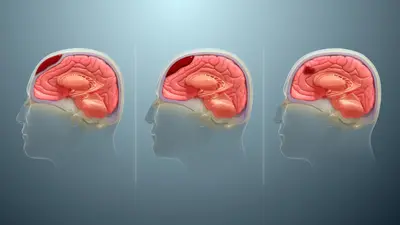
In the first week of July 2026, 40-year-old Pamela Guillen traveled from Hawaii to Six Flags Magic Mountain in California to celebrate her daughter's 16th birthday on the X2 roller coaster. When the train returned to the station, she could not disembark on her own, vomited, and collapsed immediately upon sitting on a bench. A CT scan revealed a large intracranial hemorrhage. Surgeons had to remove a portion of her skull to relieve pressure; when Guillen regained consciousness two weeks later, she was only able to speak in single words.1
Six days later, 25-year-old Naomi Greer-Wilkinson rode the same coaster. She also collapsed upon exiting and required emergency surgery. According to a lawsuit filed in late September, she remains on a ventilator, unable to speak or move her limbs.2 The park stopped operation of the train on the evening of July 12 and announced its permanent closure on September 29.3
- How the unique seat design of X2 affects riders' heads.
- How decades of injuries were documented in court and hospital records.
- Why scientists studying roller coasters long argued the risk was negligible.
- The specific motion, missing from previous measurements, that sits at the center of the X2 lawsuits.
What makes the X2 seating system different from standard roller coasters?
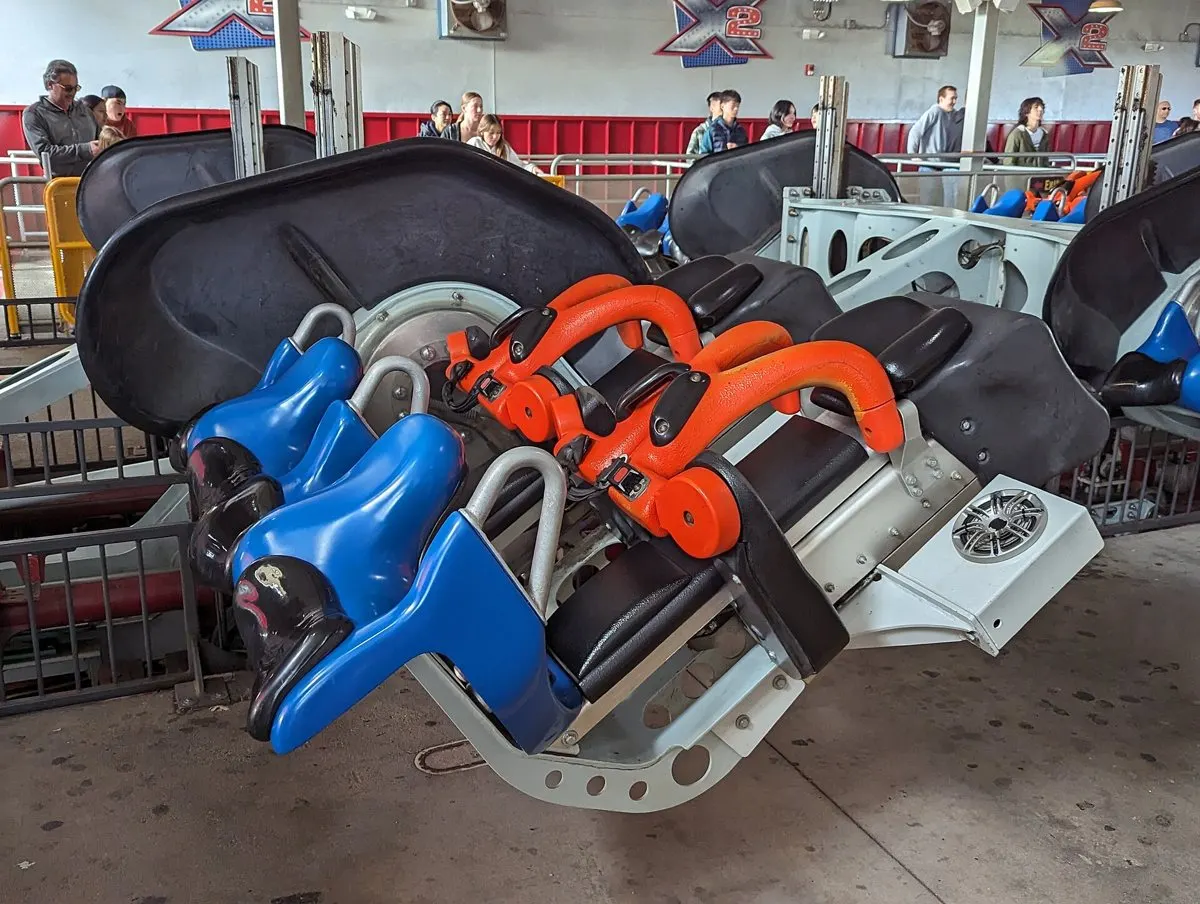
X2 was a 'fourth-dimension' roller coaster manufactured by Arrow Dynamics, originally opening as 'X' in January 2002. Unlike traditional coasters, the seats are attached to the sides of the track and rotate 360 degrees forward or backward throughout the ride. The train reaches speeds of approximately 122 kilometers per hour over a two-minute duration.4 The park closed the ride in 2007 to install lighter trains, reopening it as X2 in 2008. According to Six Flags, more than 16 million people have ridden X2.3 Only two other coasters of this type exist globally: one in China and one in Japan.1
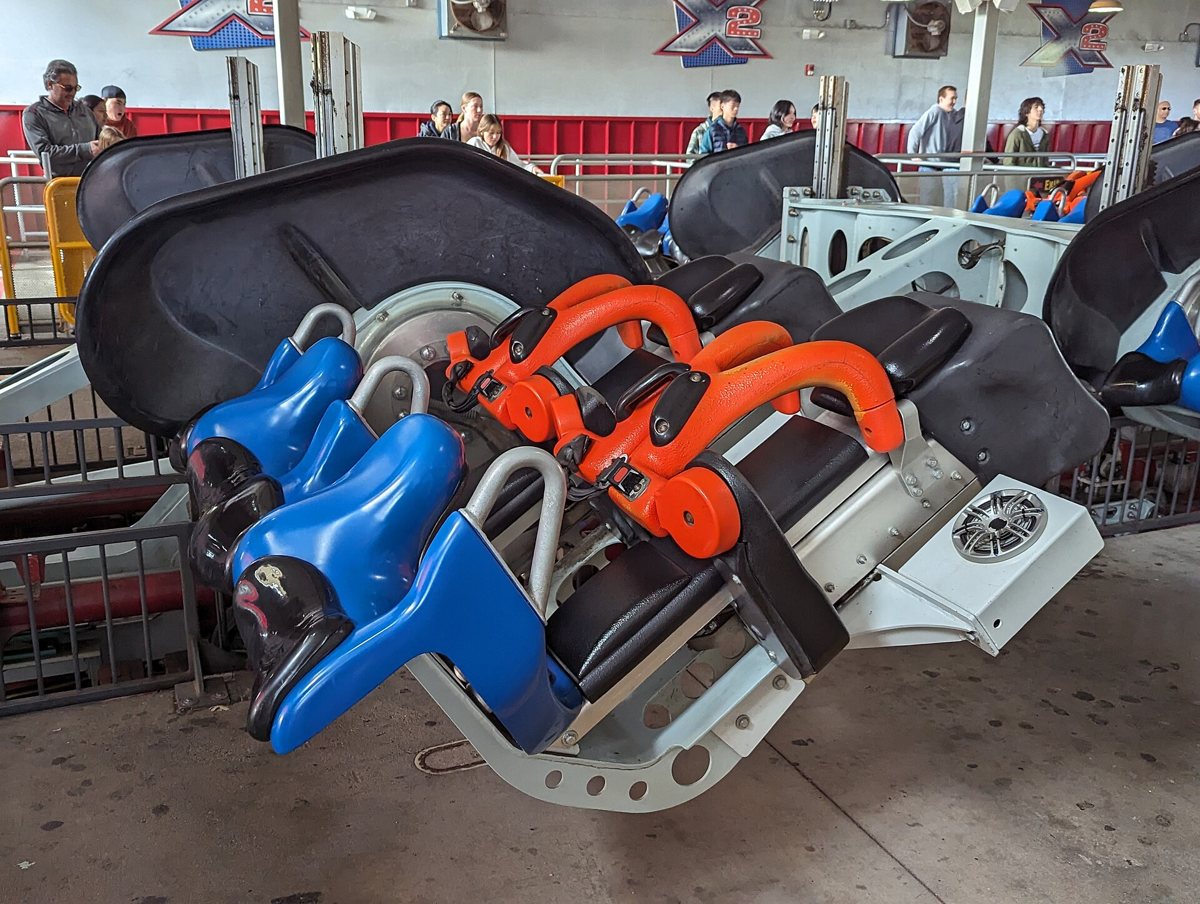
According to court records, Christopher Hawley, his brother, and his cousin were tossed around like 'ragdolls' during a 2022 ride, striking their heads against the seat back repeatedly. In a deposition, Sheila Katerelos, who was 50 when she rode the coaster in 2020, stated that she felt a sharp, throbbing pain when her head hit the headrest, which became unbearable by the time the train returned to the station.1
How have the medical records of X2 riders been documented over two decades?
A CNN investigation published in August 2026 compiled more than a dozen cases of serious injury and hospitalization linked to X2, drawing from medical records, deposition transcripts, and court files. The first lawsuit was filed in 2009 by a 62-year-old man who reported a brain injury. In 2010, 28-year-old Hilda Farias died; at the time, experts suspected a pre-existing vascular condition was exacerbated by the intensity of the ride. In 2014, 17-year-old Selena O'Neill, and in 2021, 46-year-old Lucy Alvarez were diagnosed with subdural hematomas—a condition where blood collects between the brain and its outer lining.1
On June 23, 2022, 22-year-old Christopher Hawley stepped off the train, gripped a railing, complained of head pain, and collapsed. He died the following day. The Los Angeles coroner's office listed the cause of death as blunt head trauma and classified the incident as a 'park ride accident.'5 An expert witness retained by the family reported to the court that internal park records showed at least 70 complaints of head and neck injuries from X2 riders in the three years preceding Hawley's death. The case was settled privately in August 2026, just days before a scheduled hearing.15
The three neurosurgeons who treated the two women in July wrote to CNN stating that the hemorrhages resulted from 'sudden acceleration and deceleration events' on X2. The team that operated on Guillen was the same group that had treated Hawley four years prior. Following the publication of the investigation, attorneys announced they were representing over 100 clients who claimed to have suffered brain injuries on X2 in the last two years. CNN stated it could not independently verify those specific claims.6
Why did previous scientific studies suggest that roller coaster risks were very low?
The debate regarding amusement park rides often focuses on G-forces, but biomechanical experts have long argued this metric can be misleading. A sneeze can exert 10 Gs of acceleration on the head for a few milliseconds without harm. Conversely, a fighter pilot can lose consciousness if exposed to forces between 5 and 9 Gs for over 40 seconds, which is caused by reduced blood flow to the brain, not tissue trauma.7
In 2002, Douglas Smith and David Meaney of the University of Pennsylvania applied data from three high-G coasters to a model, concluding that even in the worst-case scenario, the rotational acceleration of the head remained well below injury thresholds.8 In 2009, Smith, along with Bryan Pfister and Larry Chickola, conducted physical measurements by placing sensors on volunteers riding three coasters, using pillow fights and laboratory crash tests as comparisons. In a 29-kilometer-per-hour collision, the head injury criterion was 28.1. On the roller coasters, the highest value was 4.1.7 The volunteers for the study were provided by a Six Flags park in New Jersey.
A 2017 study from Stanford further complicated the picture. Researchers placed measurement devices on two men on three different coasters and modeled brain deformation. The model suggested the brain surface shifted up to 4 millimeters, with tissue strain reaching 7.6 percent. This value is higher than running and close to a light soccer 'header,' yet below the average threshold for concussion. Notably, the head movement of two people in similar seats on the same train varied significantly.9 Lyndia Wu, a co-author of the study now at the University of British Columbia, told CNN that high-risk coasters like X2 warrant specialized scrutiny.1
What role does the unmeasured impact against the headrest play in these injuries?
The three studies mentioned measured the acceleration of riders whose heads were moving freely. None of those studies—nor any measurement taken on X2—accounted for the head striking a rigid surface. However, the plaintiffs' testimonies describe exactly this type of impact. Subdural hematomas are known to occur when the 'bridging veins' that span the space between the brain surface and the outer membrane are torn. Experiments on cadavers in Leuven showed that these veins ruptured at a rotational acceleration of approximately 10,000 radians per second squared during short impacts; for impacts lasting longer than 10 milliseconds, the threshold dropped to 5,267.10 The highest rotational acceleration measured by Pfister in the pillow fight test was 2,054. There is no way to know how close a head striking a headrest repeatedly comes to these dangerous levels because no such data was ever recorded on X2.
Subdural hematomas following roller coaster rides have been reported in medical journals since 1994. A 2016 review listed twelve cases. Some cases involved predisposing factors such as blood-thinning medication or arachnoid cysts, but others had no such history. The authors noted that the risk might increase with age as the space between the brain and skull expands.11
Six Flags argued in court that the coaster complied with industry standards and that the forces exerted on a 'normal' rider following instructions would not be strong enough to cause a hematoma. In its announcement of the permanent closure, the company reiterated that X2 had 'passed countless safety tests.'3 Brian Avery, an amusement ride safety expert at the University of Florida, stated that the pattern of repeated brain injuries linked to the same ride is a 'clear safety signal.' California's occupational safety agency, Cal/OSHA, examined test data provided by the park after Hawley's death in 2022 and allowed the ride to reopen within days. The standards used in those tests are written by committees that include both manufacturers and operators.1
To date, no X2 lawsuit has reached a jury verdict; all have either settled or remain pending. For Hawley, the coroner linked the cause of death to the ride, and surgeons for the two women in July reached the same conclusion. While it is true that the accelerations measured on typical roller coasters are comparable to everyday movements, the injuries alleged in the lawsuits relate to the head striking the headrest in a rotating seat—a force that remains unmeasured. The investigation opened by the state agency in July is ongoing. The case of Lucy Alvarez is scheduled to go to trial in October 2027.1
Notes and Sources
- Blake Ellis, Melanie Hicken, Kyung Lah, "They braved a world-famous Six Flags roller coaster. Then they were rushed to the hospital for emergency brain surgery", CNN, August 27, 2026.
- Greer-Wilkinson v. Six Flags et al., Guillen v. Six Flags et al., and Wilk v. Six Flags et al., complaints, California State Court, September 2026.
- Fedor Zarkhin, "Magic Mountain closes X2 coaster permanently after history of injuries", Los Angeles Times, September 29, 2026.
- "Six Flags Closes Its X2 Roller Coaster After Brain-Injury Lawsuits", TIME, September 29, 2026.
- "Six Flags Magic Mountain reaches settlement in fatal X2 roller coaster lawsuit", FOX 11 Los Angeles, August 2026.
- "Over 100 people suffered brain injuries on X2 rollercoaster at Six Flags, lawyers for victims say", NBC News, September 23, 2026.
- B. J. Pfister, L. Chickola, D. H. Smith, "Head motions while riding roller coasters: implications for brain injury", American Journal of Forensic Medicine and Pathology 30(4):339-345, 2009.
- D. H. Smith, D. F. Meaney, "Roller coasters, g forces, and brain trauma: on the wrong track?", Journal of Neurotrauma 19(10):1117-1120, 2002.
- C. Kuo, L. C. Wu, P. P. Ye, K. Laksari, D. B. Camarillo, E. Kuhl, "Pilot findings of brain displacements and deformations during roller coaster rides", Journal of Neurotrauma 34(22):3198-3205, 2017.
- B. Depreitere, C. Van Lierde, J. Vander Sloten et al., "Mechanics of acute subdural hematomas resulting from bridging vein rupture", Journal of Neurosurgery 104(6):950-956, 2006.
- R. A. Scranton, R. W. Evans, D. S. Baskin, "A motion simulator ride associated with headache and subdural hematoma: first case report", Headache 56(2):372-378, 2016; first case report: C. M. Fernandes, M. R. Daya, "A roller coaster headache", Journal of Trauma 37(6):1007-1010, 1994.