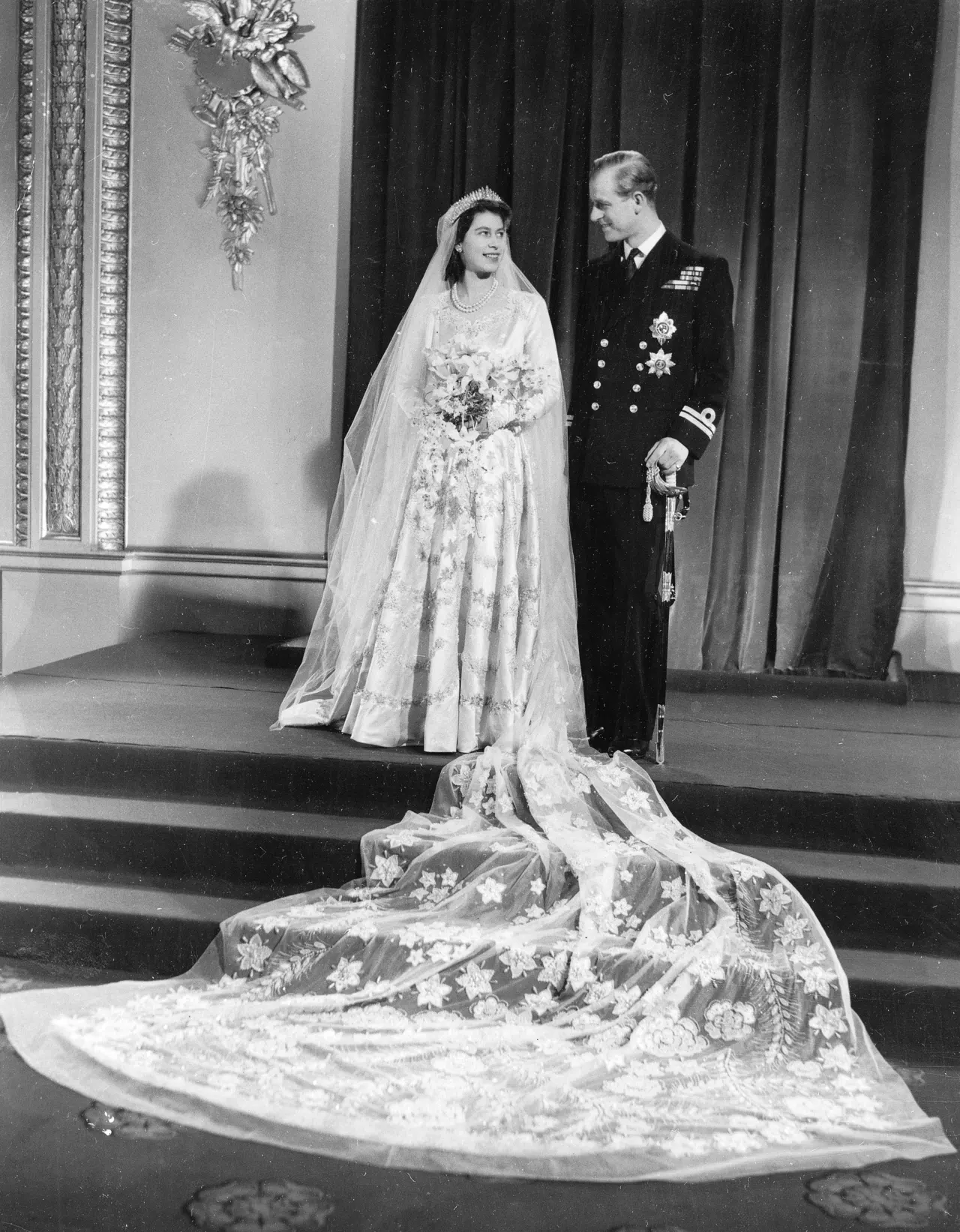
On November 20, 1947, Princess Elizabeth, the heir presumptive to the British throne, married Lieutenant Philip Mountbatten at Westminster Abbey in London. The wedding occurred during a period of post-war austerity, serving as a rare moment of national celebration for the United Kingdom. Philip, who renounced his Greek and Danish titles to become a British citizen, was created Duke of Edinburgh on the morning of the ceremony. This historic event marked the beginning of the longest-running partnership in the history of the British monarchy, lasting until the Duke’s death in 2021.
The romance began years before the world took notice. Elizabeth first met Philip, her third cousin through Queen Victoria, in 1934 at the wedding of Princess Marina of Greece and Denmark. However, it was a 1939 meeting at the Royal Naval College in Dartmouth that ignited a lasting spark. At just 13 years old, the Princess fell in love with the dashing naval cadet. They began a prolific correspondence that continued throughout the Second World War while Philip served in the Royal Navy. By 1941, observers like diarist Chips Channon already suspected Philip was destined to be the future Prince Consort.
How did the couple navigate their secret engagement?
Princess Elizabeth and Philip Mountbatten became secretly engaged in 1946 when Philip asked King George VI for his daughter's hand in marriage during a stay at Balmoral. The King granted his permission on the condition that the formal announcement be delayed until Elizabeth turned 21 the following April. To propose, Philip used diamonds from a tiara belonging to his mother, Princess Alice of Battenberg, to design a three-carat round diamond ring. The engagement was finally made public on July 9, 1947, following Elizabeth's birthday tour of South Africa. Before the wedding could proceed, the King gave his formal consent through the British Privy Council, a legal necessity under the Royal Marriages Act 1772, with similar formalities observed in Canada.

Philip proposed to Elizabeth with a 3-carat round diamond ring consisting of a centre stone flanked by 10 smaller pave diamonds, all sourced from a tiara belonging to his mother.
The wedding was not without its logistical hurdles, reflecting the grim reality of life in Britain two years after the war ended. The country was still under a system of rationing, and Princess Elizabeth had to use ration coupons to purchase the material for her bridal gown. Designed by Norman Hartnell, the dress was a masterpiece of duchesse satin featuring intricate motifs of star lilies and orange blossoms. Even the bridal party faced the constraints of the era, though the eight bridesmaids wore elegant wreaths of white satin and silver lame in their hair, and the young page boys—Prince William of Gloucester and Prince Michael of Kent—wore Royal Stewart tartan kilts.
What last-minute crises threatened the ceremony?
On the morning of the wedding at Buckingham Palace, Princess Elizabeth faced two significant scares that could have derailed her preparations. First, her fringe tiara snapped while she was dressing. A police escort was required to rush the court jeweller to his work room to perform emergency repairs, which were completed just in time. Shortly thereafter, Elizabeth realized she had left her pearl necklaces—heirlooms belonging to Queen Anne and Queen Caroline—at St James's Palace. Her private secretary, Jock Colville, was dispatched to retrieve them, successfully delivering the jewelry before the official portraits were taken in the Music Room.

The ceremony at Westminster Abbey was a grand affair attended by the highest levels of British and European royalty. Philip arrived with his best man, the Marquess of Milford Haven, while Elizabeth was escorted by her father, King George VI, in the Irish State Coach. The service was steeped in tradition but included personal touches; for instance, the music included a descant for the hymn "The Lord's my Shepherd" that the princesses had taught the organist, Sir William McKie, after the original sheet music could not be found. The Archbishop of Canterbury, Geoffrey Fisher, officiated the vows as 200 million people listened via BBC Radio across the British Empire.
The wedding band was crafted from a nugget of Welsh gold from the Clogau St David's mine, the same source used for the rings of the Queen Mother and later Princess Diana.
What titles were bestowed upon the royal couple?
Before he could join the royal family, Philip had to undergo a significant transformation of his identity. He renounced his foreign titles, converted from Greek Orthodoxy to Anglicanism, and adopted his mother's family name, Mountbatten. On the morning of the wedding, King George VI bestowed upon him the style of His Royal Highness and the titles Duke of Edinburgh, Earl of Merioneth, and Baron Greenwich. Upon the exchange of vows, Elizabeth became the Princess Elizabeth, Duchess of Edinburgh, a title she would hold until her accession to the throne in 1952. The Duke carried a ceremonial sword on his wedding day, which he later used to cut the wedding cake at the palace breakfast.

The impact of this wedding reached far beyond the walls of Westminster Abbey. In a Britain still scarred by the blitz and struggling with economic recovery, the union of the young Princess and the handsome naval officer provided a sense of continuity and a promise for the future. The couple’s appearance on the balcony of Buckingham Palace after the wedding breakfast—which featured Filet de Sole Mountbatten—was met with enormous crowds. It was the first major state occasion since the end of the war, signaling a new era for the British monarchy.
This marriage would go on to define the House of Windsor for seven decades. As Elizabeth II ascended the throne in 1952, the Duke of Edinburgh became the longest-serving royal consort in British history. Their partnership sustained the monarchy through the collapse of the British Empire, the social upheavals of the 20th century, and the modernization of the crown. When the Queen celebrated her Diamond Wedding Anniversary years later, the echoes of that cold November day in 1947 remained a testament to a union that began with letters between a young girl and a sailor and ended as the bedrock of a nation.

Did you know? Princess Elizabeth did her own makeup for her wedding day.
Did you know? The myrtle in Elizabeth’s bouquet was taken from a bush grown from the original myrtle in Queen Victoria’s wedding bouquet.
Watch: 1947 ROYAL: Wedding of HRH Princess Elizabeth and Philip Mountbatten at Westminster Abbey
From the Reuters Connect channel.
Sources and further reading: Wikipedia — Wedding of Princess Elizabeth and Philip Mountbatten, Elizabeth II, Prince Philip, Duke of Edinburgh, Duke of Edinburgh (CC BY-SA). Images: Wikimedia Commons.