What did the Starship Flight 15 recovery attempt achieve?
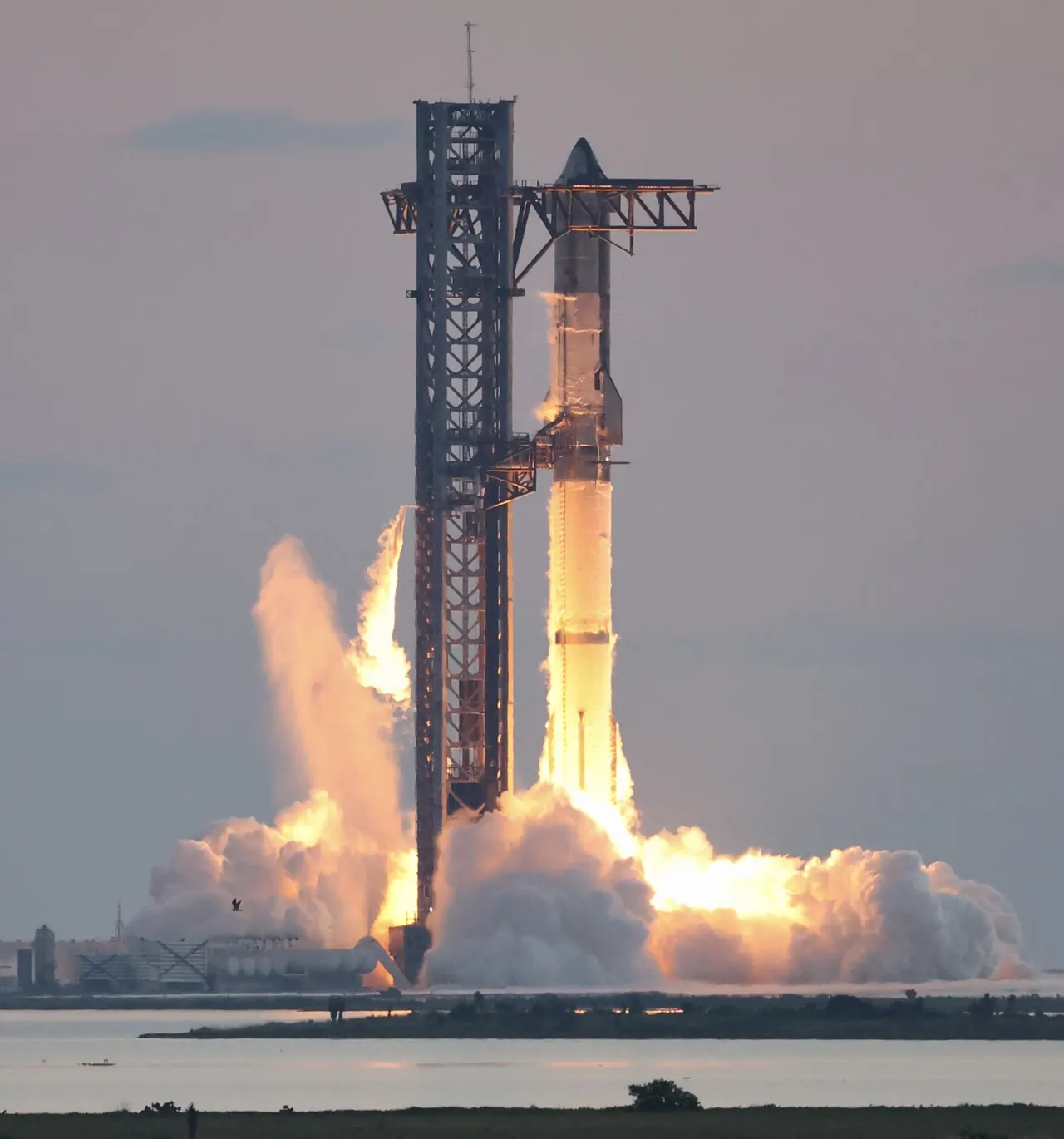
The 15th flight of Starship, which launched from Starbase in Texas on the evening of November 13, 2026, set out to test the recovery of both launch vehicle components using the same landing tower. While the upper stage, Ship 42, came to rest between the mechanical arms of the Mechazilla tower, the Super Heavy booster aborted its landing sequence six and a half minutes into the flight and was destroyed over the Gulf of Mexico. According to data released by SpaceX, the successful capture of the upper stage occurred exactly 22 hours and 32 minutes after liftoff.
- 22.5 hours after the November 13 launch, Ship 42 was caught by the Mechazilla arms at Starbase, marking the first time an upper stage returning from orbit landed at the launch pad.
- The B22 booster automatically aborted its landing due to a return fuel alarm and concerns regarding its alignment with the tower, resulting in its destruction over the Gulf.
- The mission successfully deployed 26 Starlink V3 satellites into orbit, with all units establishing contact and initiating orbit-raising maneuvers.
- Recovery was contingent upon clearing three distinct "permission to return" checkpoints, representing a critical risk management step toward full reusability.
Why did the Super Heavy B22 booster not land at the tower?
The Super Heavy booster B22 failed to land at the tower because its onboard safety software triggered an automatic abort. This decision was driven by a fuel reserve alarm and a detected risk that the vehicle would not be able to align correctly with the tower interface. To ensure safety, the guidance, navigation, and control (GNC) system opted to steer the booster away from the launch facility and initiate a disposal maneuver over the Gulf of Mexico.
What are the implications for Starship's full reuse?
The primary value of Flight 15 lies in the volume of engineering data collected rather than the spectacle of the dual recovery. By requiring the upper stage to pass through three "permission to return" control checkpoints before authorizing the final tower catch, SpaceX has implemented a rigorous risk management protocol essential for long-term operations. The fact that the upper stage completed 14 orbits before returning to the pad provides a new baseline for measuring the operational durability of the vehicle's heat shield and navigation systems.
Notes and Sources
- SpaceX, Starship Flight 15 mission page and timeline, updated November 2026. Data covers launch, payload deployment, return checkpoints, deorbit burn, and tower capture times.
- Spaceflight Now, "Live coverage: Starship Flight 15 attempts to recover full vehicle in double launch pad catch," November 13, 2026; details on B22 Gulf disposal, GNC auto-abort, and 2120 UTC Ship 42 capture.
- CNBC, "SpaceX catches upper stage of Starship rocket in historic first," November 14, 2026; report on the upper stage completing 14 orbital revolutions.
This content is for informational purposes only and is not sufficient for making investment or engineering decisions.