
Snake venom has long been portrayed as a cinematic nightmare of fangs, injections, and paralysis, yet the evolutionary history of viper venom reveals a far more pragmatic origin story. Research suggests this chemical cocktail was not designed for defense but as a tool to secure meals, with its genetic foundations dating back to mundane bodily functions.
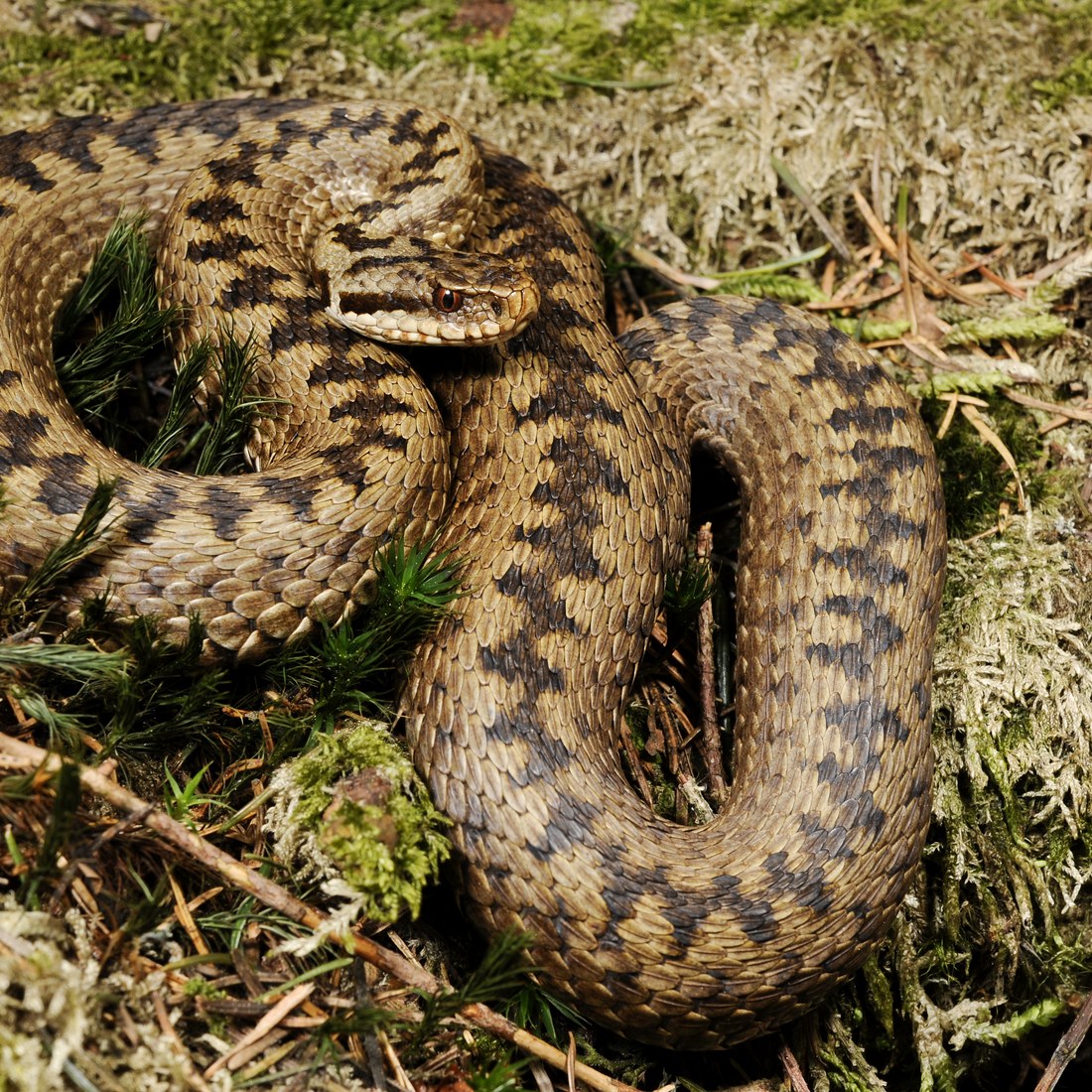
In 1977, David Chiszar and his team at the University of Colorado documented the feeding behavior of rattlesnakes, noting that these vipers would strike their prey and immediately release it. The envenomated mouse would flee only a short distance before collapsing, after which the snake would track the scent trail to consume its meal.1 As members of the family Viperidae, these snakes demonstrate that the strike-and-follow strategy is optimized for incapacitating prey, while defensive biting in humans is merely a secondary application of the same biological weapon.
- Viper venom is an offensive tool for rapid incapacitation and early digestion rather than a purely defensive mechanism.
- Toxins were not invented from scratch but evolved through the recruitment and duplication of existing body proteins.
- Some researchers argue that venom is simply a specialized, hyper-evolved form of saliva.
- The viper's efficiency is driven by the diversity of SVMP and PLA2 protein families, optimized by a high-pressure injection system.
Why did viper venom evolve as an offensive tool?
Viper venom is classically associated with systemic damage, including hemorrhage, coagulation failure, and tissue swelling. While these effects may appear punitive to a victim, they are biological strategies evolved to immobilize prey and initiate digestion before the meal is even consumed. The mixture released from the venom gland targets the circulatory system and cell membranes of the prey, allowing the snake to track and consume its catch without engaging in a prolonged, energy-intensive chase. While a bite to a human is inherently defensive, the natural selection pressures acting on these molecules for millions of years have been entirely focused on the efficacy of the venom against prey.
How were toxins recruited from the body's existing proteins?
In 2005, Bryan Fry compared the amino acid sequences of snake toxins with existing bodily proteins and discovered a startling connection. He found that the majority of toxin families are closely related to proteins already functioning in the heart, pancreas, brain, and other tissues. There were at least twenty-four separate instances of these proteins being recruited for venom production. Through minor sequence variations, these proteins maintained their original structural framework while undergoing dramatic shifts in function.2 Evolution did not create a new factory; instead, it duplicated existing parts and connected them to the production line of the venom gland. Enzymes such as phospholipase A2, metalloproteinases, and kallikrein-like serine proteases are all venom-adapted versions of familiar enzyme families.
Is snake venom simply a form of supercharged saliva?
While the theory of protein recruitment has long dominated the literature, a 2014 study by Hargreaves et al. shifted the perspective by comparing the transcriptomes of venomous and non-venomous reptile tissues. They found that many toxin genes were already present in the saliva of non-venomous species, suggesting that these genes were not relocated from distant organs but rather amplified and specialized within the oral secretory system.3 This view posits that snake venom is not a miraculous new invention but an evolutionarily exaggerated form of saliva. Though the specific origins of various toxins continue to be debated, the consensus is shifting toward the idea that venom is an overdosed and specialized version of a standard secretory system.
How do SVMP, PLA2, and fangs drive viper venom diversity?
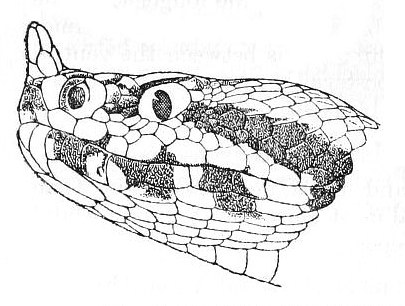
While cobras are known for three-finger toxins, the viper venom profile is dominated by snake venom metalloproteinases (SVMP) and group II phospholipase A2 (PLA2) families. These proteins act as the primary agents of hemorrhage and tissue destruction, often accounting for the bulk of the venom proteome’s total weight.4 SVMPs appear to have originated from the ADAM protein family. The earliest form is the P-III class, from which P-II and P-I forms evolved through domain loss, a process that allowed for the development of new functions through positive selection on surface amino acids.5 This molecular explosion is inseparable from viper anatomy; their front-fanged, high-pressure injection system incentivizes the diversification of venom, as a wider variety of toxin variants allows the snake to target a broader range of prey with minimal risk of the prey escaping.
Notes and Sources
- David Chiszar, Charles W. Radcliffe and Kent M. Scudder, "Analysis of the behavioral sequence emitted by rattlesnakes during feeding episodes. I. Striking and chemosensory searching," Behavioral Biology 21 (1977): 418–425.
- Bryan G. Fry, "From genome to 'venome': Molecular origin and evolution of the snake venom proteome inferred from phylogenetic analysis of toxin sequences and related body proteins," Genome Research 15 (2005): 403–420.
- Adam D. Hargreaves et al., "Restriction and Recruitment—Gene Duplication and the Origin and Evolution of Snake Venom Toxins," Genome Biology and Evolution 6, no. 9 (2014): 2080–2095.
- Nicholas R. Casewell et al., "Causes and Consequences of Snake Venom Variation," Trends in Pharmacological Sciences 41, no. 8 (2020): 570–581.
- Nicholas R. Casewell et al., "Domain Loss Facilitates Accelerated Evolution and Neofunctionalization of Duplicate Snake Venom Metalloproteinase Toxin Genes," Molecular Biology and Evolution 28, no. 9 (2011): 2637–2649.
This article is for informational purposes only. Snake bites are medical emergencies; seek immediate professional medical attention.