How were two of Charles Darwin's notebooks returned after being missing for two decades?
On March 9, 2022, a bright pink gift bag was left on the floor outside the librarian’s office on the fourth floor of Cambridge University Library’s 17-story tower. With no surveillance cameras in the corridor, the anonymous delivery contained an archival box holding two small notebooks wrapped in plastic. A brown envelope inside was marked with a printed note: "Librarian Happy Easter X." The items were the lost field notebooks of Charles Darwin, which had been missing for 21 years. One contained a seminal sketch from 1837 illustrating Darwin's theory of how species branch off from a common ancestor.
The notebooks had been removed from the library's secure storage in September 2000 for a photography project. When a routine audit occurred in January 2001, the small box was discovered missing. For years, librarians assumed the notebooks had been misfiled among the institution’s collection of approximately ten million books, maps, and manuscripts. In early 2020, university librarian Jessica Gardner launched an exhaustive search, scouring 189 boxes in the Darwin archive, yet the notebooks remained elusive. Following consultations with experts in cultural heritage theft, the university concluded the items had likely been stolen. A global appeal was issued in November 2020 via the Cambridgeshire Police and Interpol, and the pink bag appeared 15 months later. Katrina Dean and head of conservation Jim Bloxam examined the notebooks, finding no significant damage. The identity of the person who returned the items remains unknown, and the police investigation is ongoing.1
How was Paul McCartney's stolen bass recovered after 51 years?
Paul McCartney purchased his Höfner 500/1 bass in Hamburg in 1961, using the violin-shaped instrument on early Beatles tracks including "Love Me Do," "She Loves You," and "Twist and Shout." On October 10, 1972, the bass was stolen from the back of a van in London's Notting Hill district.2 Nick Wass of Höfner began a search for the instrument in 2018. Following a public appeal in May 2023 supported by journalists Scott and Naomi Jones, the team received over 100 tips. Ian Horne, a former member of McCartney's road crew, confirmed the circumstances of the theft. The trail led to the proprietor of the Admiral Blake pub in the local area, eventually suggesting the instrument had been stored in the attic of a row house in Hastings. After seeing the news, Cathy Guest checked her attic, photographed the guitar, and delivered it to McCartney's home approximately 13 kilometers away.3
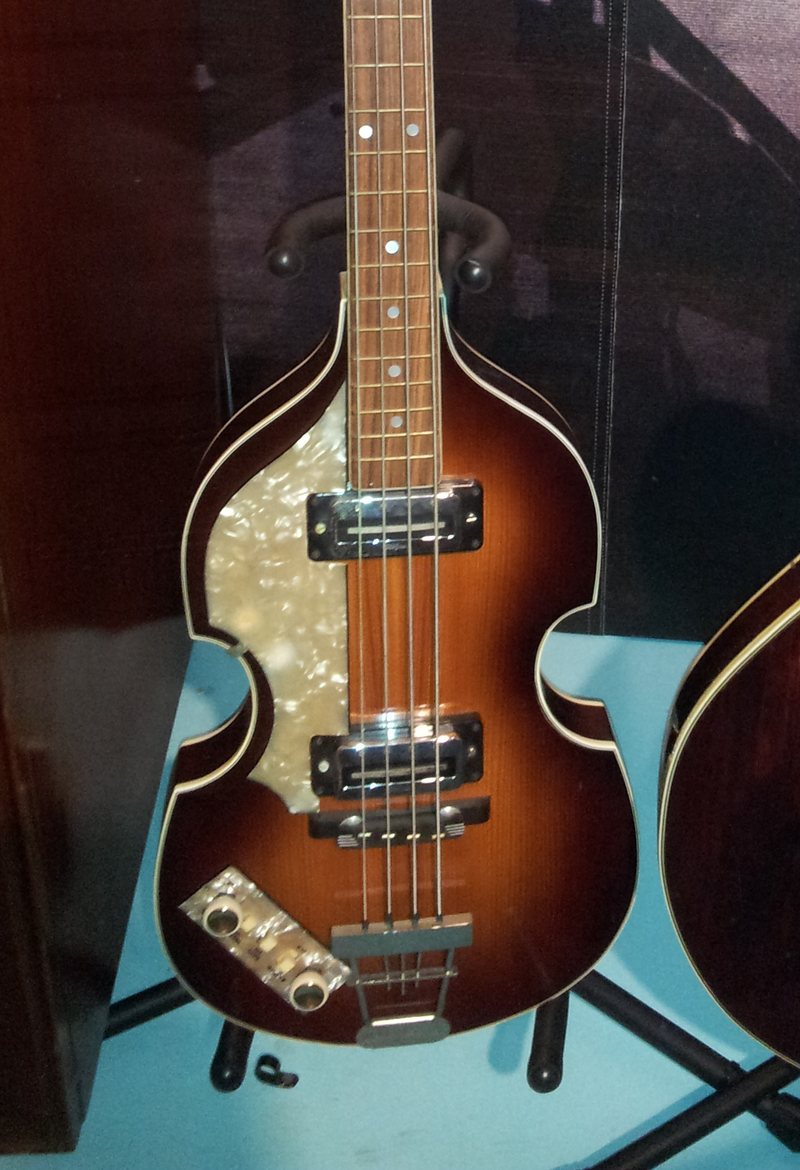
Wass conducted a meticulous forensic examination of the bass, documenting broken joints and replaced tuning pegs. The instrument featured a reddish spray-paint repair from the 1960s, consistent with studio photographs of McCartney from that era. On February 15, 2024, McCartney's official website confirmed that the bass had been verified by Höfner.4
What evidence linked the recovered ruby slippers to the pair held by the Smithsonian?
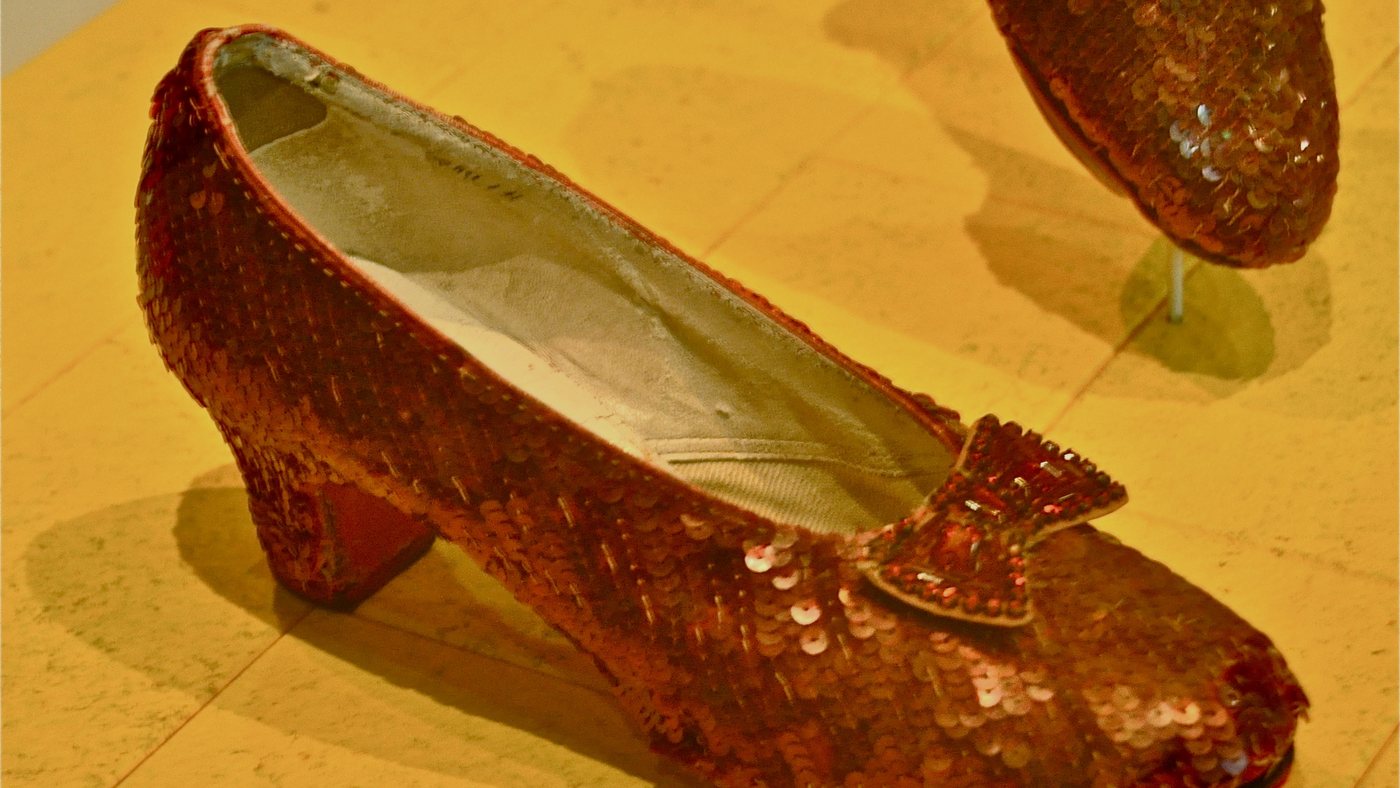
One of the four surviving pairs of ruby slippers worn by Judy Garland in the 1939 film The Wizard of Oz was stolen from the Judy Garland Museum in Grand Rapids, Minnesota, on August 28, 2005. After 12 years without a lead, an individual approached the insurer in 2017 with information about the slippers. According to the FBI, the inquiry evolved into an extortion attempt, leading to a sting operation in Minneapolis in July 2018.5
The FBI transferred the recovered slippers to the Smithsonian National Museum of American History, where a different pair had been on display since 1979. Conservation expert Dawn Wallace, who had spent over 200 hours studying the museum's pair, knew they were a mismatched set. Analysis at the Smithsonian’s conservation institute revealed cellulose nitrate layers and reflective silver lining in the sequins, unlike the aluminum used in modern replicas. When placed side-by-side, it was discovered that the recovered left slipper was the match for the museum's right, and vice versa. While the Smithsonian did not issue a formal authentication, they confirmed the materials and construction were consistent with their original pair.6
Thief Terry Jon Martin pleaded guilty in October 2023, admitting he had used a sledgehammer to break into the museum. In January 2024, the court sentenced the terminally ill 76-year-old to pay $23,500 in restitution rather than prison time.7 The slippers were returned to owner Michael Shaw in March 2024 and subsequently sold at auction for $32.5 million.8
How did a violin expert identify the stolen Ames Stradivarius?
Roman Totenberg’s 1734 Ames Stradivarius violin was stolen following a concert at the Longy School of Music in Massachusetts in May 1980.9 Totenberg long suspected a young violinist named Philip Johnson, but authorities lacked sufficient evidence to obtain a search warrant. Johnson died in 2011, and Totenberg passed away at age 101 one year later.10 In 2015, Johnson's former wife discovered a locked violin case among his belongings. An internal label bore Stradivari's name and the year 1734. Photographs of the instrument were sent to Pittsburgh-based luthier Phillip Injeian. Injeian immediately grew suspicious of the date; most counterfeit Stradivari labels show dates between 1710 and 1727, making 1734 highly unusual given the master luthier died in 1737. Referencing Herbert Goodkind’s catalog of known Stradivarius instruments, Injeian confirmed the stolen Ames was the violin in question.11
On June 26, 2015, Injeian inspected the violin in a Manhattan hotel room. The instrument bore a distinct dark mark on the lower right of the back plate, matching the catalog photographs. FBI agents used original millimeter measurements taken before the theft to verify the violin's identity. Every measurement aligned perfectly.10 The violin was returned to Totenberg’s three daughters on August 6, 2015.9
In each of these four cases, recovery was achieved not through automated databases, but through investigative persistence and human expertise. Public appeals reunited the notebooks and the bass with their owners, while a shakedown and an expert’s catalog research recovered the slippers and the violin. Forensic details, such as the silver lining of sequins, broken guitar joints, and microscopic measurements, served to confirm the identity of the recovered items. The two antique bows stolen alongside Totenberg's violin remain missing.12
Notes and Sources
- University of Cambridge (2022). "Missing Darwin notebooks returned to Cambridge University Library", April 5, 2022. cam.ac.uk; Cambridge University Libraries, Annual Report 2021-22. lib.cam.ac.uk
- The Beatles Story / The Lost Bass Project (2024). "Get Back: Paul McCartney's Missing Bass", February 16, 2024. beatlesstory.com
- Guitar World, "How Paul McCartney was reunited with his lost Beatles bass" (Interview with Nick Wass). guitarworld.com; BBC News, "Paul McCartney reunited with guitar stolen 51 years ago", February 15, 2024. bbc.com
- paulmccartney.com, "Statement on Höfner Bass", February 15, 2024. paulmccartney.com
- FBI (2018). "Ruby Slippers Recovered", September 4, 2018 (updated March 18, 2024). fbi.gov
- Smithsonian National Museum of American History (2018). "Recovered Ruby Slippers visit museum for examination" and "Dorothy's Ruby Slippers" fact sheet. americanhistory.si.edu
- Duluth News Tribune, "Dying ruby-slipper thief sentenced to supervised release, restitution", January 29, 2024. duluthnewstribune.com
- Heritage Auctions (2024). "Dorothy's Ruby Slippers From 'The Wizard of Oz' Sell for $32.5 Million at Heritage Auctions", December 2024. ha.com
- FBI New York and U.S. Attorney's Office, Southern District of New York (2015). "Manhattan U.S. Attorney and FBI Announce Return of Stolen Stradivarius Violin", August 6, 2015. fbi.gov
- Nina Totenberg (2015). "A Rarity Reclaimed: Stolen Stradivarius Recovered After 35 Years", NPR, August 6, 2015. npr.org
- Phillip Injeian (2015). "The rediscovery of the 'Ames' Stradivarius", The Strad. thestrad.com; Herbert K. Goodkind (1972). Violin Iconography of Antonio Stradivari 1644-1737.
- FBI (2015). "Recovered Stradivarius Returned After 35 Years", August 7, 2015. fbi.gov