Meretneith, a powerful figure from Egypt's First Dynasty, may have been the nation's first female pharaoh, with recent digital re-evaluations of historical documents suggesting she exercised formal royal authority nearly 5,000 years ago.
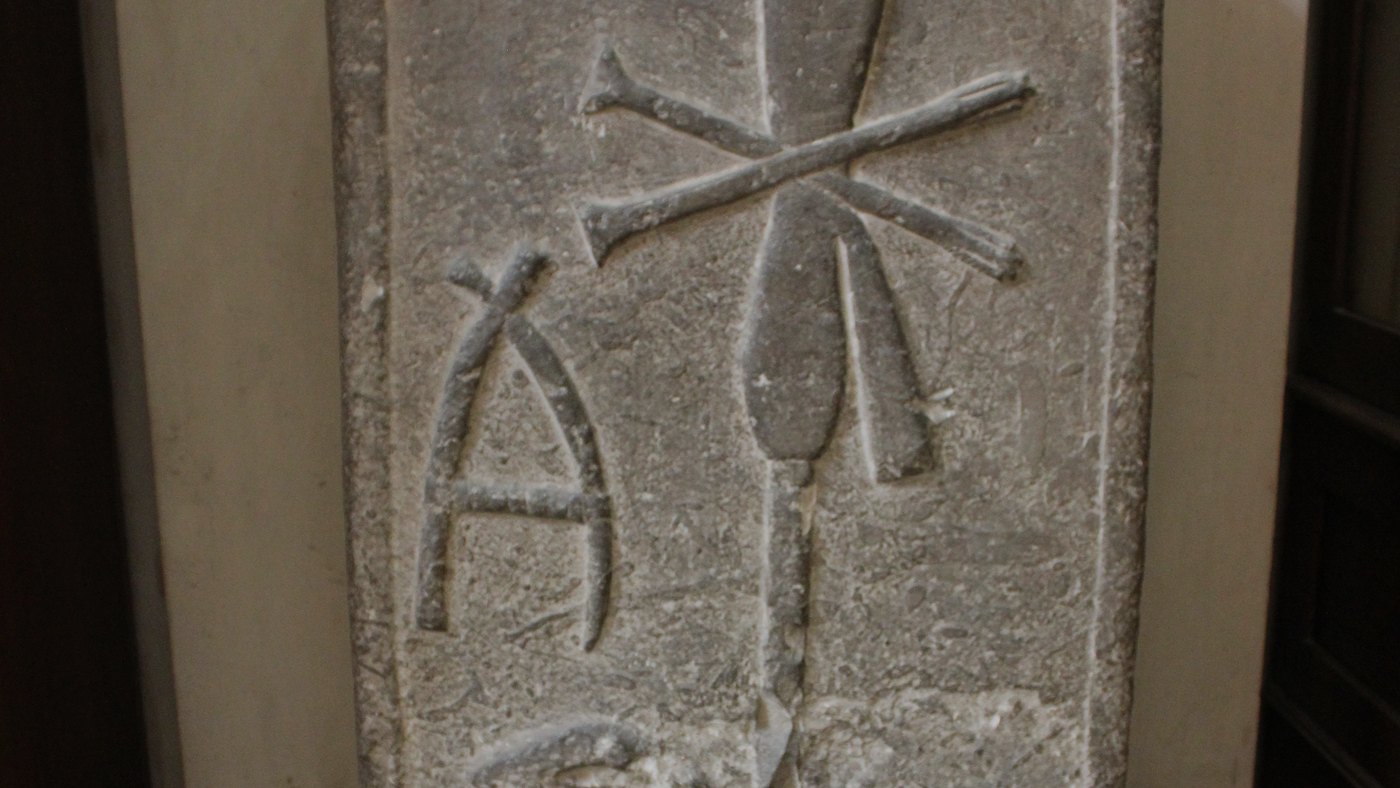
In 1946, British archaeologist Walter B. Emery discovered 13 mud stoppers at the entrance to tomb S3503 in Saqqara. These stoppers, which once sealed storage jars, bore impressions made by a cylinder seal containing four distinct symbols. Emery attributed two of these to the First Dynasty king Djer, while speculating that the central two belonged to a woman named Meretneith.1
Today, those 13 stoppers are lost, and the original glass negative used by Emery remains missing. All that survives is a grainy black-and-white photograph archived from the excavation.2
- Historical consensus on female rulers in Egypt.
- Techniques used to digitally recover imagery from a faded photograph.
- Expert debates regarding the identification of Meretneith's royal symbols.
- Archaeological findings from wine jars in the royal cemetery at Abydos.
Was Meretneith the first female pharaoh long before Hatshepsut?
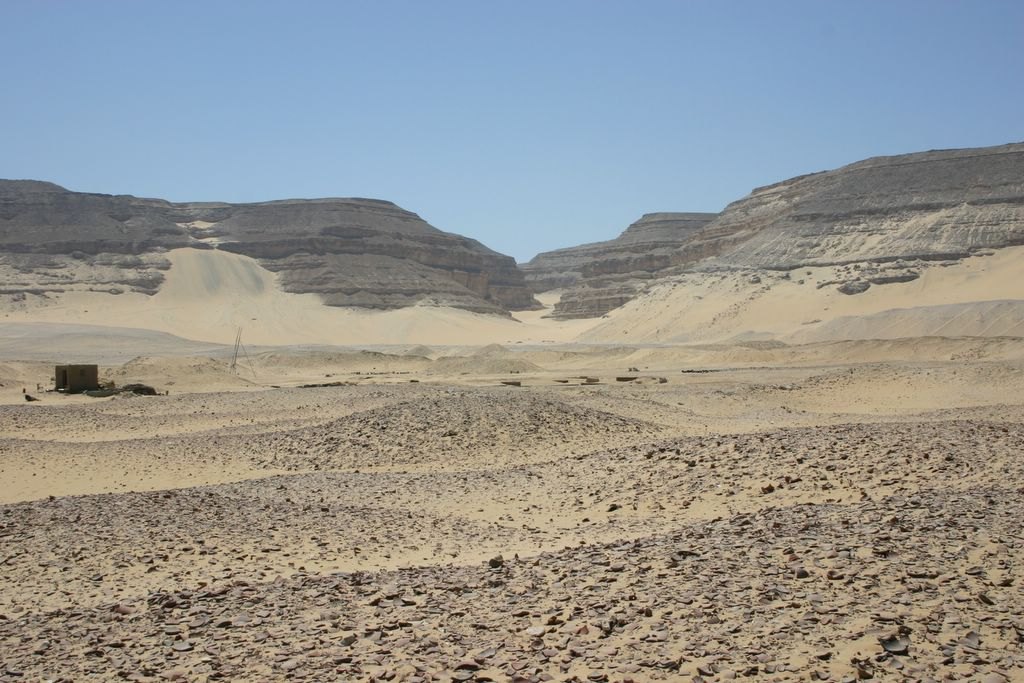
Yes, Meretneith lived approximately 1,500 years before Hatshepsut, the famous 18th Dynasty queen who famously ascended to the throne as pharaoh after serving as regent for her stepson, Thutmose III. While Hatshepsut and the 12th Dynasty's Sobekneferu are well-documented as ruling with full royal titles, Meretneith governed shortly after the unification of Egypt. Her identity was first revealed at Abydos, where Flinders Petrie excavated tomb Y in the royal cemetery at Umm el-Kaab between 1899 and 1900. Her tomb is situated prominently among those of kings Djet and Den, measuring 16.5 by 14 meters, and was noted by Petrie for its exceptional craftsmanship.1
How was the lost photograph of the mud seal re-read?
The original seal impressions featured a serekh, a frame representing the palace facade that typically housed a king's name under the protection of the falcon god Horus. In 1961, Emery argued that the symbols on the Saqqara seal indicated that Meretneith had succeeded Djer. Recently, Sue Kelly of the Czech Institute of Egyptology and digital technician Crystal Miller revisited the 1946 photograph using modern high-resolution scanning performed by the Egypt Exploration Society in 2022. By applying Photoshop threshold masks to invert the image and isolate the raised seal impressions against the mud background, they produced a vector drawing far more detailed than Emery's original manual sketches. The new drawing reveals a double-anchor symbol, characteristic of Meretneith, and potential traces of a Horus falcon above the third serekh, raising the intriguing possibility of a female Horus serekh.1
What is the counter-argument from scholars regarding Meretneith?
Eva-Maria Engel of Humboldt University in Berlin, who was not involved in the latest study, remains skeptical. After reviewing the enhanced imagery, she informed Live Science that the seal exclusively bears the name of King Djer and contains no evidence of Meretneith. While Engel does not dispute Meretneith's immense influence—noting that her location in the royal cemetery and various inscriptions confirm she ruled on behalf of her son Den during his youth—the disagreement centers on whether she was ever officially invested with the formal royal title of king.2
What evidence exists for Meretneith's political role?
Evidence for Meretneith's status exists beyond the contested serekhs. A royal seal found in Den's tomb and published by Günter Dreyer in 1987 lists First Dynasty rulers, ending with Meretneith and the title "mother of the king." Uniquely, she is the only person on this list whose name is not preceded by the name of the god Khentiamentiu, suggesting she may have been alive when the seal was created. Further seals from the reigns of Semerkhet and Qaa indicate that her name remained in state lists for generations. Researchers suggest she served as a co-regent, then regent for Den, and possibly held power in her own right, governing for at least 30 years.1
What was discovered inside the wine jars at Abydos?
Recent excavations at Abydos, led by Christiana Köhler of the University of Vienna, have provided new context for Meretneith's authority. In 2023, the team uncovered 24 intact wine jars in room Y-KK2 of her tomb, some with original mud seals still in place. Twelve of these jars contained sediment patterns indicating they were once filled to the brim. The discovery of these jars, alongside inscriptions found in the tomb, reinforces the theory that Meretneith oversaw central administrative functions, such as the treasury, further solidifying her role as a ruler of significant stature.7
Notes and Sources
- S. Kelly and C. Miller (2026). "New technology illuminating ancient evidence: re-evaluating Meretneith's serekhs and political position", Prague Egyptological Studies XXXVI: 28-49.
- O. Jarus (28 September 2026). "A 72-year-old photo is revealing new clues about 'Meretneith,' a powerful woman who may have ruled Egypt 5,000 years ago", Live Science.
- The Metropolitan Museum of Art, "List of Rulers of Ancient Egypt and Nubia", Heilbrunn Timeline of Art History.
- Torino King List, Museo Egizio, Turin. See: K. Ryholt (1997). The Political Situation in Egypt during the Second Intermediate Period.
- S. Kelly (2025). "Neithhotep: Ancient Egypt's First Female Ruler", Studien zur Altägyptischen Kultur 54: 271-281.
- E. C. Köhler et al. (2023). "A Preliminary Report of New Archaeological Fieldwork at the Tomb of Queen Meret-Neith of the 1st Dynasty at Abydos, Umm el-Qaab", Ägypten und Levante 33: 75-144.
- University of Vienna (9 October 2023). "5,000-year-old wine for Egyptian queen", press release.