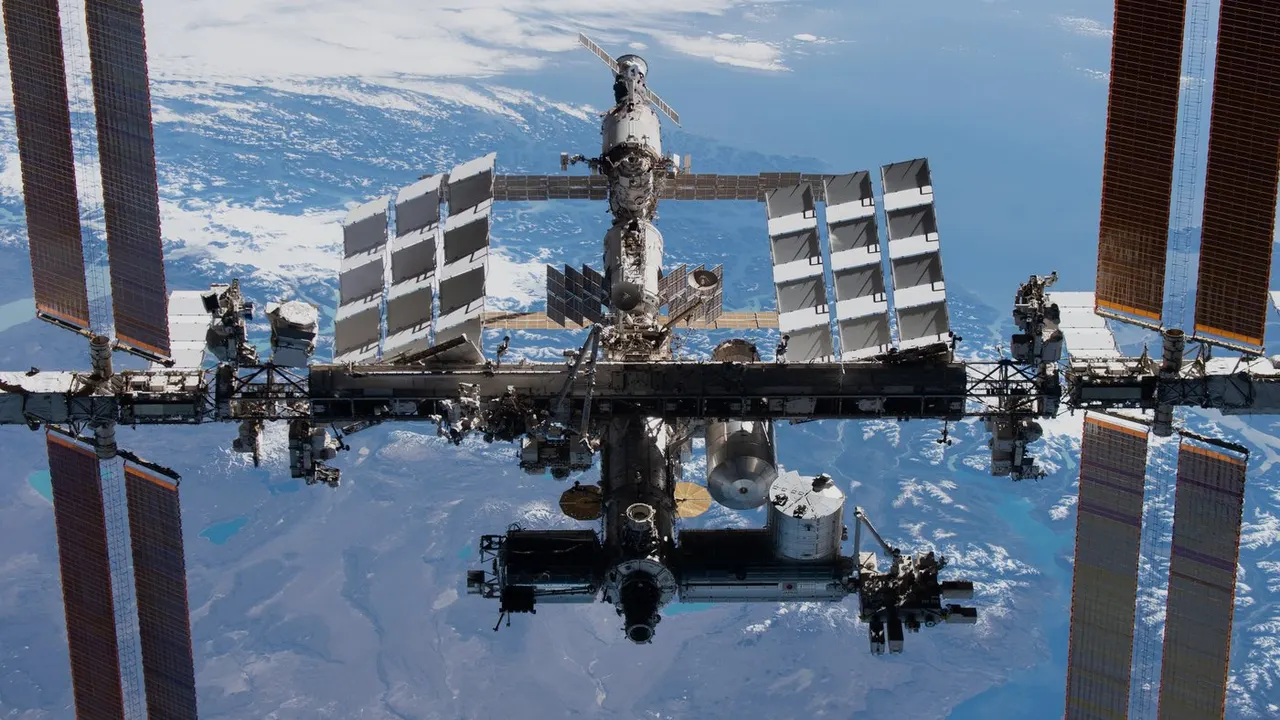
On November 19, 2024, a Russian cargo craft docked at the International Space Station ignited its engines for five minutes and 31 seconds to boost the station's altitude and avoid a collision with a piece of debris from a military weather satellite that shattered in 2015. NASA and its partners had been alerted two days earlier that the fragment would pass dangerously close to the orbiting laboratory. Had the maneuver not been performed, trajectory experts calculated the object could have come within four kilometers of the station.1 NASA confirmed this was the 39th collision-avoidance maneuver conducted by the station since its launch in 1998.2
While four kilometers may seem like a safe buffer, objects in low Earth orbit travel at speeds of seven to eight kilometers per second, resulting in average relative impact velocities of 10 kilometers per second.3 At such extreme speeds, an object crosses a four-kilometer gap in less than half a second.
How many objects are currently in orbit?
Detection is the first requirement for avoidance. The United States Space Force, along with European radar and telescope networks, maintain catalogs of tracked objects. According to current European Space Agency (ESA) statistics, there are 46,930 objects in these catalogs. As of February 2026, the ESA's MASTER-8 model estimates there are 68,450 objects larger than 10 centimeters, 1.5 million fragments between one and 10 centimeters, and 230 million particles between one millimeter and one centimeter.4
Maneuver decisions can only be made for objects within these catalogs; the vast majority of the millions of smaller fragments remain untracked.
How is the decision to maneuver determined?
Orbital paths are never known with absolute precision due to radar measurement errors, atmospheric density fluctuations, and solar activity, all of which introduce uncertainty. Operators focus less on simple distance and more on the overlapping "uncertainty clouds" of two objects. According to a 2001 NASA technical note, flight controllers are notified 72 hours in advance if an object is predicted to enter a 4-kilometer-tall, 50-by-50-kilometer box surrounding the station.5 If the probability of collision exceeds one in 10,000, the station typically performs a maneuver. NASA states this occurs roughly once per year.3
In Europe, the process is managed by the European Space Operations Centre (ESOC) in Germany. The ESA Space Debris Office updates its predictions several times daily, looking seven days ahead. Because command preparation and upload take 12 hours, final decisions are made no later than 12 hours before the closest approach.6 Delays are intentional, as each new measurement can significantly alter the probability.
The ESA's Aeolus wind satellite faced this reality in 2019. U.S. data indicated a close encounter between Aeolus and SpaceX’s Starlink 44 on September 2. The ESA initially contacted SpaceX on August 28, but the company declined to maneuver at that stage. As the collision probability climbed to one in 1,000 by Sunday, the ESA decided to act. Aeolus fired its engines half an orbit before the encounter.7 SpaceX later explained that an error in their automated warning system had prevented them from seeing the updated collision probability. Holger Krag, head of the ESA's Space Safety Programme, has noted that such coordination often still relies on email.
How many maneuvers does the Starlink fleet perform?
SpaceX currently operates the largest fleet in orbit. According to a report submitted to the U.S. Federal Communications Commission (FCC) in July 2026, Starlink satellites performed 207,152 collision-avoidance maneuvers between December 1, 2025, and May 31, 2026.8 This equates to an average of more than 1,100 maneuvers per day, or approximately 36 to 46 maneuvers annually per satellite, depending on the generation.8
The high volume of maneuvers is partly due to the company's aggressive risk threshold; SpaceX triggers avoidance when collision probability exceeds three in 10 million, roughly 300 times more sensitive than the industry-standard one in 10,000 used by NASA for the station. While these maneuvers are automated, the system is not perfect. Between June and November 2025, eight incidents involving first-generation satellites could not be reduced to the target risk level, four of which involved poorly tracked debris.9 The report identifies fragments from China’s 2007 anti-satellite test and the 2015 DMSP F13 military satellite breakup as frequent sources of concern.
How do spacecraft survive impacts with tiny debris?
Particles smaller than one centimeter cannot be tracked or avoided, so critical infrastructure like the station's life-support modules and pressure tanks are protected by shielding designed to withstand impacts up to one centimeter in diameter.3 This shield consists of a thin outer layer spaced away from the main hull, which causes a projectile to shatter upon impact, dissipating its energy over a wider area.
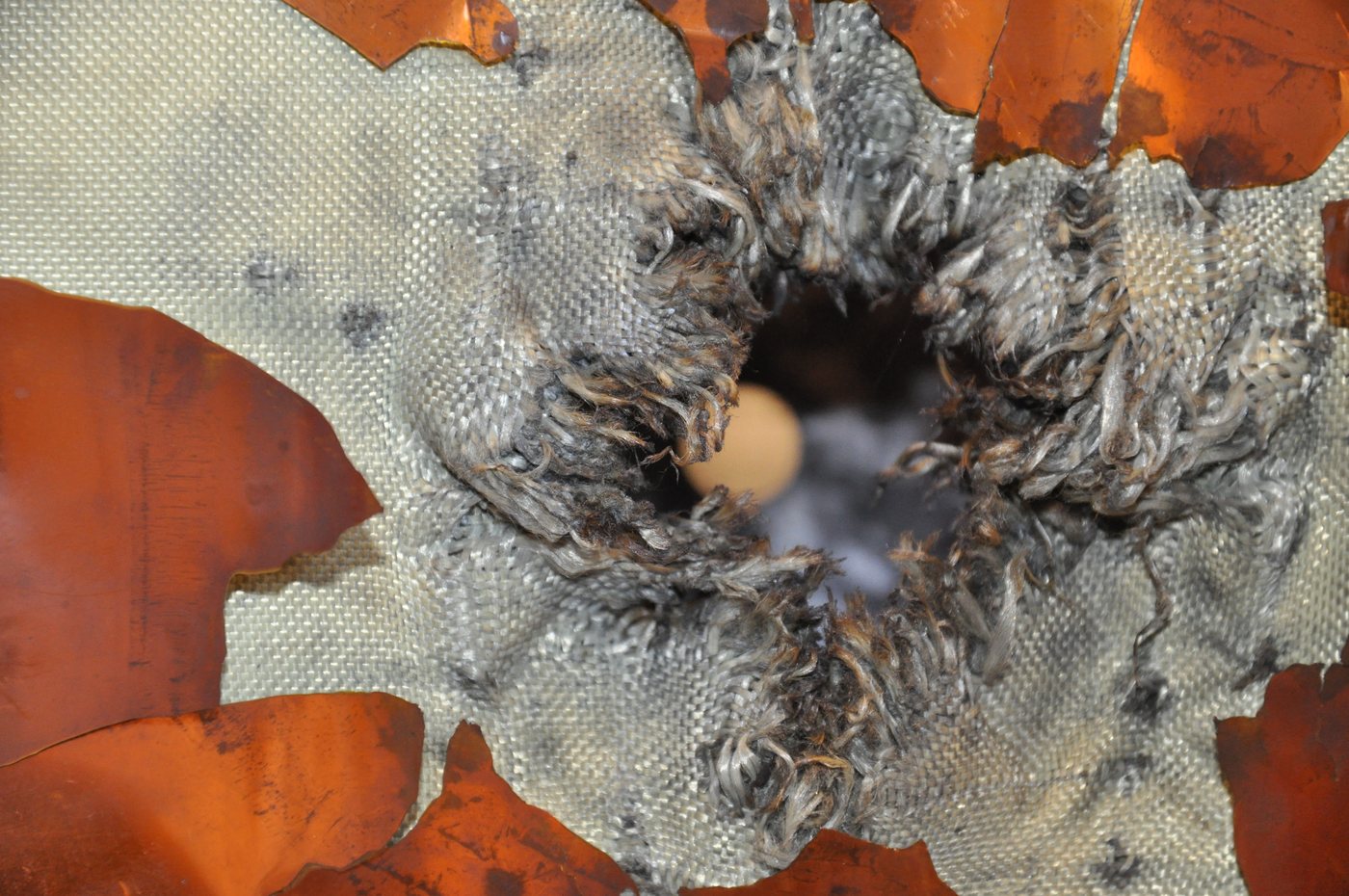
When large objects collide, however, neither shielding nor maneuvering is sufficient. The 2009 collision between the operational Iridium 33 satellite and the defunct Russian Kosmos 2251 satellite created over 2,000 trackable fragments.10 This event prompted tighter regulations, with the ESA reducing its post-mission orbital lifetime limit from 25 years to five years in 2023, a standard also adopted by the FCC for U.S.-licensed low-Earth orbit satellites in September 2022.11 While the station took 39 avoidance actions in 26 years, the Starlink fleet now executes a similar number of maneuvers in under an hour.
Notes and Sources
- NASA, "Space Station Raises Orbit Avoiding Orbital Debris", 2024.
- NPR, "The International Space Station adjusts its orbit to avoid space debris", 2024.
- NASA Orbital Debris Program Office (ODPO), "Frequently Asked Questions".
- ESA Space Debris Office, "Space Environment Statistics", 2026.
- NASA, "Orbital Debris Quarterly News" 6(2), 2001.
- ESA, "Reentry and collision avoidance"; Flohrer et al., "Tailoring the observation scenarios and data processing techniques", ESA.
- ESA, "ESA spacecraft dodges large constellation", 2019; Space.com, "European Satellite Dodges Potential Collision with SpaceX Starlink Craft", 2019.
- SpaceX, "Gen1 and Gen2 Semi-Annual Report", FCC filing, 2026.
- SpaceX, "Gen1 and Gen2 Semi-Annual and Annual Report", FCC filing, 2025; Space Intel Report, 2025.
- NASA, "Satellite Collision Leaves Significant Debris Clouds", 2009.
- ESA, "Annual Space Environment Report", 2025; FCC, "Space Innovation; Mitigation of Orbital Debris in the New Space Age", 2022.