A Lost World Reimagined
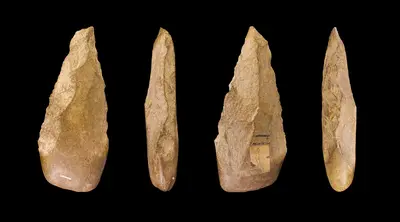
For decades, we have viewed the ancient human story through the lens of stone, bone, and fire. Yet, a remarkable discovery on the shores of an ancient, long-vanished lake in Saudi Arabia challenges our most fundamental assumptions about the ingenuity of our ancestors. Researchers have unearthed thousands of stone artifacts dating back 125,000 years, revealing that early humans were not merely surviving in the harsh desert, but mastering a sophisticated, lethal technology that required deep environmental knowledge: the poison-tipped projectile.
The Chemistry of Survival
The site, a witness to a much greener era of Arabia, has yielded compelling evidence that hunter-gatherers were crafting complex composite weapons. According to reports, these findings suggest that humans were utilizing adhesive glues to assemble their tools, a feat of engineering that allowed for the construction of more effective, multi-part weaponry. This level of craftsmanship implies a highly developed cognitive ability to manipulate the natural environment to increase hunting efficiency.
The discovery of 125,000-year-old stone points indicates that early humans possessed the sophisticated technological ability to develop and use poisoned weaponry to hunt large game, marking a significant milestone in our understanding of prehistoric life.
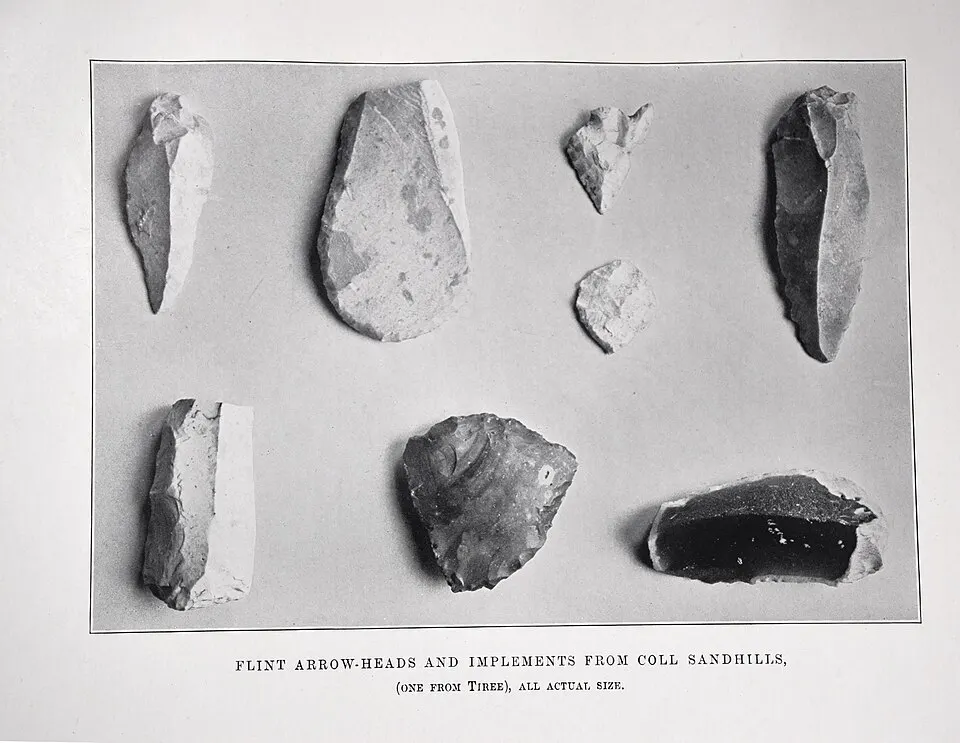
The evidence, which includes thousands of stone artifacts, points toward a population that understood the properties of local flora and fauna to potentially derive toxins. By combining knapped stone—fashioned by skilled flintknappers—with these chemical agents, these early hunters were able to overcome the physical limitations of their tools, enabling them to bring down large game that would have otherwise remained out of reach.

Rewriting the Timeline of Innovation
This study changes our understanding of human prehistory by shifting the timeline for the development of complex weaponry. Previously, the use of such advanced hunting methods was considered to be a much more recent development. These findings demonstrate that, even during the Paleolithic, human innovation was not stagnant; it was vibrant, adaptive, and highly reliant on a deep understanding of toxicology and structural design.
- Technological Sophistication: The use of adhesives highlights a mastery of composite tool construction.
- Environmental Adaptation: The lush, ancient lakeshore environment provided the necessary resources to sustain these complex hunting practices.
- Chemical Mastery: The potential use of poison suggests an early, expert-level grasp of natural toxins and their utility in survival.
Peering into the Future of Archaeology
As researchers continue to analyze the artifacts recovered from this ancient Saudi Arabian landscape, the focus shifts toward understanding the full scope of these early human societies. The discovery serves as a reminder that the desert once held a bustling, green ecosystem, and that the people who called it home were far more than simple gatherers. They were pioneers of technology who, 125,000 years ago, were already refining the tools that would eventually define the human experience. Future excavations and chemical analyses at this site promise to further elucidate the methods these hunters used to thrive in a world that was as challenging as it was resource-rich.

Sources: This report draws on coverage by Live Science, Phys.org, Discover Magazine, The Conversation, Bioengineer.org, Gizmodo. The wording is our own.