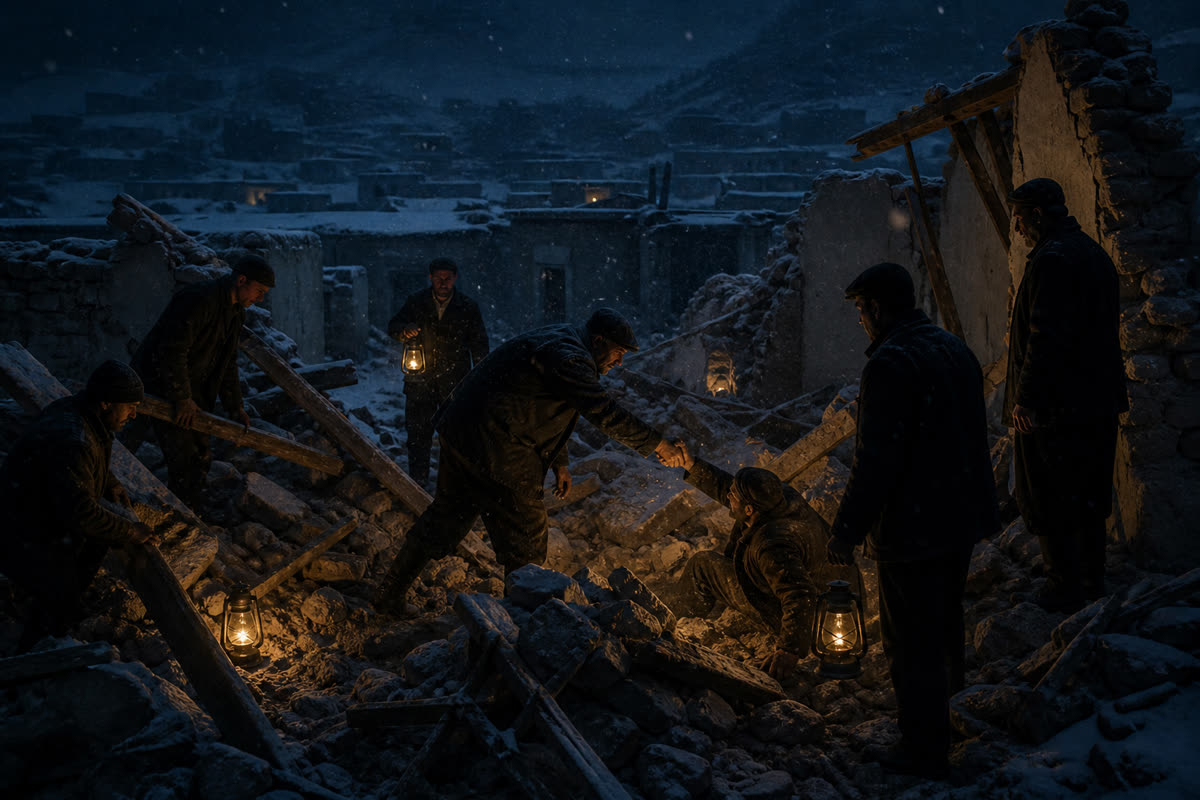
In August 1866, the entire 80-man army of Liechtenstein returned home from the Austro-Prussian War without suffering any casualties, firing a single shot, or losing a man—and allegedly bringing back an extra person.
During the summer of 1866, Vaduz was a quiet alpine town tucked into the Rhine Valley, home to fewer than seven thousand residents. In the central square, 80 soldiers lined up in pressed uniforms with rifles slung over their shoulders as family members gathered to wave goodbye. The men were deploying to the Austro-Prussian War, a monumental conflict poised to reshape the geopolitical landscape of Central Europe. This single company constituted the entire armed forces of the Principality of Liechtenstein.
Weeks later, the same square hosted a welcoming ceremony for the returning contingent. Brass instruments played and crowd members cheered as the final accounting revealed no fatalities, no injuries, and zero ammunition spent. However, as the roll call began, a curious detail transformed a routine military return into an enduring piece of European folklore: eighty men had marched out, but eighty-one returned.
Why did Liechtenstein send troops to war in 1866?
Liechtenstein deployed its troops in 1866 to fulfill its legal obligations to the German Confederation during the Austro-Prussian War. Prussia and Austria had entered into conflict over hegemony within the German states. Known as the Seven Weeks' War, the campaign was brief but decisive. Prussia crushed the Austrian army at the Battle of Königgrätz, resulting in the dissolution of the German Confederation and paving the way for German unification under Berlin.1
As a member of the German Confederation, Liechtenstein was legally bound to provide a military contingent when war broke out. Prince Johann II resided in Vienna, and the ruling dynasty maintained deep ties to Austria. However, the mobilization encountered domestic resistance. Liechtenstein's newly established parliament opposed entering a conflict without public consultation, and popular sentiment disdained the war. Prince Johann II traveled to the country to explain the rationale, offered to cover part of the financial costs out of his personal wealth, and promised a state loan. He also instituted a crucial condition: his soldiers would not be deployed to fight against fellow Germans.1
The total force of 80 soldiers was determined by a strict administrative quota based on the principality's population size under Confederation rules. Paper records and physical reality matched: the country held no artillery, cavalry, or naval units. Aside from a few guards left behind to watch Vaduz Castle, the entire military apparatus of Liechtenstein could fit inside a single event hall.
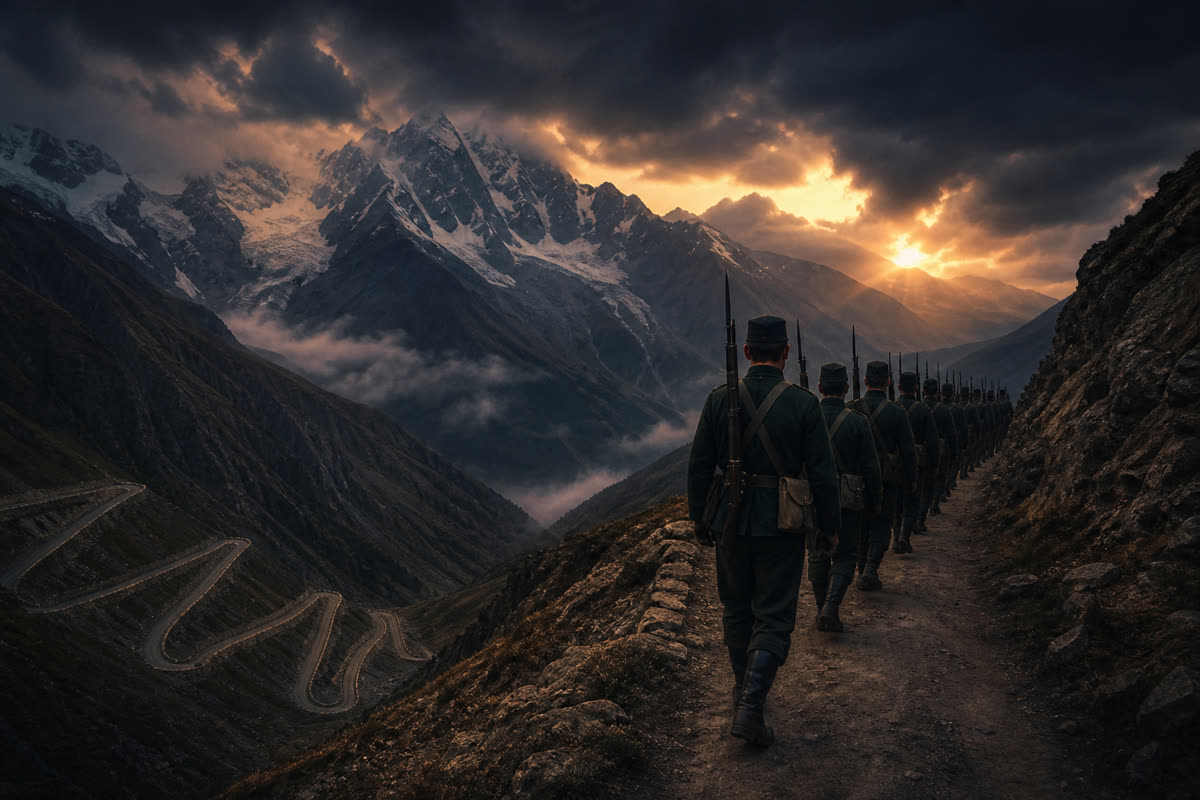
To avoid fighting other German troops, the deployment plan sent the company south toward the Italian border rather than north to the Prussian front. The mission tasked the unit with holding the Stilfser Joch pass—known today as the Stelvio Pass in the Alps—to prevent Italian forces allied with Prussia and volunteers led by Giuseppe Garibaldi from entering Tyrol.
What happened to the Liechtenstein contingent on the front line?
The Liechtenstein contingent encountered no enemy forces during its deployment at the Stelvio Pass under the command of Captain Peter Rheinberger. The unit departed on July 26, 1866, weeks after the decisive Battle of Königgrätz on July 3 had already determined the outcome of the war.1 By the time the unit reached the mountain pass, the active hostilities were effectively over.
Instead of facing Italian assaults or Garibaldi's troops, the soldiers encountered alpine glaciers, clear mountain air, and quiet guard duty. Historical accounts indicate that the men spent their days enjoying scenic views, food, wine, and tobacco pipes. Following the signing of the Peace of Prague on August 23, the unit marched back to Vaduz on September 4, 1866, without incurring a single casualty.1
While the administrative records and deployment dates are documented in official archives, the mystery surrounding the extra soldier emerged immediately after their return.
Who was the eighty-first man in the Liechtenstein army?
The identity of the eighty-first man in the Liechtenstein army remains unverified, though several competing theories exist. The most frequent account suggests an Austrian liaison officer attached to the unit accompanied the soldiers back through Austrian territory to Vaduz. Some popular historical compilations refer to this figure as Lieutenant Radinger.2 Under this explanation, the officer simply completed his duties and subsequently returned home to Vienna.
Alternative accounts present different origins for the extra arrival. One narrative claims the eighty-first person was an Italian peasant who befriended the soldiers during their post at the pass and traveled to Liechtenstein to start a new life. Another version alleges the individual was a army deserter seeking sanctuary in a small, peaceful principality.2
Primary historical documents do not verify any of these accounts. The official historical encyclopedia of Liechtenstein documents the campaign dates, the parliamentary crisis, and the casualty-free return of the company, but makes no reference to an additional person.1 The narrative of eighty men departing and eighty-one returning persists as an unproven legend within European military history.
Zero dead, zero wounded, and one extra person: the ultimate anomaly in military accounting. Historical summary of the 1866 deployment
Why did Liechtenstein abolish its army?
Liechtenstein abolished its army on February 12, 1868, because the dissolution of the German Confederation removed its military obligations, making an armed force financially burdensome and politically unnecessary. Following the war, the principality formally declared permanent neutrality and disbanded its 80-man military apparatus.3 Liechtenstein has maintained no standing army for over 150 years.
In 1893, former soldiers established a veterans' association that eventually reached a peak membership of 141 individuals. The final surviving soldier of the 1866 campaign, Andreas Kieber, died in 1939 at the age of 94.3 By the time Kieber passed away shortly before the outbreak of World War II, Liechtenstein had existed without a military for 71 years. The country maintained its strict neutrality throughout World War II without firing a weapon.
Can a sovereign nation survive without an army?
Sovereign nations can operate successfully without a standing army by relying on international diplomacy, regional defense pacts, or police forces, as demonstrated by over twenty countries worldwide. While many of these nations are small island states in the Pacific and Caribbean, larger countries have adopted similar structures. Costa Rica abolished its military under President José Figueres Ferrer in 1948 following a brief civil war, enshrining the decision in Article 12 of its 1949 Constitution.4 The former military headquarters was converted into the National Museum of Costa Rica, and the nation redirected defense spending toward education and health care.
Panama followed a similar path in 1990 by disbanding its armed forces. In Europe, microstates such as Andorra, San Marino, Monaco, and Vatican City operate without conventional militaries or maintain only small symbolic guard units. Security arrangements vary: some states hold bilateral defense agreements with larger neighbors, while others rely entirely on geographical positioning.
Liechtenstein relies on a small national police force for internal security. Its geographic positioning between Switzerland—which has maintained strict neutrality for centuries—and Austria provides external stability. By reallocating funds away from military spending toward financial services and precision manufacturing, Liechtenstein developed into one of the wealthiest nations per capita globally.
What happened during the 2007 Swiss military incident in Liechtenstein?
During a training exercise on March 1, 2007, an infantry unit of 171 Swiss soldiers accidentally marched over two kilometers into Liechtenstein territory due to bad weather and poor visibility. Because the border lacked visible markers, the troops failed to realize they had crossed into another country until their commander discovered the error and ordered a retreat.5
Liechtenstein authorities were unaware of the accidental crossing until Swiss officials contacted them to issue an apology. An internal affairs spokesperson later downplayed the incident, noting that the soldiers had not arrived in attack helicopters and carried unloaded rifles. Both governments treated the event as a minor navigational error. A similar incident occurred in 1985, when Swiss rockets fired during a exercise went off course and inadvertently started a forest fire in Liechtenstein, prompting Bern to pay compensation for the damage.5
The story of the 1866 campaign continues to circulate because it represents a rare departure from typical military history. While tens of thousands of soldiers died at Königgrätz in a single day, Liechtenstein's small force completed its deployment without loss of life, eventually stepping away from military operations entirely.
Notes and Sources
- Historisches Lexikon des Fürstentums Liechtenstein (Historical Dictionary of the Principality of Liechtenstein), entry "Preussisch-Österreichischer Krieg": mobilizaton details, parliamentary debate, departure on July 26, 1866, Stelvio Pass duty, and return on September 4, 1866. ↩
- Accounts of the 81st soldier (Austrian liaison officer, Italian peasant, deserter) as compiled in historical surveys, e.g., The Times of India (2026), "The army that went to war with 80 men and returned with 81". Unverified by primary archival sources. ↩
- Disbandment of the Liechtenstein army on February 12, 1868, formation of the 1893 veterans' association, and the death of last soldier Andreas Kieber in 1939: Historisches Lexikon des Fürstentums Liechtenstein, entry "Militär". ↩
- Constitution of Costa Rica, Article 12 (1949); abolition of the army by José Figueres Ferrer on December 1, 1948. ↩
- BBC News (2007), "Swiss in Liechtenstein 'invasion'" and Associated Press (2007): accidental border crossing of 171 Swiss soldiers on March 1, 2007; 1985 rocket incident and compensation. ↩