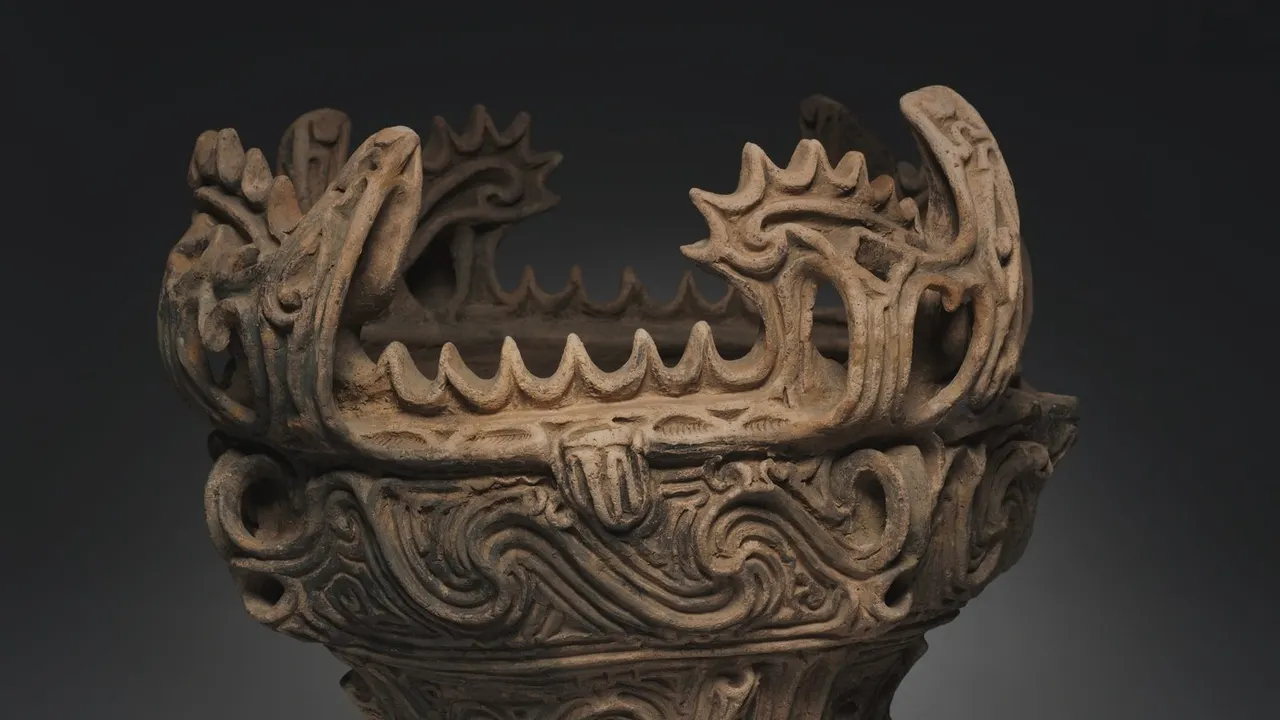
Around 4,500 years ago along the terraces of the Shinano River in Niigata, ancient potters coiled wet clay to construct deep vessels crowned with wild, curling rims that resemble leaping flames. Known in Japanese as kaen doki, or flame-style earthenware, these distinctive vessels feature four prominent crests that sweep forward, pierced with holes and layered with delicate clay ridges. Archaeologists continue to investigate whether these intricate objects served as practical kitchenware for daily meals or as ceremonial vessels for sacred rituals.
The question remains a central point of study in Japanese archaeology. Examples of the flame style have been excavated across hundreds of settlements in the Shinano basin, with several designated as Important Cultural Properties or included in national treasure collections. While the dramatic form is instantly recognizable, the precise intent behind its creation remains a subject of ongoing research.
Why were flame-style vessels made in the Shinano basin?
Flame-style vessels were produced in high concentration across the Shinano River basin during the Middle Jōmon period because the region supported dense hunter-gatherer settlements with rich forest and aquatic resources. The Jōmon period spans over ten thousand years of gatherer-hunter history on the Japanese archipelago, taking its name from the cord markings impressed onto clay surfaces (jōmon translates to cord pattern). Between roughly 5,500 and 4,500 years ago, potters in modern-day Niigata began shaping vessels with dramatically exaggerated rims featuring four large projections that evoke cockscombs, rising fire, or swirling water. This artistic surge coincided with expanding villages, increased production of jade beads, and a proliferation of clay figurines.1
The unique environment of Niigata's snow country helped shape this cultural landscape. According to Japan Heritage historical narratives, heavy snowfall in the region increased approximately 8,000 years ago as the Tsushima Current entered the Sea of Japan, creating the environmental conditions under which Middle Jōmon culture flourished. Communities typically established horseshoe-shaped villages on elevated river terraces near natural springs, surrounding open central plazas with pit dwellings, burial pits, and deep storage pits for nuts. The ceramic vessels produced in these settlements were fundamentally deep pots, yet their rims were sculpted so elaborately that they would have made routine culinary tasks difficult. This tension between utility and artistic extravagance sits at the heart of the debate.2
How were the first flame-style pots discovered at Umataka?
The flame-style typology was formally established following a key excavation in 1936 at the Umataka site in Nagaoka, where local researcher Kondō Atsusaburō unearthed fragments of a deeply carved rim alongside a large stone rod and a prominent clay figurine later nicknamed Miss Umataka. Archaeologist Nakamura Kōzaburō subsequently categorized the restored vessel as "Flame Type, Class A, No. 1," establishing the baseline classification for similar ceramics found throughout the region. The Umataka-Sanjūinaba site complex received national historic site protection in 1979, and its excavated ceramics and stone tools are preserved as Important Cultural Properties.3
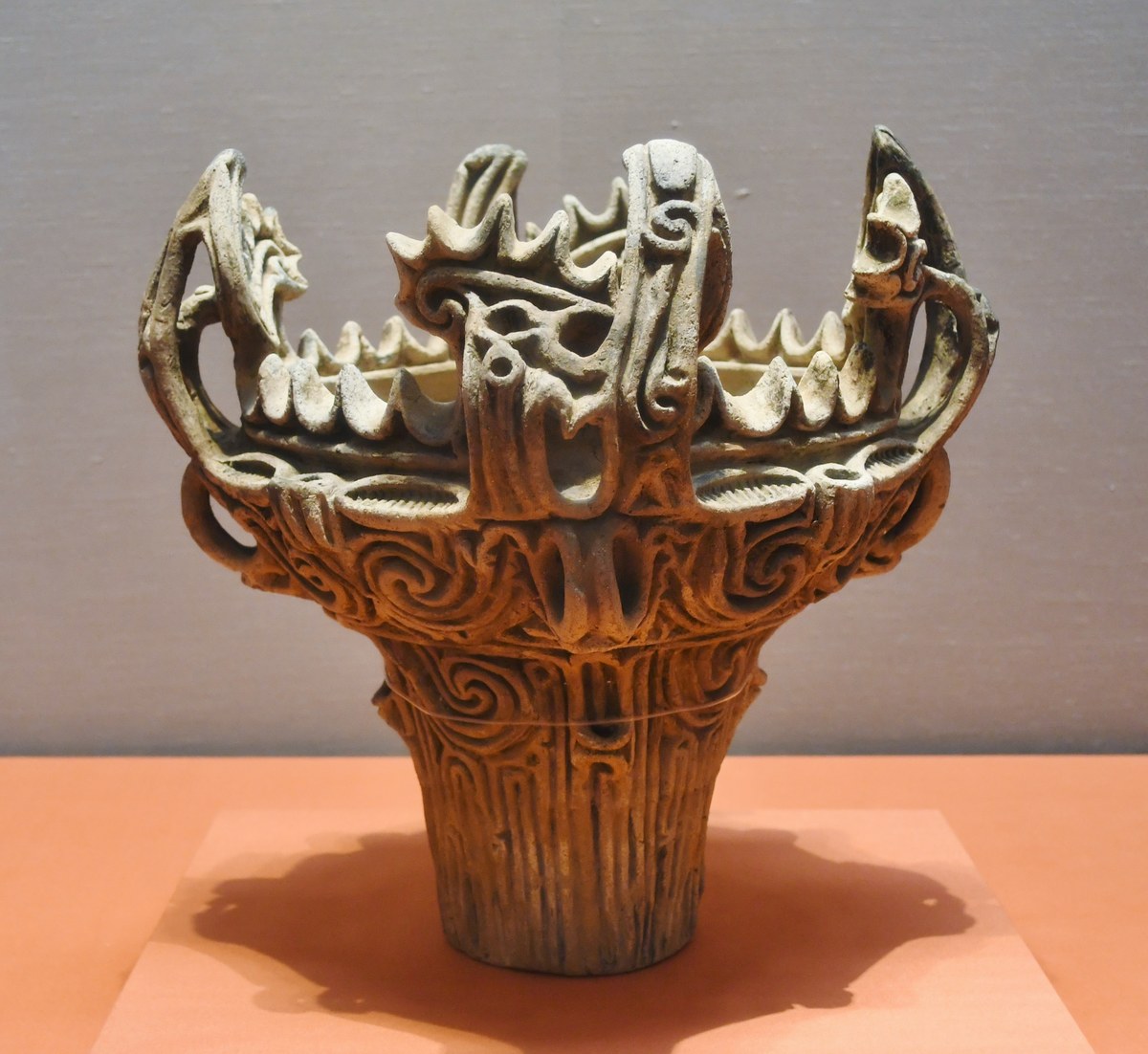
Subsequent excavations across neighboring locations, such as the Sasayama site in Tokamachi, confirmed that flame-style pottery was not an isolated artistic anomaly but a shared design language across the Shinano watershed. A notable example preserved in the Metropolitan Museum of Art displays a flat-bottomed, slightly expanding cylindrical body topped by four abstract sculpted rim clusters. Built from coiled clay, pierced, and marked with rolled cords, the vessel's structure is delicate; modern X-ray imaging reveals both original cord impressions and structural restoration work.4
Were flame-style vessels used for cooking or rituals?
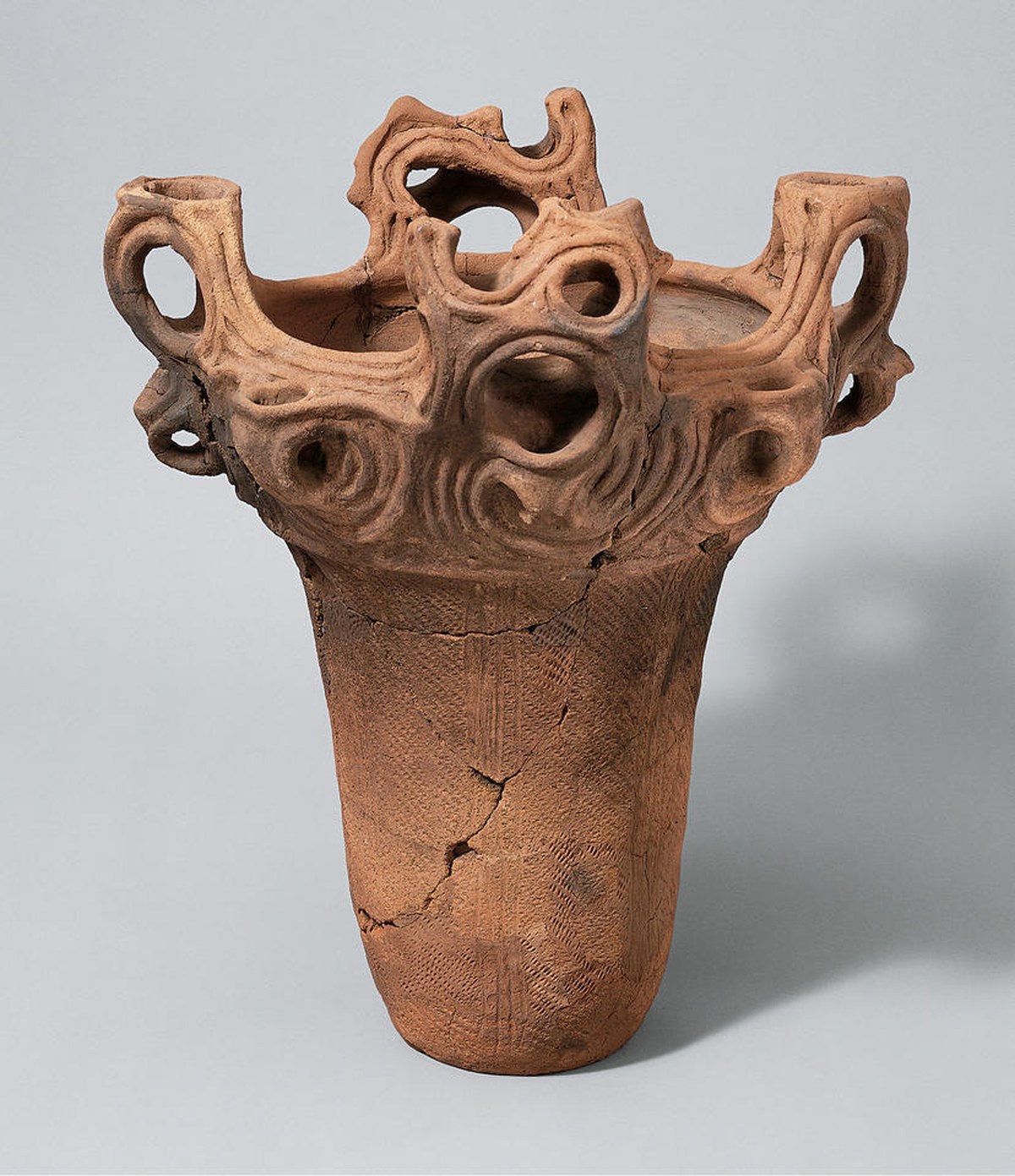
Flame-style vessels were likely used for both practical cooking and community rituals, as chemical residues and soot marks indicate functional heating despite their ornate, non-utilitarian crests. Early archaeological theories suggested that the dramatic four-pronged rims would have hindered daily kitchen work, making them purely ceremonial. However, residue analysis and visible soot patterns on numerous specimens point toward heat exposure. Documentation from the Tokyo National Museum regarding Umataka-type vessels notes evidence consistent with cooking nuts, plant foods, or meat, while a tall flame vessel dating to roughly 2750 BCE at the Cleveland Museum of Art demonstrates the global presence of these functional yet sculpted forms.5
Archaeologists emphasize that practical utility and ritual significance were not mutually exclusive in Jōmon society. A vessel could boil food over a central hearth while simultaneously serving as a symbolic center for communal gatherings. Charred residues found on certain flame pots are thought to include remnants of salmon, a fish species that continues to migrate up the Shinano River system today. While definitive conclusions about their primary purpose remain open, physical evidence confirms a widespread network of hearth-centered settlements producing these distinct, cord-marked earthenware containers.
How did modern artists redefine Jōmon flame pottery?
Modern appreciation for Jōmon flame pottery transformed in the mid-twentieth century when avant-garde artist Okamoto Tarō encountered the vessels and championed their raw, expressive energy as a foundational element of Japanese aesthetic history. Okamoto argued that the dynamic intensity of Middle Jōmon ceramics represented a powerful artistic lineage distinct from later, more restrained classical traditions. In 2016, Japan's Agency for Cultural Affairs officially designated the story of the flame vessels and the culture of the Shinano snow country as a national Japan Heritage narrative. Today, the Umataka Jōmon Museum in Nagaoka displays key artifacts at their original excavation site, preserving the legacy of these 4,500-year-old ceramic masterpieces.2
Notes and Sources
- Nagaoka City Umataka Jōmon Museum, "English Guide" and Umataka-Sanjūinaba site documentation: Middle Jōmon (~5,500–4,500 BP) settlement structures and flame vessel typology. Museum Guide ↩
- Japan Heritage, "About Flame Pots": Shinano River basin environment, snow country context, and 2016 heritage designation. kaen-heritage.com ↩
- Umataka-Sanjūinaba Site (National Historic Site, 1979); Kondō Atsusaburō 1936 excavation findings and Important Cultural Property designations. ↩
- The Metropolitan Museum of Art, "Flame-Style" Deep Pot (Kaen doki), Middle Jōmon period (3500–2500 BCE), accession no. 2015.300.258. The Met Collection ↩
- Tokyo National Museum / Cultural Properties Online: Deep Bowl with Flame-like Ornamentation (Umataka attribution); Cleveland Museum of Art, Fire-flame Cooking Vessel, accession no. 1984.68 (~2750 BCE). ↩