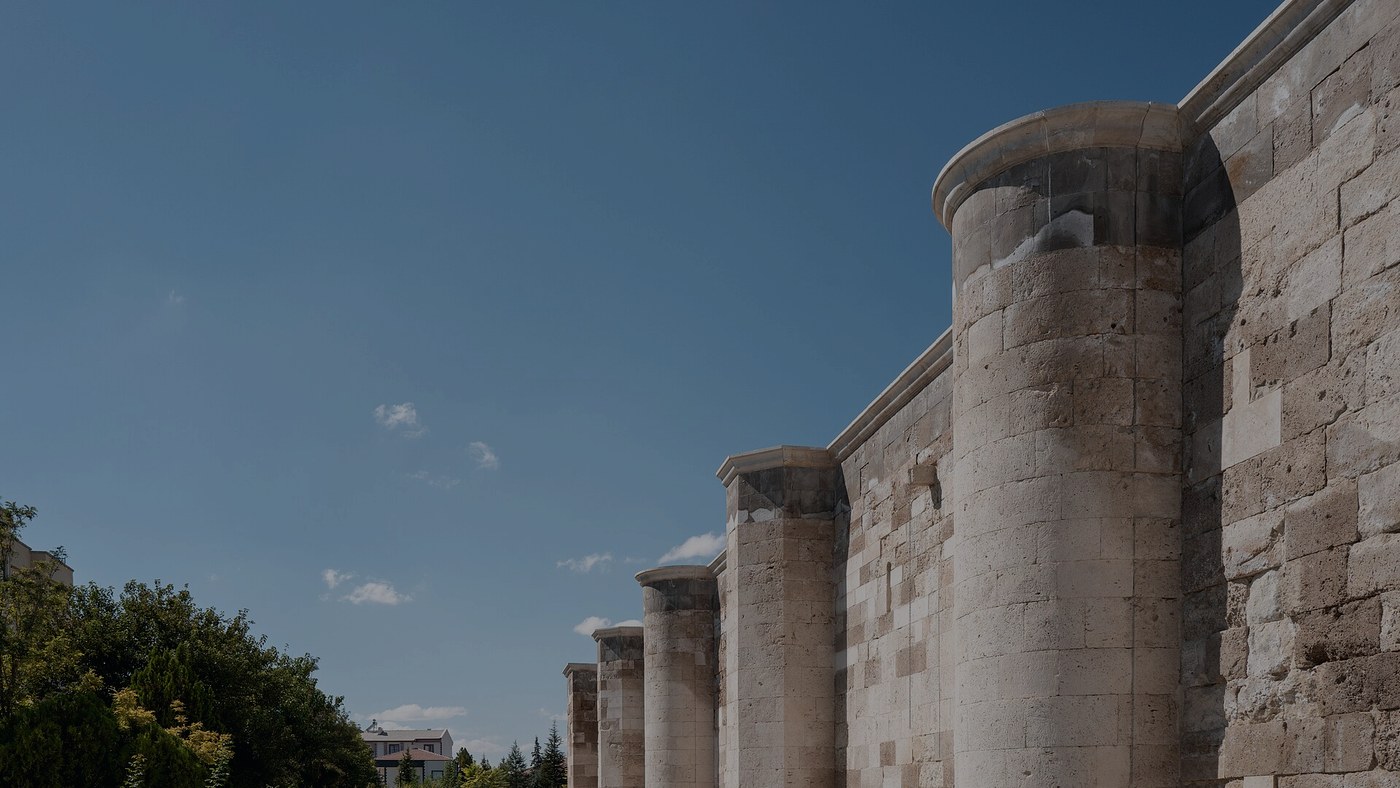
The curtain rises. A stone courtyard, a smoky hearth, and a handful of tables. Kartal Tibet steps through the door, accompanied by his wolf. The dialogue is sparse, the stares are lingering. Soon, a brawl breaks out or a secret is whispered. Though a grand battle may be on the horizon, it is often these quiet, claustrophobic moments in a wayside tavern that audiences remember most vividly.1
Between 1969 and 1973, Sezgin Burak’s comic strip, which debuted in the newspaper Hürriyet, transitioned to the screen. Kartal Tibet portrayed Tarkan in five feature films. While the series embraced an epic language featuring Vikings, sorcerers, Chinese palaces, and octopus puppets, the enduring legacy of these films lies not in the sword fights, but in the cramped, intimate spaces where characters briefly intersect.
- The transition of Tarkan from comic page to cinema and the casting of Kartal Tibet.
- The narrative function of the tavern scene in fantastic adventure storytelling.
- How the lack of studio infrastructure led to the creative use of authentic stone architecture.
- The impact of borrowing scores from Shostakovich to John Barry on the film's atmosphere.
How did the Tarkan comic strip transition to the Yeşilçam film industry?
Sezgin Burak began publishing Tarkan in daily Hürriyet installments on April 14, 1967. The character’s name was deliberate, as tarkan (or tarhan) was a prestigious title in the ancient Turkic-Mongol world. The narrative centered on a Hun warrior raised by a wolf who served Attila. As the readership grew, producers sought to adapt the character for the screen.1
The first official film was produced by Ertem Eğilmez in 1969 and directed by Tunç Başaran. A magazine competition was held to cast the lead, resulting in the selection of Ünal Şahin. However, producers feared the risk of an unknown face and replaced him with Kartal Tibet, who was already established for his role in the Karaoğlan film series. Mehmet Aslan directed the subsequent four films: Silver Saddle (1970), Viking Blood (1971), Golden Medallion (1972), and Powerful Hero (1973). Throughout all five films, Tibet maintained a consistent gait and a signature low-toned delivery.2
Why are the tavern scenes in Tarkan films considered so memorable?
Fantastic adventure cinema typically favors a grand scale: castles, armies, seas, and palaces. The tavern, conversely, speaks the language of the individual. It is the place where the hero rests, gathers information, falls into traps, and selects companions. In these period-fantasy films, the tavern serves as the heart of the journey, acting as a crossroads where any character can enter and any alliance can sour.
The power of this setting in the Tarkan series stems from contrast. On one side are the grand, borrowed elements: the score from Shostakovich’s 5th Symphony, Viking ships, and ornate costumes. On the other are stone pillars, wooden tables, and ambient smoke. The audience forgets the epic promises of the plot because the tavern restores a human scale. While the wolf waits by the table, Tibet’s gaze shifts from world-conquering ambitions to the immediate question of who stands in the room.3
The thematic diversity of the series converges in the tavern. Silver Saddle follows a path from the steppe to the castle, while Viking Blood centers on maritime conflict. Later entries like Golden Medallion and Powerful Hero diverge into Vandal and Chinese settings. Despite changing backdrops, the feeling of a road-side stop remains constant—a sense that the characters are resting before the next adventure begins.
How did the lack of studio infrastructure shape the aesthetics of these films?
The Yeşilçam era could not maintain a Hollywood-style studio system. Between 1960 and 1975, productions frequently relied on authentic locations such as historical mansions, waterfronts, and ancient inns. When studio systems are weak, natural settings provide both cost-effectiveness and a sense of physical reality. The repetition of the same furniture or street corners across multiple films did not disturb audiences; rather, the familiarity of the location helped ground the story more quickly.4
While Tarkan sets were prepared in studios like Acar, Ören, and Bükey, the stone textures captured on film left viewers with an authentic sense of being in an ancient inn. Today, historical films still utilize Seljuk-era caravanserais as sets. This choice was not new; it was the standard Yeşilçam approach to borrowing reality rather than building it from scratch. The tavern courtyard offers natural depth: a table in the foreground, a portico in the back, and sunlight filtering through arches.5
How did borrowed music enhance the atmosphere of the tavern?
The auditory world of the series was equally "borrowed." The first two films featured a score derived from the Moderato movement of Dmitri Shostakovich’s 5th Symphony. Viking Blood utilized music by John Barry, while Powerful Hero incorporated Dušan Radić’s compositions from the film Genghis Khan. Although copyright standards were loose, the effect was unmistakable: brief tavern dialogues were suddenly elevated by the weight of global cinematic scores.3
These scenes remain in the collective memory because they emphasize the intimacy of production. While large-scale battle scenes were often constrained by budget—relying on models, stuntmen, and rapid editing—tavern scenes were inexpensive and intense, focusing on faces, gazes, and the immediate environment. The productivity of the era is best exemplified here. In a system outputting hundreds of films a year, directors concentrated their resources where they were most effective. Tarkan’s quiet moments in the tavern are the most honest representation of that economy.
Sezgin Burak’s comic strip was adapted into five films between 1969 and 1973, with the initial scores drawing heavily from Shostakovich’s 5th Symphony. Summary of this article
Today, revisiting these films, one might smile at the Viking ships or the naive special effects. Yet, those few minutes in the tavern remain potent: the stone, the smoke, the way Tibet walks, and the shadow of the wolf. The series solidified a ritual for the audience: the door opens, glances lock, and the music swells.
Notes and Sources
- Wikipedia, "Tarkan (film series)" and "Tarkan (comic)": Details on Sezgin Burak’s 1967 series, the five Kartal Tibet films (1969-1973), and the historical etymology of the title. ↩
- Anadolu Agency (2025), "A name that left a mark on Turkish cinema: Kartal Tibet": On the transition to the Tarkan role after the success of the Karaoğlan films. ↩
- Wikipedia, Tarkan films "Music" section: Documentation of the use of Shostakovich’s 5th Symphony, John Barry, and Dušan Radić in the series soundtracks. ↩
- Atayeter (2024), "The Effect of Narrative Structure on Space Use in Yeşilçam Cinema": An academic analysis of how the lack of studios necessitated the use of natural locations. ↩
- News reports on the use of Zazadin and Sultanhanı caravanserais as historical film sets. ↩