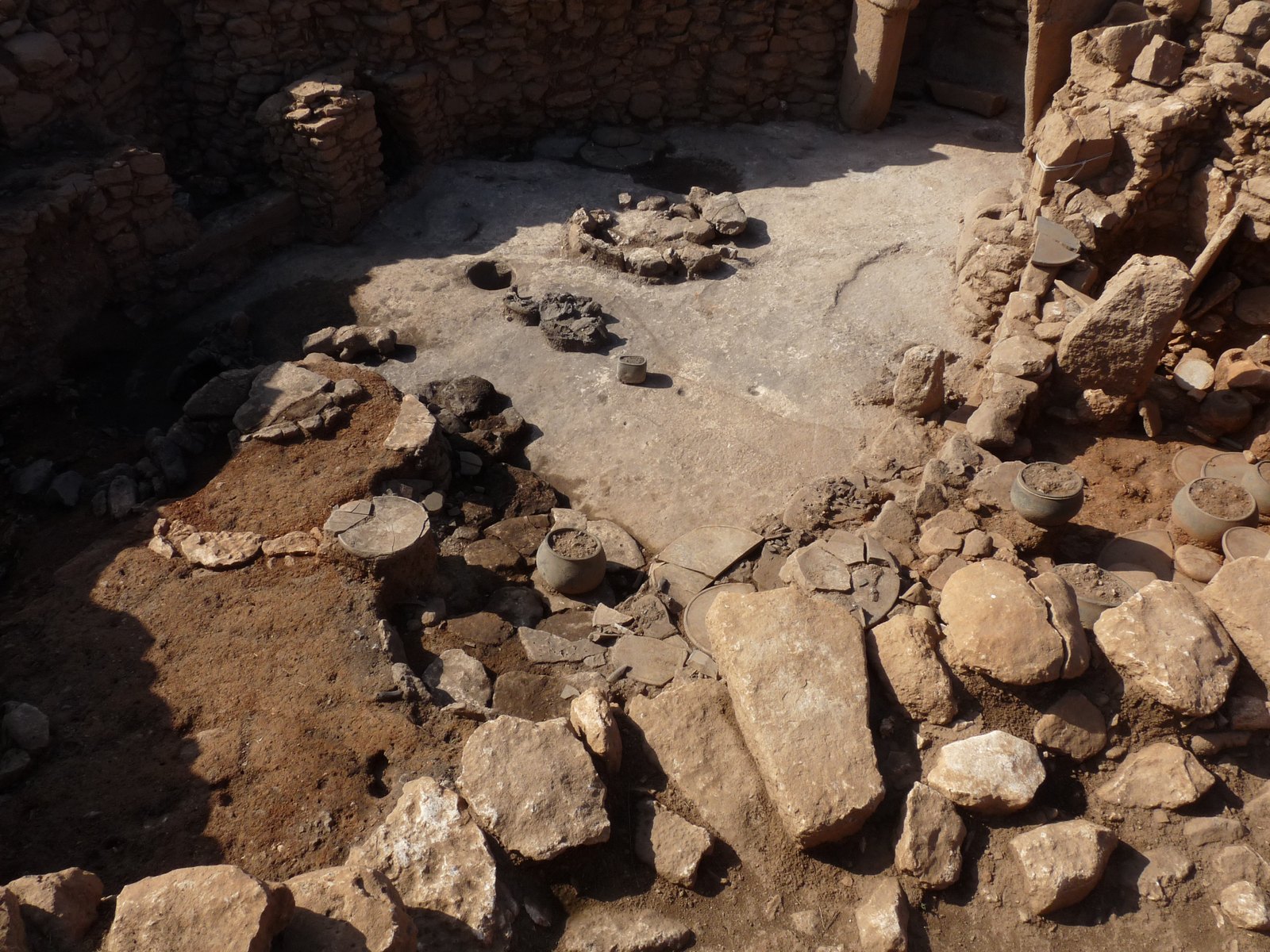
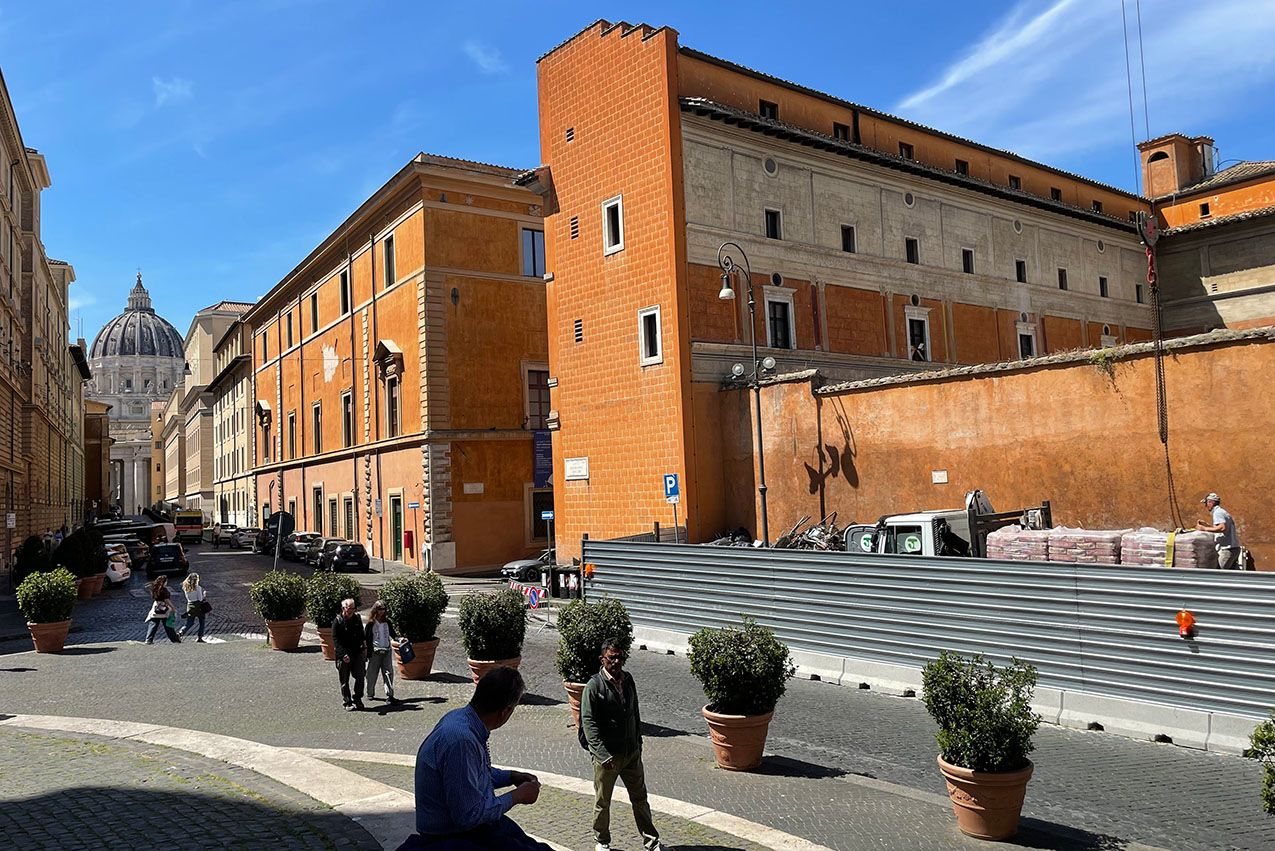
Excavations at the walled garden of Palazzo della Rovere, situated near the Via della Conciliazione leading to St. Peter's Basilica, began in 2020. The site garnered global attention in July 2023 when archaeologists discovered the remains of Emperor Nero's theater.1 Among the higher, more recent soil layers, the team uncovered 20 silver coins minted in England.
These coins circulated in papal Rome more than eight centuries after Nero's era. All were minted during the 10th century and are now considered the first material proof of an English quarter known previously only through written records.
- The three kings whose names appear on silver pennies that remained buried for a millennium.
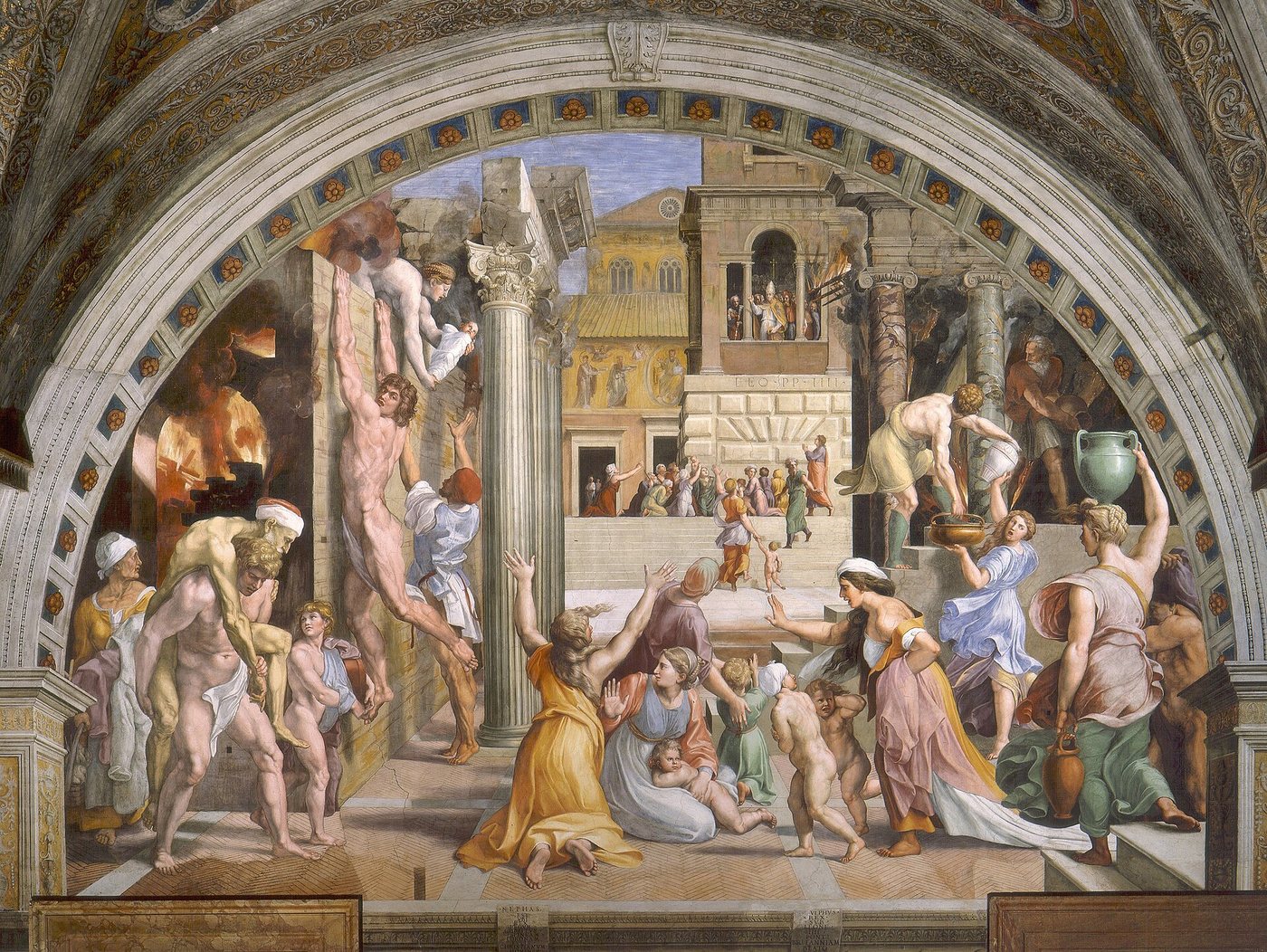
- The identity of the neighborhood seen burning in one of Raphael's Vatican frescoes.
- Why foreign travelers in Rome were traditionally forced to exchange currency and how the English appeared to be exempt.
- How a single half-penny reveals the commercial nature of a pilgrim's stay.
Which three kings are represented on the twenty silver pennies found in Rome?
The 20 Anglo-Saxon coins recovered consist of 19 silver pennies and one half-penny. They were minted over a period of approximately 40 years under Edward the Elder (899-924), son of Alfred the Great, and his descendants Æthelstan (924-939) and Eadred (946-955). Fourteen of these coins were found in waste pits in two clusters of six to eight, having fused together after a thousand years underground. The remaining six were scattered throughout the area. Along with these pieces, the excavation yielded 10 coins dating to the Roman era and 10th-century Italy, as well as remnants of leather, bone, and metalworking.1
Historian Rory Naismith of the University of Cambridge and Francesca Tinti of the University of the Basque Country examined the coins, determining that they were minted in East Anglia, Kent, London, and the West Midlands. Their findings appear in a book chapter co-authored with excavation team members Marzia Di Mento, Valentina Pica, and Filippo Salamone, published in 2026.2 Naismith points to a striking realization: the number of Anglo-Saxon coins found from this period in Rome now exceeds the number of papal coins discovered. He argues that this indicates a massive flow of currency from England into the city.1
What was the role of the English neighborhood located on the banks of the Tiber?
Medieval sources have noted the presence of an Anglo-Saxon quarter in this region since the second half of the 8th century, known by its Latin name, Schola Saxonum. The neighborhood housed a church dedicated to the Virgin Mary. According to the Anglo-Saxon Chronicle, Burgred, the King of Mercia who was ousted from his throne by Vikings in 874, traveled to Rome, where he died and was interred in the English quarter's church of St. Mary.3
The quarter suffered two major fires during the 9th century. The Liber Pontificalis, a record of the lives of the popes, recounts that the fire of 847 originated in the Saxon quarter and spread to the porticoes of St. Peter's. The text states that Pope Leo IV stopped the flames by making the sign of the cross.4
Traces of this history persist in local place names today. The riverside road between the Tiber and the Vatican, Lungotevere in Sassia, derives its name from the Schola Saxonum. The Hospital of Santo Spirito in Sassia continues the tradition of care once provided by the quarter to Anglo-Saxon visitors.1 Until this recent excavation, however, evidence was limited to written accounts and place names. Tinti notes that this discovery is something scholars have awaited for the better part of their careers.
How did pilgrims use their currency in 10th-century Rome?
Roman documents from this period generally mention only papal coinage. Other texts describe how foreigners had to prepare travel funds before departure; a 9th-century letter from a Frankish abbot details the difficulties of exchanging money before a journey to Rome. Consequently, researchers long assumed that the papacy prohibited foreign currency in the city.1
These new coins challenge that assumption. They were not found as a buried hoard, but were scattered across the site individually or in small groups. The team interprets this distribution as a trail of money dropped during daily transactions. There is no evidence of silver smelting, meaning the coins were not being collected for conversion into local currency. The half-penny is particularly significant, as such small denominations are typically associated with busy trading hubs. One papal coin was also found, suggesting that two currency systems likely operated side-by-side.1
Naismith observes that almost no other foreign coins from this period have been found in Rome. Very few have emerged from the Frankish world or northern Italy. While the Franks, Lombards, and Frisians also maintained their own institutions near St. Peter's, the English community appears to have been the most prominent and enjoyed unique privileges.1
What were the origins of the privileges granted to the English in Rome?
The connection between England and Rome began in the late 6th century with Pope Gregory I's mission to the Anglo-Saxons. By the end of the 8th century, King Offa of Mercia committed to paying 365 gold coins annually to the papacy to maintain candles in Roman churches.1 According to Asser, the biographer of Alfred the Great, Pope Marinus exempted the Saxon colony in Rome from all taxes and dues at Alfred's request, a detail mentioned in the section covering the Pope's death in 883.5
Naismith and Tinti specify that there is no proof this exemption extended to currency, but it is certain that the coins of Alfred's son Edward were in use in Rome a few decades later. For the kings, this carried prestige. The fact that their own currency circulated near the tomb of St. Peter demonstrated to their subjects back home that they held the power to open the pilgrimage route.1
The excavation reveals that the neighborhood was more than a stopover for rest and prayer. The area containing evidence of craftsmanship spans at least 3,000 square meters, and the full extent of the district remains unknown. Naismith suggests it likely supported a permanent population of hundreds. Visitors arrived to visit the Pope and tour the churches, but they needed to produce and sell goods to sustain themselves. Naismith believes it is highly probable that artisans arriving from Winchester, London, or York opened shops along the banks of the Tiber.1
The bond endured beyond the 10th century. Peter's Pence—a voluntary tax where every English household provided at least one penny for Rome—became established during this period. King Cnut also visited Rome in 1027 to negotiate new financial concessions with the Pope for English pilgrims.1
Notes and Sources
- University of Cambridge, "When in Rome: Anglo-Saxon expats got special treatment in Rome's 'Little England', coin discovery reveals", Tom Almeroth-Williams, 2026.
- M. Di Mento, R. Naismith, V. Pica, F. Salamone, and F. Tinti, "Ricerche nell'area della schola Saxonum", Rome and the Others (300-1000), 2026, pp. 489-505.
- Anglo-Saxon Chronicle, entry for the year 874.
- Liber Pontificalis, Life of Leo IV (847 fire); English translation: Raymond Davis, The Lives of the Ninth-Century Popes, 1995.
- Asser, Life of King Alfred, chapter 71; English translation: Albert S. Cook, 1906.