The Architect at a Crossroads
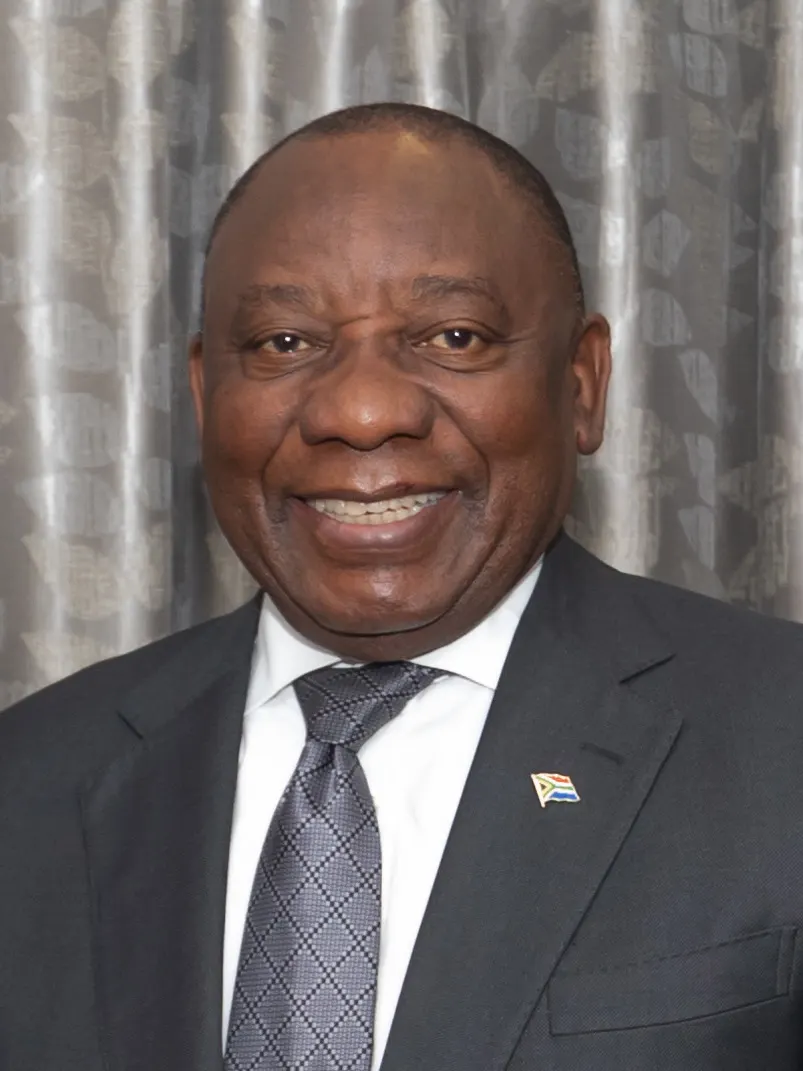
For three decades, the African National Congress (ANC) has been more than a political party in South Africa; it has been the synonymous heartbeat of the democratic state. Yet, the current moment represents a tectonic shift. As the results of recent elections reveal the ANC’s worst performance since the end of apartheid, President Cyril Ramaphosa finds himself in the eye of a gathering storm. Having navigated the country through the legacies of his predecessor, Jacob Zuma, and the grueling challenges of a global pandemic, Ramaphosa is now forced to confront the reality that the liberation movement he once helped steer into power is losing its grip on the electorate's imagination.
From Union Hall to the Union Buildings
To understand the weight of the present, one must look at the arc of Ramaphosa’s life. Born in 1952, he emerged from the crucible of the anti-apartheid struggle as a formidable force. His leadership of the National Union of Mineworkers in the 1980s established him as a master negotiator—a trait that would later make him indispensable to Nelson Mandela. As the ANC’s chief negotiator during the transition from minority rule to democracy, Ramaphosa was the primary drafter of a constitution celebrated globally for its progressive protections.
However, his journey has been anything but linear. In 1996, feeling sidelined, he pivoted to the private sector. He became a titan of South African industry, founding the Shanduka Group and taking high-profile board roles at companies like MTN and Lonmin. For years, he was viewed not as a politician, but as a mogul. His return to the political fold in 2012 signaled a desire to mend a party increasingly fragmented by corruption scandals and factionalism. By the time he ascended to the presidency in 2018, he was framed as the “fixer,” a reformer tasked with cleaning up a government stained by the era of State Capture.
The Weight of the 'Bread and Butter' Issues
Ramaphosa’s tenure has been defined by a constant battle between his reformist instincts and the entrenched machinery of his party. His supporters often point to his steady hand in institutional recovery, arguing that without his intervention, the state’s collapse would have been far more profound. They highlight his commitment to international diplomacy and his efforts to attract foreign investment as hallmarks of a leader who understands the mechanics of global markets.
Conversely, his detractors—and increasingly, the disillusioned electorate—argue that the pace of change has been glacial. The “bread and butter” issues that dominate voter sentiment—unemployment, energy instability, and the widening chasm of inequality—have become synonymous with his administration. The Phala Phala scandal, which cast a shadow over his private business dealings, provided ammunition for critics who contend that he has failed to fully distance himself from the culture of elite enrichment that he once promised to eradicate.

The verdict of the electorate is a message that must be respected; we hear the people of South Africa, and we acknowledge the gravity of this moment for the movement.
These words, reflecting his response to the recent election figures, capture the paradoxical position of the President: a man who rose to fame by mobilizing the people against an oppressive regime, now struggling to answer for the failures of his own government to provide for those same people.
The Dawn of Coalition Politics
The recent electoral setback is not merely a statistical anomaly; it is a fundamental reconfiguration of the South African political landscape. The ANC’s tumble below historic thresholds means that the era of total dominance is effectively over. The party is now forced into the unfamiliar, often fraught territory of coalition negotiations. For a leader whose entire career was built on the consensus-driven politics of the 1990s, the challenge of managing a fractured parliament will test his negotiation skills as never before.
What happens next will be the true measure of Ramaphosa’s legacy. He must decide whether to position the ANC as a party that can compromise in order to govern effectively, or if he will allow the internal divisions of the party to paralyze the state. The world is watching to see if the man who helped write the rulebook for South Africa’s democracy can successfully navigate the complexities of a new, multiparty reality. As the dust settles on the latest polls, the question remains: is this the end of an era, or a painful, necessary evolution?