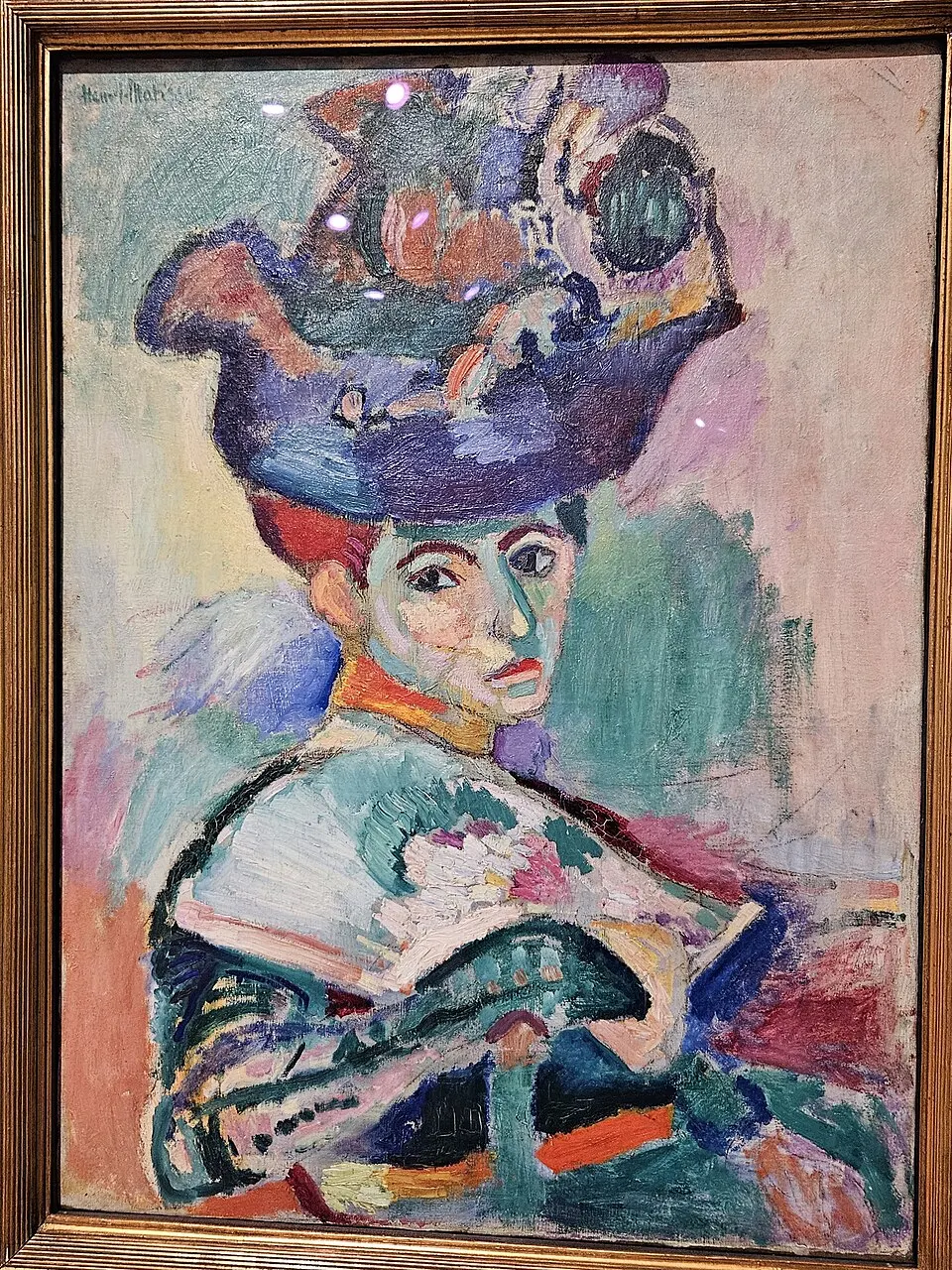
Imagine standing in a Parisian gallery at the dawn of the twentieth century, confronting a canvas where the sky blazes in electric vermilion and trees shimmer in pure cobalt blue. The colors do not describe the physical world as your eyes perceive it; instead, they strike the senses like a sudden chord of thunder. In these brief, explosive years between 1905 and 1908, a loose circle of young artists threw aside centuries of illusionistic tradition to paint not what they saw, but the uninhibited energy of color itself. The public was astonished, the critics were outraged, and the visual arts were permanently transformed.
This radical movement was Fauvism, a style that emerged in France around 1904 and burned brightly at its core for just a few short years. Led by Henri Matisse and André Derain, the artists dubbed les Fauves—“the wild beasts”—produced works marked by seemingly wild brushwork, high degrees of simplification, and deliberately discordant palettes. Though the formal movement hosted only three collective exhibitions, its reverberations redefined the opening decades of twentieth-century art, proving that color could exist as an expressive force independent of realistic representation.
The Shock of the New in Belle Époque Paris
To understand the scandal Fauvism provoked, one must appreciate the artistic landscape from which it erupted. For centuries, Western painting had relied on delicate gradations of shade, atmospheric perspective, and representational accuracy. Even Impressionism, which had revolutionized the nineteenth century by capturing fleeting effects of natural light, remained fundamentally tethered to the observed world. Fauvism took a decisive leap further, operating as an extreme development of Vincent van Gogh’s Post-Impressionism and building upon the structural innovations of Paul Cézanne and Paul Gauguin.
Modern art at large was moving away from narrative storytelling toward abstraction, experimentation, and fresh ideas regarding materials. When Matisse, Derain, Maurice de Vlaminck, Raoul Dufy, and Georges Braque—who would later partner with Pablo Picasso in Cubism—exhibited their expressive landscapes and figure paintings in Paris, the sheer intensity of their pigment felt like an assault on refined taste. Where Impressionism gently rendered a sunlit riverbank, the Fauves unleashed riotous, unmixed hues directly from the tube, flattening forms and replacing subtle modeling with fierce, raw energy.
A Circle of Rivals and Revolutionaries
The human story behind Fauvism is one of intense creative camaraderie and shared intellectual rebellion. Matisse, a former student of various Paris academies who met Derain at the Académie Camillo under Eugène Carrière in 1898, brought a rigorous yet revolutionary spirit to the group. Derain, born in Chatou in 1880, had initially trained as an engineer while teaching himself to paint outdoors. In 1900, Derain shared a studio with the fiery Vlaminck, painting the local neighborhoods before a stint of military service at Commercy temporarily interrupted his output.
By 1905, Matisse and Derain were working in tandem, pushing their experiments with color to uncharted extremes. They were joined by a diverse cohort of modernists, including Albert Marquet, Charles Camoin, Louis Valtat, Jean Puy, Henri Manguin, Othon Friesz, Georges Rouault, Jean Metzinger, Kees van Dongen, Émilie Charmy, Bela Czobel, Robert Deborne, and Adolphe Wansart. Together, they formed a volatile, highly dynamic avant-garde.

The paintings of the Fauves were characterized by seemingly wild brushwork and strident colors, while their subject matter had a high degree of simplification and abstraction.
The scandal brought notoriety, particularly to Matisse, whose intensity of color between 1900 and 1905 established him as the intellectual heart of the movement. Yet, as quickly as the movement ignited, its founders began to evolve. By 1906, Matisse was developing a more rigorous style that emphasized flattened forms and decorative patterns, eventually adopting even bolder simplifications of form in his later years. Derain’s riotous colorism of 1905–1906 shifted by 1910 toward a more austere study of Cézanne and the old masters, eventually leading him to the classicizing “Return to Order” after the First World War. By 1908, the short-lived alliance of the Wild Beasts had effectively dissolved, but the point had been made.
The Legacy of the Wild Beasts
Fauvism changed the course of visual culture by proving that an artist’s primary allegiance was to the canvas and emotional intuition, not to literal mimicry. By liberating color from its duties of description, Matisse, Derain, and their peers laid the groundwork for modern expressionism and the sweeping abstraction that defined the rest of the twentieth century.
Today, our fascination with these revolutionary years remains remarkably potent. Whether in blockbuster museum retrospectives or in popular digital explorations—such as educational videos on the movement that easily attract hundreds of thousands of views—audiences continue to be captivated by the sheer boldness of the Fauvist experiment. More than a century after those initial, controversial exhibitions, the dazzling light and defiant colors of the Wild Beasts still possess the power to startle, delight, and awaken our sight.