On November 21, 1783, physics teacher Jean-François Pilâtre de Rozier and Marquis François Laurent d'Arlandes took off from Paris, France, aboard a hot air balloon designed by the Montgolfier brothers to complete the world's first untethered manned flight. The voyage lasted approximately twenty-five minutes, carrying the two pioneers over the rooftops of Paris and establishing the foundation for modern aviation. This historic event proved to a skeptical world that human beings could safely ascend into the atmosphere and travel aboard an airborne vessel.
Before this triumphant autumn day, the concept of human flight belonged almost entirely to mythology and ancient folklore. Precursors to ballooning had existed for centuries, beginning in Asia with the sky lanterns utilized by Zhuge Liang of the Shu Han kingdom during the Three Kingdoms era for military signaling. Centuries later, the Mongolian army introduced these floating lights to Europe during the 13th-century Battle of Legnica. In 1709, the Portuguese Jesuit priest Bartolomeu de Gusmão envisioned an aerial apparatus known as the Passarola, demonstrating an unmanned prototype before King John V of Portugal and Queen Maria Anna of Austria at the Casa da Índia. Yet, despite these earlier glimmers of possibility, actual human ascent remained unrealized.
The breakthrough came through the tireless experimentation of two paper manufacturers from Annonay, Joseph-Michel and Jacques-Étienne Montgolfier. Recognizing that heated air possessed a lower density than the colder surrounding air—thereby creating natural buoyancy inside a lightweight fabric envelope—the Montgolfier brothers constructed a massive paper-and-cloth vessel. On September 19, 1783, they conducted a public demonstration featuring an unmanned flight that lasted ten minutes. Encouraged by their success, they began preparing for a true test of human endurance and nerve.
Who were the bold aeronauts who risked their lives?
The French monarch, King Louis XVI, initially viewed the prospect of human flight with immense trepidation. To minimize the risk of losing valuable citizens, King Louis XVI decreed that condemned criminals should be placed inside the basket for the initial untethered trial. However, Jean-François Pilâtre de Rozier, a prominent teacher of chemistry and physics, strongly objected to allowing criminals the honor of becoming the first human aviators. Joined by Marquis François Laurent d'Arlandes, an influential French soldier, Jean-François Pilâtre de Rozier successfully petitioned the king to permit two noble volunteers to undertake the perilous journey instead.

Prior to the untethered flight, Jean-François Pilâtre de Rozier tested the technology through tethered ascents. On or around October 15, 1783, Pilâtre de Rozier made his first tethered attempt from the yard of the Réveillon workshop in the Faubourg Saint-Antoine. Later that same day, he ascended to a height of 85 feet (26 meters), reaching the full limit of the securing rope. These preliminary tests confirmed that humans could breathe and function normally while elevated above the earth, setting the stage for an unmoored journey across the sky.
On November 21, 1783, Jean-François Pilâtre de Rozier and François Laurent d'Arlandes became the first human beings in recorded history to drift freely through the open sky.
How did the historic maiden flight unfold over Paris?
On the clear afternoon of November 21, 1783, a massive crowd gathered in Paris to witness the extraordinary spectacle. The Montgolfier balloon featured a grand fabric envelope open at the bottom throat, suspended directly above an open hearth carried within a wicker gondola. By stoking an open flame beneath the mouth of the envelope, Jean-François Pilâtre de Rozier and Marquis François Laurent d'Arlandes generated the heat necessary to lift the craft. As the holding lines were cast off, the brightly decorated balloon lifted smoothly into the air, rising above the astonished onlookers below.
Floating entirely at the mercy of the prevailing winds, Jean-François Pilâtre de Rozier and François Laurent d'Arlandes monitored the hearth constantly. The work was demanding and dangerous; sparks from the open flame posed a continuous threat to the fabric envelope above them. The two men stoked the fire to maintain altitude and suppressed small embers that threatened to ignite the vessel. After drifting gracefully across the Parisian skyline for roughly twenty-five minutes, the aeronauts safely descended to the ground, completing the first free human flight in history.

What was the immediate aftermath and tragic legacy of early ballooning?
The success of the Montgolfier flight ignited an era of intense public fascination known as balloonomania. Within a decade, aerial technology adapted to practical military uses. On June 26, 1794, during the Battle of Fleurus, the French military deployed the balloon l'Entreprenant for battlefield observation, marking the first recorded military use of an airborne vessel.
Tragedy, however, soon shadowed the triumphs of early aviation. Driven by a desire to conquer new aerial frontiers, Jean-François Pilâtre de Rozier attempted to fly across the English Channel in a hybrid balloon craft. Near Wimereux in the Pas-de-Calais, his balloon crashed, killing Jean-François Pilâtre de Rozier and his companion Pierre Romain. In a somber twist of fate, the man who had been the first to fly safely also became part of the first known fatal air crash in history.
The historic 1783 flight demonstrated that heated air trapped within a simple fabric envelope could generate enough lift to carry human passengers over vast distances.
How did this 18th-century breakthrough shape modern flight?
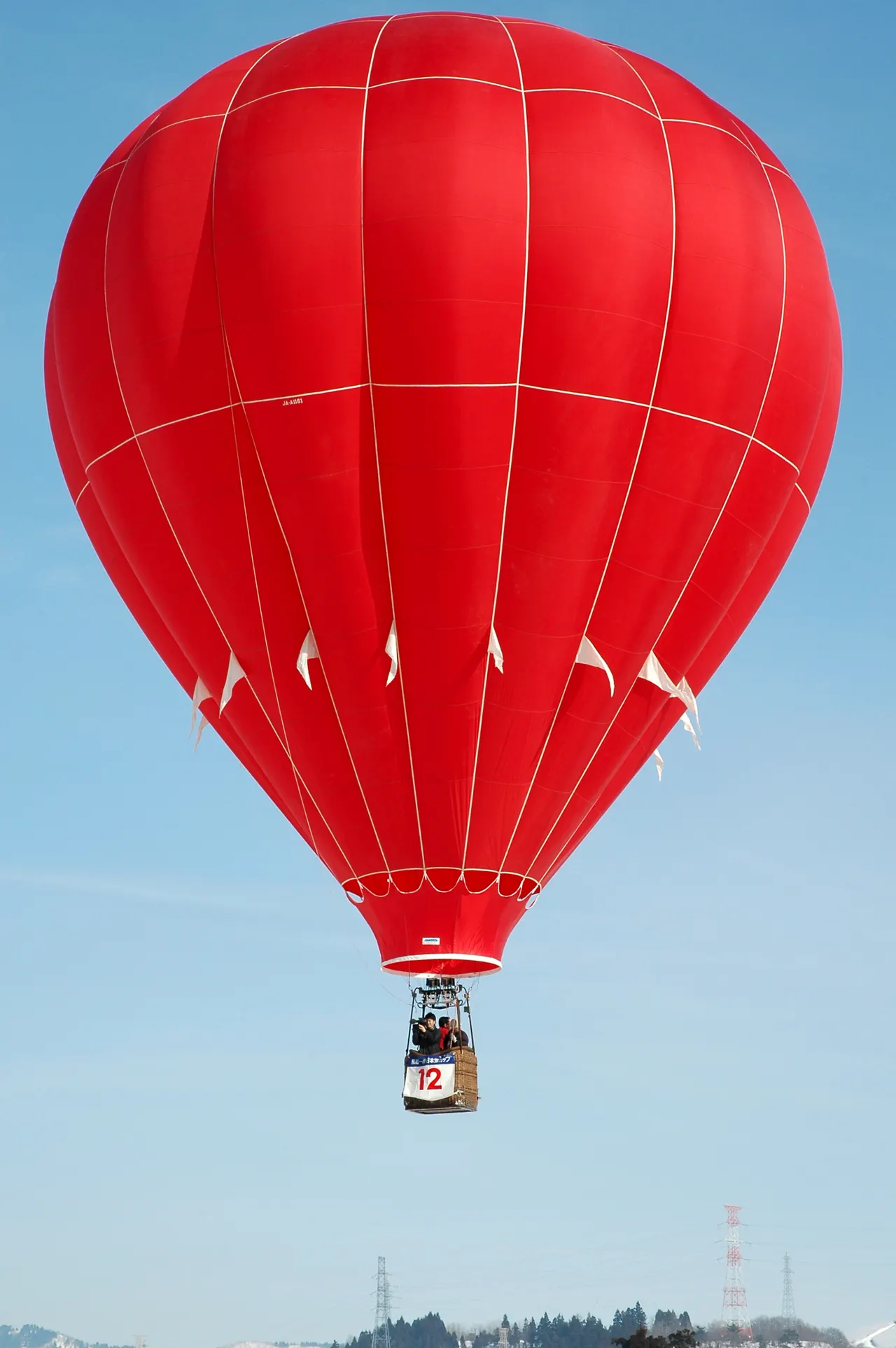
The basic physics demonstrated in Paris on November 21, 1783, remain fundamental to hot air ballooning today. Modern sport balloons rely on the same core principle of buoyancy, though materials have advanced significantly. Today's envelopes are typically sewn from durable ripstop nylon or dacron polyester, using specialized French felled seams with double lap stitching. The lower throat near the heat source is constructed from fire-resistant Nomex, and liquid propane burners have replaced the open wood and straw fires of the 18th century.

In the mid-20th century, pioneers Ed Yost and Jim Winker modernized the craft by adding onboard propane heat sources, leading to a successful flight on October 22, 1960. Later achievements pushed the boundaries of altitude, speed, and endurance. On November 26, 2005, Vijaypat Singhania set the world altitude record in a hot air balloon, ascending to 68,986 feet (21,027 meters) over India. Meanwhile, endurance records reached their zenith between March 1 and March 21, 1999, when Bertrand Piccard and Brian Jones completed the first nonstop round-the-world balloon trip aboard the Breitling Orbiter 3, traveling for over 19 days.
Every modern aircraft that takes to the skies owes a debt to the courage displayed over Paris in the late autumn of 1783. By taking that initial, unmoored leap into the atmosphere, Jean-François Pilâtre de Rozier and François Laurent d'Arlandes proved that humanity was no longer bound to the terrestrial world.
Did you know? King Louis XVI originally insisted that condemned criminals be used as test subjects for the first untethered flight, but Jean-François Pilâtre de Rozier successfully argued that noblemen should have the honor instead.

Did you know? The fastest ground speed ever recorded by a manned balloon was set on January 15, 1991, when Per Lindstrand and Richard Branson reached 245 mph (394 km/h) aboard the Virgin Pacific Flyer.
Watch: RISE UP: The Film | Hot Air Balloon DOCUMENTARY
From the a Province Apart channel.
Sources and further reading: Wikipedia — Hot air balloon, Jean-François Pilâtre de Rozier, François Laurent d'Arlandes (CC BY-SA). Images: Wikimedia Commons.