The alchemy of the iron pot
In the humid, bustling kitchens of Brazil, the air is thick with the scent of slow-simmering black beans, garlic, and bay leaves. It is a fragrance that defines a nation, hanging heavy over the street-side bistros of Rio de Janeiro and the quiet family dining rooms of the interior. This is feijoada, a deep, mahogany-colored stew that serves as the culinary heartbeat of a country. Far from being just a meal, it is a living chronicle of survival, a dish that took the cast-offs of a colonial empire and transformed them into the ultimate expression of Brazilian identity.
The story of feijoada is not found in the refined cookbooks of the Portuguese elite, but in the forced resourcefulness of the enslaved people brought to the Americas starting in the 16th century. To understand its scale and endurance, one need only look at the global fascination with its origins, evidenced by a video tour that has drawn nearly a million views on the channel Tasting History with Max Miller, demonstrating that the world is hungry for the narratives behind our most iconic dishes.
A crucible of cultures
Brazilian cuisine is a mosaic, shaped by the collision of Amerindian traditions, Portuguese colonial influence, and the profound, transformative contributions of African cultures. While Portuguese settlers brought the concept of bean-based stews common to the Iberian Peninsula, the Brazilian feijoada diverged sharply from its European counterparts. It became a crucible where necessity met ingenuity.
As enslaved people worked the vast plantations, they were often left with the less desirable cuts of meat—the ears, feet, and tails of pigs—that were discarded by the plantation owners. By simmering these scraps with black beans, garlic, and local spices, they created a hearty, calorie-dense sustenance that fueled them through grueling days of labor. It was an act of quiet defiance: taking the ingredients deemed worthless by the colonizer and elevating them into a meal of sustenance and communal strength.
The history of the enslaved people of Brazil is inextricably cooked into every batch of feijoada, serving as a permanent, edible reminder of the endurance required to build the nation from the bottom up.
The national table
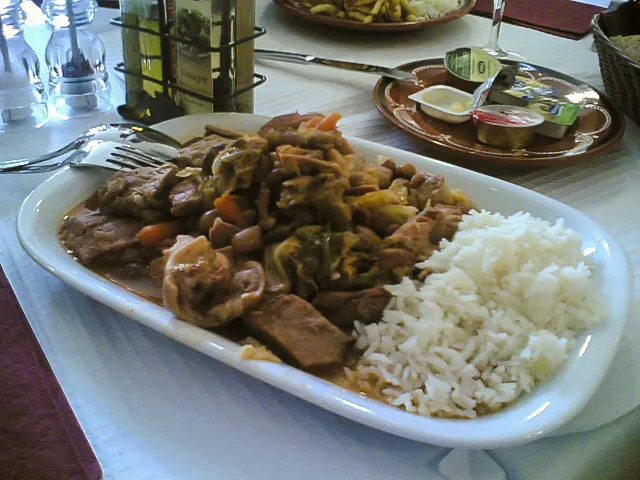
As the centuries turned, the rigid boundaries of the plantation began to soften, and the dish began its ascent. Feijoada migrated from the slave quarters to the kitchens of the emerging middle class, eventually becoming a staple served in restaurants across the country. It is a dish that refuses to be rushed; it demands time, patience, and a communal setting, traditionally served on Saturdays when families and friends gather to share the laborious, slow-cooked feast. It is served with white rice, sliced oranges to cut the richness, toasted cassava flour (farofa), and thin, dark ribbons of sautéed collard greens.

Today, the regional variations of the dish reflect Brazil's continental size. In the northeast, you might find different legumes or local spices, while in the south, the meat profiles shift to include regional sausages and cured beef. Yet, the spirit remains identical. It is a dish that does not belong to any single demographic; it is the great equalizer, found on the tables of the wealthy and the modest alike.
The enduring taste of history
Why does feijoada still matter in the 21st century? In an age of rapid global modernization, the dish acts as an anchor. It reminds Brazilians that their culture is a complex, often painful, but ultimately vibrant synthesis of disparate threads. To eat feijoada is to participate in a ritual that honors the resourcefulness of those who came before, turning the remnants of hardship into a national celebration.
When you lift a spoonful of that thick, dark stew, you are tasting more than just beans and pork. You are tasting the resilience of a continent. It is a dish that has moved from the shadows of history into the spotlight of global cuisine, proving that when a culture is forged in the fire of survival, the results are always profoundly, undeniably soulful.