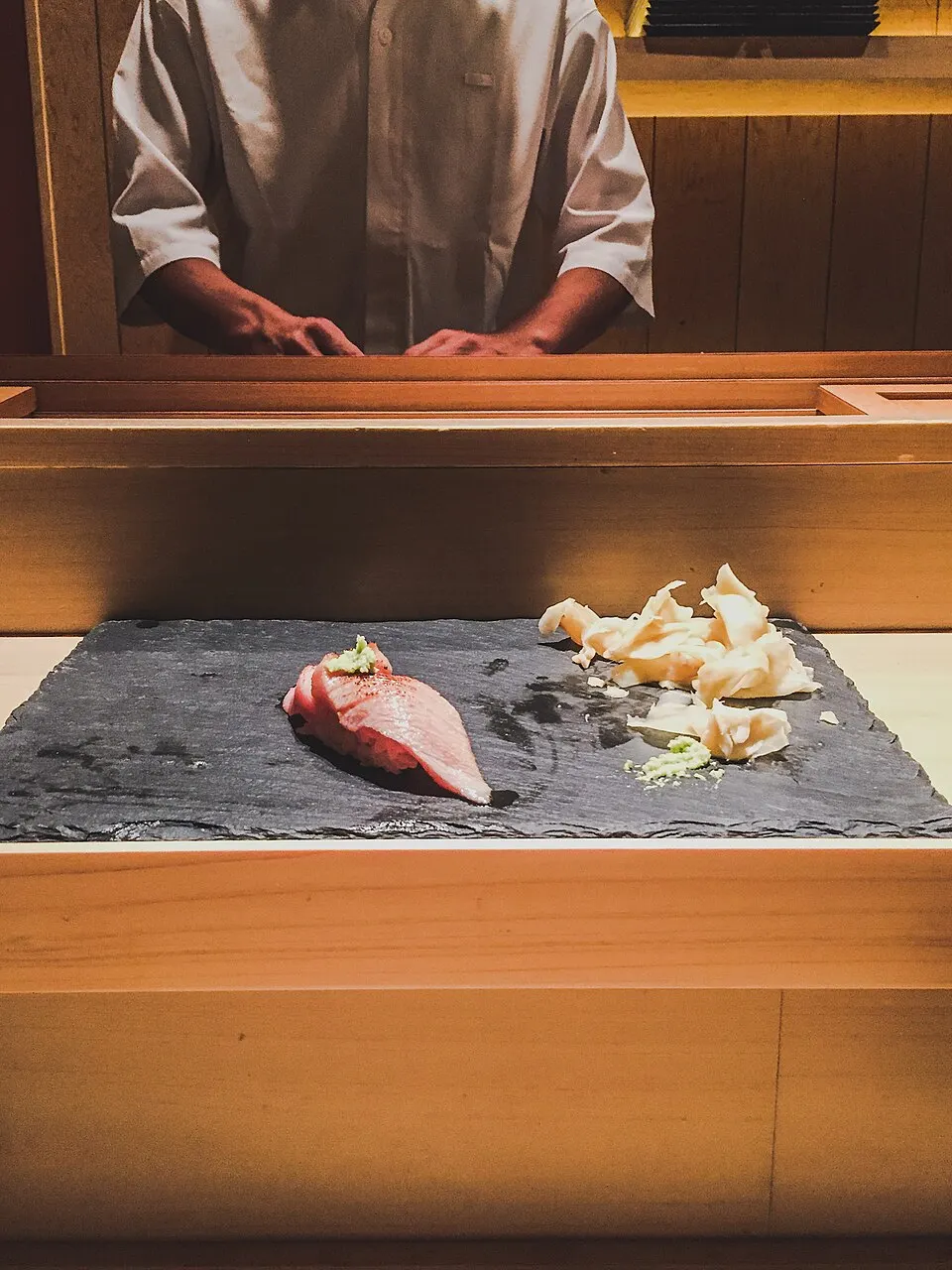
In a quiet, sunlit workshop in Sakai, Osaka, the high-pitched rasp of a wet stone grinding against carbon steel echoes off wooden timber walls. Here, master blacksmiths spark live embers to forge blades whose edge geometry hasn't changed radically since the twilight of the feudal era. Nearby, across the ancient urban corridors of the Kansai region, a chef gently presses a slice of glossy red tuna over a hand-molded cushion of warm, vinegared rice. What appears to be an effortless bite of contemporary luxury is, in truth, the culmination of centuries of regional geography, agrarian trade, and military craftsmanship colliding in southern-central Honshū.
While millions of diners today equate sushi with fast-paced Tokyo counters or sleek global metropolitan hubs, the soul of the craft’s technical precision traces its lineage back to the fertile plains, rivers, and coastal ports of Kansai. A video tour exploring the culinary origins of Kansai by Huckberry that has drawn 1.3 million views underscores a growing global realization: to truly understand why a piece of raw fish drapes perfectly over seasoned rice, one must examine the historic crossroads of Hyōgo, Kyoto, Mie, Nara, Osaka, Shiga, and Wakayama.
From Fermented Paddy Fields to the Kansai Engine
The story of sushi did not begin with delicate slices of fresh fish. Its oldest ancestor, known as narezushi, originated as a pragmatic method of food preservation in Southeast Asian river valleys before spreading to Japan around the Yayoi period. Freshwater fish was packed in fermented rice and salt; over months, the rising acidity preserved the protein, but the sour, decomposed rice itself was scraped off and discarded. It was a strategy for survival, not fine dining.
Transformation arrived during Japan’s Muromachi period (1336–1573), a tumultuous era centered around the elite political and cultural spheres of Kyoto. As trade networks flourished across the Kansai region, urban populations grew demanding and impatient. Cooks began shortening the fermentation window, discovering that if they consumed the fish earlier, the rice retained a pleasant tang and could be eaten alongside the seafood rather than thrown away. By the Edo period (1603–1867), culinary pioneers bypassed the lengthy fermentation process entirely, turning to brewed rice vinegar to instantly season fresh grains—creating sumeshi (vinegared rice), the non-negotiable bedrock of all modern sushi.

The defining component of modern sushi is not raw fish, but shari—rice carefully seasoned with vinegar, sugar, and salt.
The Samurai Steel Connection
Yet vinegar and seasoned rice were only half of the equation. To elevate raw seafood from humble fare to an art form, Japanese cooks needed tools that could slice delicate flesh without tearing muscle fibers or releasing unwanted bitter oils. Enter the blacksmiths of Kansai.
During the Sengoku and Edo periods, regions surrounding Osaka and Sakai served as the primary armories for the samurai class, producing some of the sharpest swords in feudal Japan. When peaceful times and eventual 19th-century demilitarization decrees reduced the demand for longswords, these master smiths redirected their metallurgical expertise toward kitchen cutlery. They applied the dual-layer forging techniques of katana production—combining a hard carbon-steel core for extreme sharpness with a softer iron backing for toughness—to create dedicated culinary knives like the yanagiba (willow leaf blade).
This technical leap changed sushi forever. A single, smooth pull of a samurai-derived blade glides through fish cells without crushing them, preserving the pristine texture, natural sheen, and subtle fat profile of the seafood. The razor-sharp edge made the clean, artistic presentation of sashimi and nigiri possible, embedding a martial level of precision into everyday Japanese cuisine.

The Legacy on the Modern Plate
The broader ecosystem of traditional Japanese cuisine—focused heavily on seasonal balance, clear broths, pickled vegetables, and delicately grilled or raw seafood—was nurtured by the geography of Kansai. Blessed with access to the rich waters of the Seto Inland Sea, the mountain streams of Nara and Shiga, and the merchant markets of Osaka (long known as the nation's kitchen), the region perfected the balance of salt, acid, and umami that defines sushi rice today.
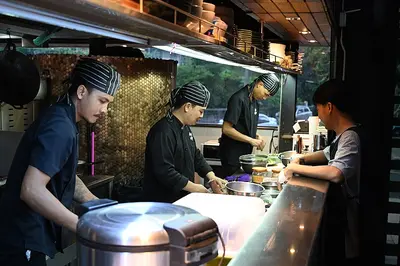
Modern diners marvel at the theatricality of a high-end sushi counter: the immaculate wooden boards, the gleaming blades, the exact temperature of the rice, and the seasonal provenance of the catch. Yet every element of that modern performance reflects a living historical continuum. When a chef draws a single-edged knife through a filet of wild sea bream, they are employing tools forged from the legacy of samurai armorers and serving rice perfected by centuries of Kansai merchants. What began in muddy river paddies as a survival technique has transformed, through regional artistry and refined steel, into one of the world's most sophisticated culinary traditions.