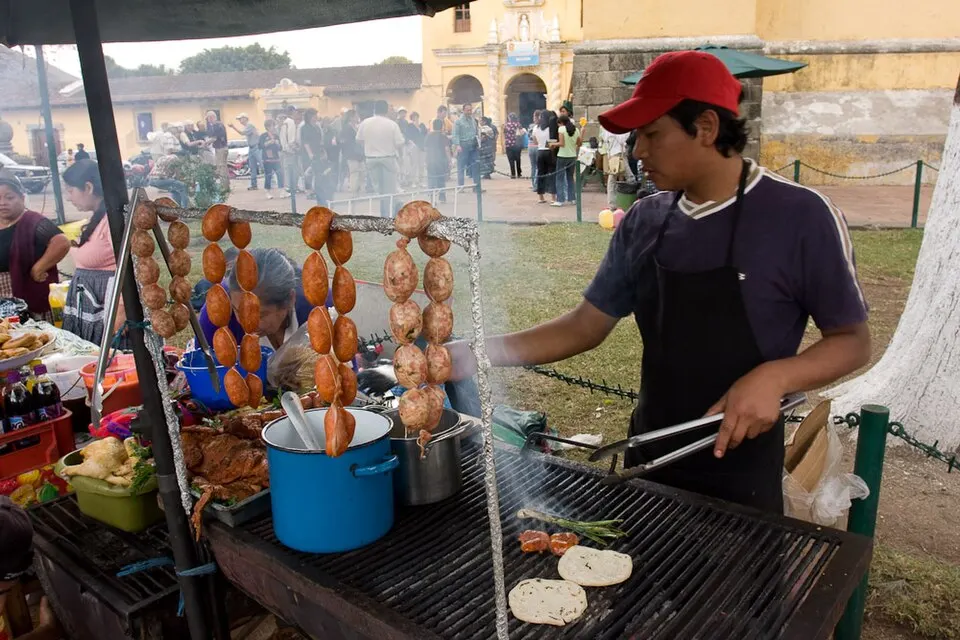
As the sun dips behind the volcanic peaks surrounding the Valle de la Ermita, the air in Guatemala City begins to shift. The cool mountain breeze of the central highlands carries more than just the scent of pine; it carries the irresistible, smoky aroma of sizzling meat and toasted buns. In the heart of the largest metropolis in Central America, the evening ritual belongs to the shuko. While the rest of the world might view the hot dog as a simple, utilitarian snack, here in the city colloquially known as Guate, it is a canvas for an entire nation’s history and a testament to its restless culinary spirit.
A Mountain Valley’s Masterpiece
Guatemala City is a place of dramatic contrasts, where the ancient echoes of the Maya meet the frantic energy of a modern capital. This duality is captured perfectly within the humble confines of a street-side grill. The Guatemalan hot dog, or shuko, is a masterclass in texture and flavor layering. Unlike its North American cousin, which often relies on a soft bun and a singular ribbon of mustard, the Guatemalan variation is a heavy, toasted affair, loaded with a complexity that belies its street-food status.
The foundation is almost always a crusty, charred bread, providing a necessary structural integrity for the avalanche of toppings that follow. It is here that the true identity of the country emerges. In a nation where traditional cuisine is rooted deeply in Maya heritage—defined by the trinity of corn, chilies, and beans—the modern hot dog acts as a bridge. While the sausage itself might be a nod to international influence, the toppings are pure Guatemala. Expect a thick, velvety layer of mashed avocado, sharp lime juice, and a crunchy slaw of boiled cabbage, all unified by a spicy kick of local chili.
The metropolitan area of Guatemala City serves as the largest urban center in Central America, acting as a melting pot where indigenous Maya traditions and Spanish colonial influences fuse into a singular, modern gastronomic identity.
The Global Gaze on Guate
For years, this hyper-local obsession remained a secret shared between the residents of the valley. However, the digital age has pulled back the curtain on the city's smoking grills. A video tour of the city’s street food, which has drawn over 4.1 million views, recently showcased these "craziest hot dogs" to a global audience, sparking a newfound curiosity in how a global staple could be so thoroughly reinvented. This international attention highlights a broader shift: Guatemala City is no longer just a transit point for travelers heading to the ruins of Tikal or the shores of Lake Atitlán; it is becoming a destination for those seeking the cutting edge of Latin American street culture.

What makes these hot dogs so captivating to the global palate is their fearless use of ingredients. Vendors in Guate often offer a "mixto"—a monumental creation that includes multiple types of meat, such as chorizo, longaniza (a white sausage flavored with mint), and even slices of ham or steak. It is an edible representation of the city’s own density and vibrant chaos.
Staples of the Soil
To understand why the Guatemalan hot dog tastes the way it does, one must look toward the mountains. The fertile soil of the surrounding Guatemala Department has long dictated the flavors of the capital. Traditional Guatemalan cuisine is famously labor-intensive, involving complex recaudos (sauces) and hand-patted tortillas. The street food of the city takes these essential elements—the creaminess of the local avocados and the heat of native peppers—and applies them to a faster, more urban format.
This evolution is a mark of resilience and creativity. By taking a dish that is technically foreign and crowning it with flavor-packed, eccentric toppings, the people of Guatemala City have claimed it as their own. It reflects a modern culinary identity that is proud of its indigenous roots but unafraid to experiment with the tools of the globalized world. Whether it is a late-night snack for a student or a quick lunch for a worker in the bustling Zona 1, the shuko is the ultimate equalizer.

The Future of the Flame
As the city continues to grow within its mountain valley, its food scene is evolving with it. High-end chefs in the capital are now taking cues from the street, incorporating the smoky, charred elements of the shuko into gourmet menus. Yet, the heart of the experience remains on the sidewalk. There is a specific magic in watching a vendor navigate a crowded grill with surgical precision, ensuring every bun is perfectly toasted and every scoop of avocado is generous.
In the end, the Guatemalan hot dog is more than just a meal; it is a lens. Through it, we see a city that is proud, energetic, and infinitely flavorful. It is a reminder that even in a world of standardized fast food, local culture has a way of rising to the top, one eccentric topping at a time. For those lucky enough to stand by a grill in Guate, the first bite is an introduction to a country that is as complex and inviting as the food it serves.