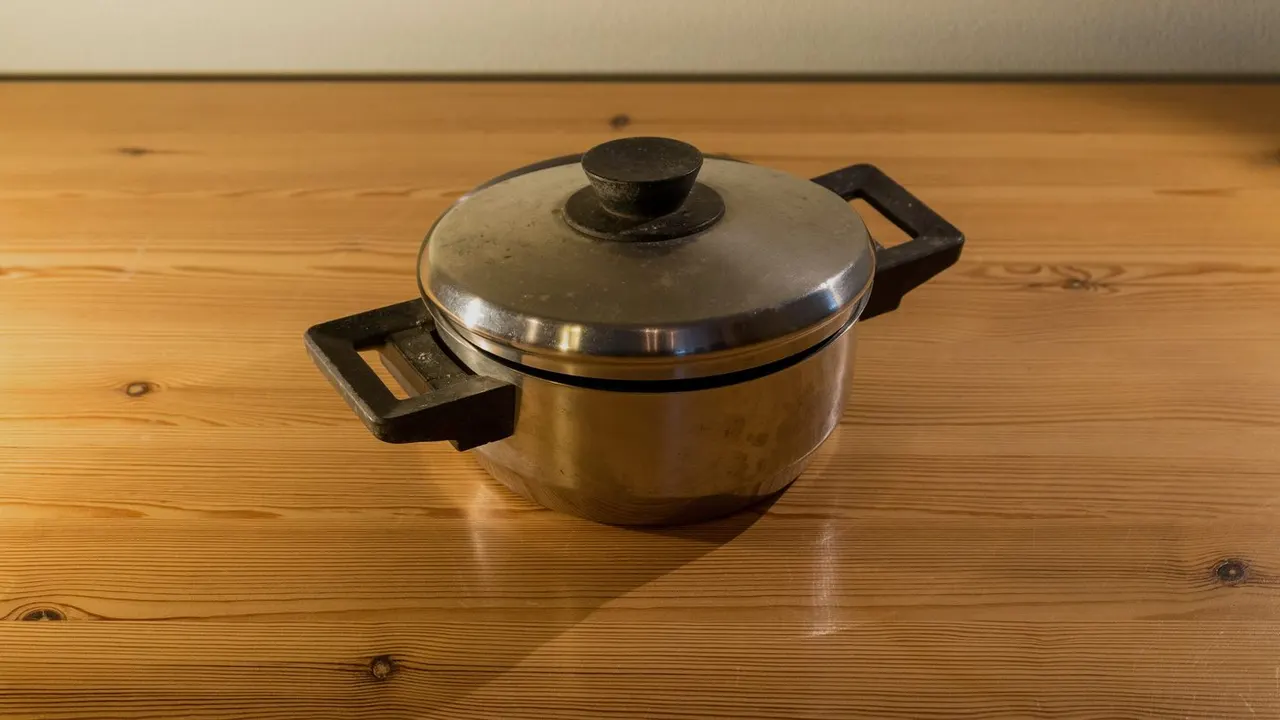
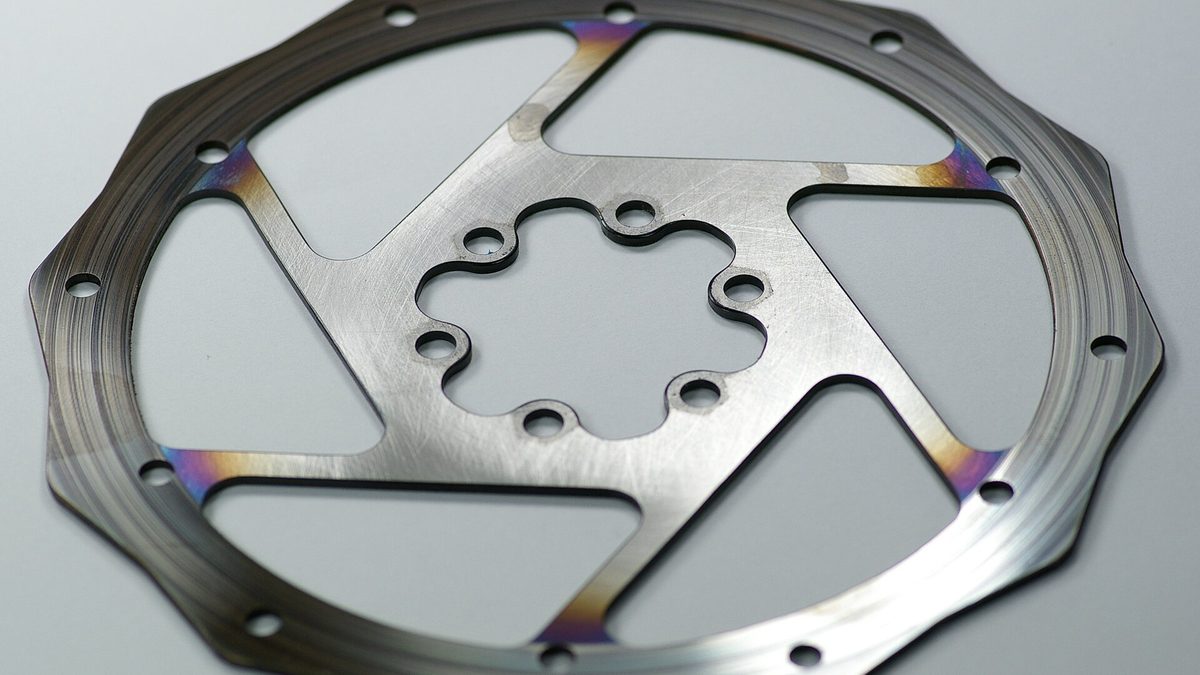
When a pot boils dry and is left unattended on a burner, it frequently displays a dark black base accompanied by a distinct purple and blue ring along its inner walls. According to guidelines provided by the British Stainless Steel Association (BSSA), grade 304 stainless steel changes color systematically when heated in air. The surface turns pale yellow at approximately 290 degrees Celsius, brown at 390 degrees, dark purple at 450 degrees, and dark blue at 600 degrees. Because 304 is one of the two most common stainless steel types utilized in food and kitchen utensils, the purple and blue rings appearing at the bottom of an overheated pot are the direct culinary equivalent of this metallurgical chart.
The blackened layer covering the very bottom of the pot, however, is an entirely different matter consisting of carbonized food. Consequently, cleaning the discoloration requires a completely different approach than removing the burned residue.
- What temperature causes the blue ring at the bottom of a pot, and what does the British Stainless Steel Association chart indicate?
- Why does ordinary baking soda transform into a more powerful cleaning agent when boiled for half an hour?
- How does a standard scouring pad leave rust stains on stainless steel cookware?
- Is it problematic to cook with a discolored pot, and what do nickel release measurements show?
Why does the blue ring appear on stainless steel?
Stainless steel resists corrosion due to a microscopic, self-repairing passive oxide layer that forms naturally on its surface. According to the Nickel Institute's maintenance guide, because the steel contains over 11 percent chromium, this layer halts the progression of oxidation, and if it is scraped away or damaged, a new one immediately forms in its place. Heat causes this protective layer to thicken. The BSSA explains that the visible color arises from light waves reflecting off the upper surface of the oxide layer and the underlying metal interacting with one another. As the oxide layer grows thicker, the human eye perceives different colors.
In the experiments underlying the BSSA chart, the steel was generally heated for one hour. As the duration increases, the colors darken, and rougher surfaces take on color more rapidly, which is why the BSSA emphasizes that coloration serves only as a rough indicator of temperature. American cookware manufacturer All-Clad provides a similar threshold in kitchen terms: prolonged heating exceeding 260 degrees Celsius can alter the color of the steel without affecting its cooking performance. The manufacturer guidelines also state that, aside from normal preheating, empty cookware should never be left on a hot burner.
How should you soak and clean burned stainless steel?
For carbonized food layers, the 2011 home care guide published by Euro Inox, the European stainless steel producers association, initially recommends plain water. The pot is filled with hot water and a drop of dish soap, then left to soak for 15 minutes, after which the majority of the residue can be removed using a sponge or a nylon scouring pad. The Turkish Stainless Steel Association (PASDER) is also among the member organizations that distribute localized versions of these guidelines.
For more stubborn burns, Euro Inox recommends transitioning to washing soda. Several teaspoons of this powder, chemically known as sodium carbonate, are dissolved in hot water inside the pot, and the solution is left to stand for several hours. This process softens or flakes away the adhered food residues.
Notes and Sources
- British Stainless Steel Association (BSSA), "Heat Tint (Temper) Colours on Stainless Steel Surface Heated in Air" and "Post weld cleaning and finishing of stainless steels". Color-temperature chart for 304 (1.4301) grade; chromium depletion beneath the surface during heat tinting; drinking water application rules. bssa.org.uk, bssa.org.uk
- Kamerud, K. L., Hobbie, K. A., and Anderson, K. A. (2013). "Stainless Steel Leaches Nickel and Chromium into Foods during Cooking". Journal of Agricultural and Food Chemistry, 61(39), 9495-9501. DOI: 10.1021/jf402400v
- Nickel Institute, "Stainless Steel in Architecture, Building and Construction: Guidelines for Maintenance and Cleaning" (publication no. 11014). Chromium ratio and reformation of the protective oxide layer. nickelinstitute.org
- All-Clad, "Use and Care Guide" and "How to Clean Stainless Steel Cookware". Color change above 260 °C (500 °F), empty pan warning, boiling with baking soda, vinegar, salt timing, cold water and warping. all-clad.com, all-clad.com
- Euro Inox (2011). Frequently Asked Questions: Cleaning Stainless Steel in the Home. Brussels. ISBN 978-2-87997-350-0; Turkish version ISBN 978-2-87997-358-6. worldstainless.org
- Crosby, G. (2012). "The Many Lives (and Uses) of Baking Soda". pH measurement of a 5 percent baking soda solution during boiling, America's Test Kitchen. cookingscienceguy.com
- European Directorate for the Quality of Medicines & HealthCare (EDQM), Council of Europe (2024). Metals and alloys used in food contact materials and articles: A practical guide for manufacturers and regulators, 2nd edition. Specific release limit for nickel 0.14 mg/kg food. edqm.eu