A study published on September 22, 2026, in the journal JGR Biogeosciences found that coast redwood leaves can become up to 10 degrees Celsius hotter than the surrounding air during extreme heat waves, causing their photosynthetic efficiency to plummet.1
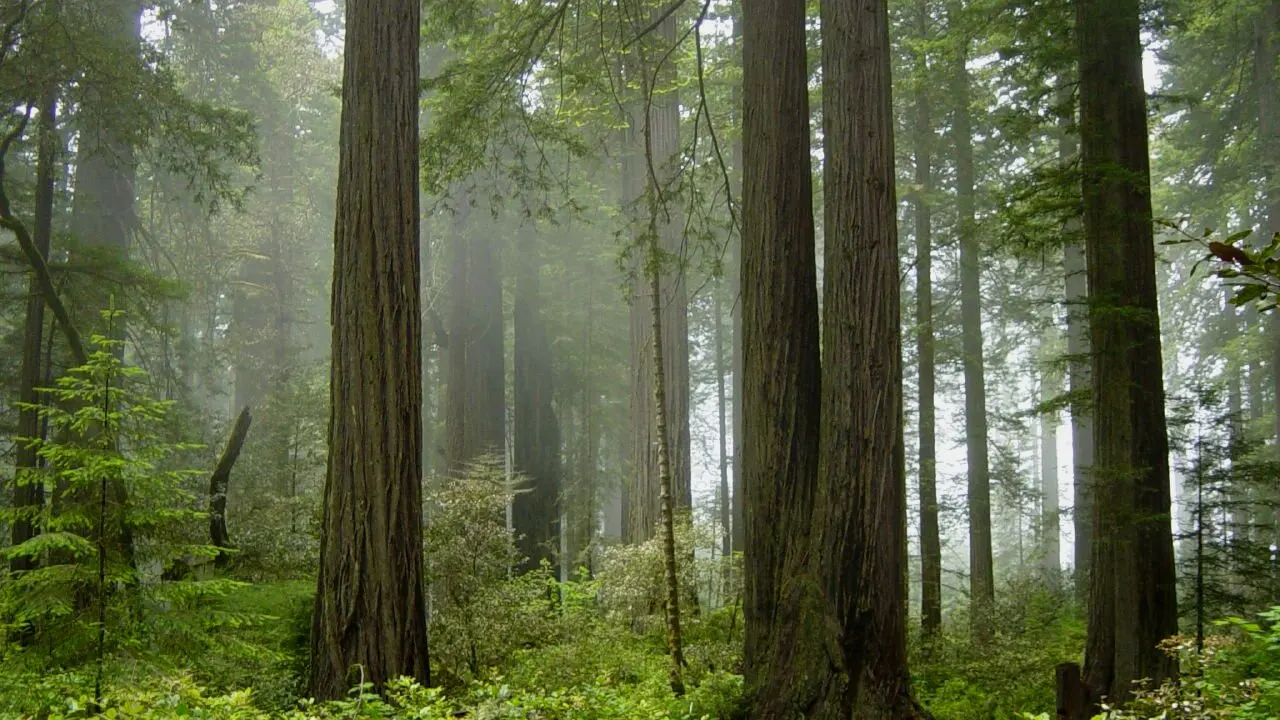
In the Garcia River Forest along California's northern coast, weather stations recorded temperatures exceeding 40 degrees Celsius during the summers of 2022 and 2024. This represents a significant departure for an ecosystem where the annual average temperature typically hovers around 15 degrees Celsius. Lily Klinek, a doctoral student at UC Davis, led a research team that monitored these iconic trees (Sequoia sempervirens) to determine how they cope with such unprecedented thermal stress.1
How much hotter do coast redwood leaves get compared to the air?
Coast redwood leaves can reach temperatures up to 10 degrees Celsius higher than the ambient air during the peak of heat waves. While the team's measurements of 1,527 leaves between July 2022 and October 2024 showed that leaves were only half a degree warmer than the air on average, this balance shifted dramatically during late summer. In the morning, the leaves remained cool or matched the air temperature, but as the day progressed and the heat intensified, the leaves lost the ability to regulate their internal temperature.1
The trees normally cool themselves through transpiration, a process similar to sweating where water vapor is released through tiny pores called stomata. However, when the environment becomes too dry or hot, the trees close these pores to conserve water. According to Klinek, the 10-degree gap indicates that the leaves have reached a breaking point where they can no longer maintain their own cooling.3
Why did researchers wrap redwood leaves in aluminum foil?
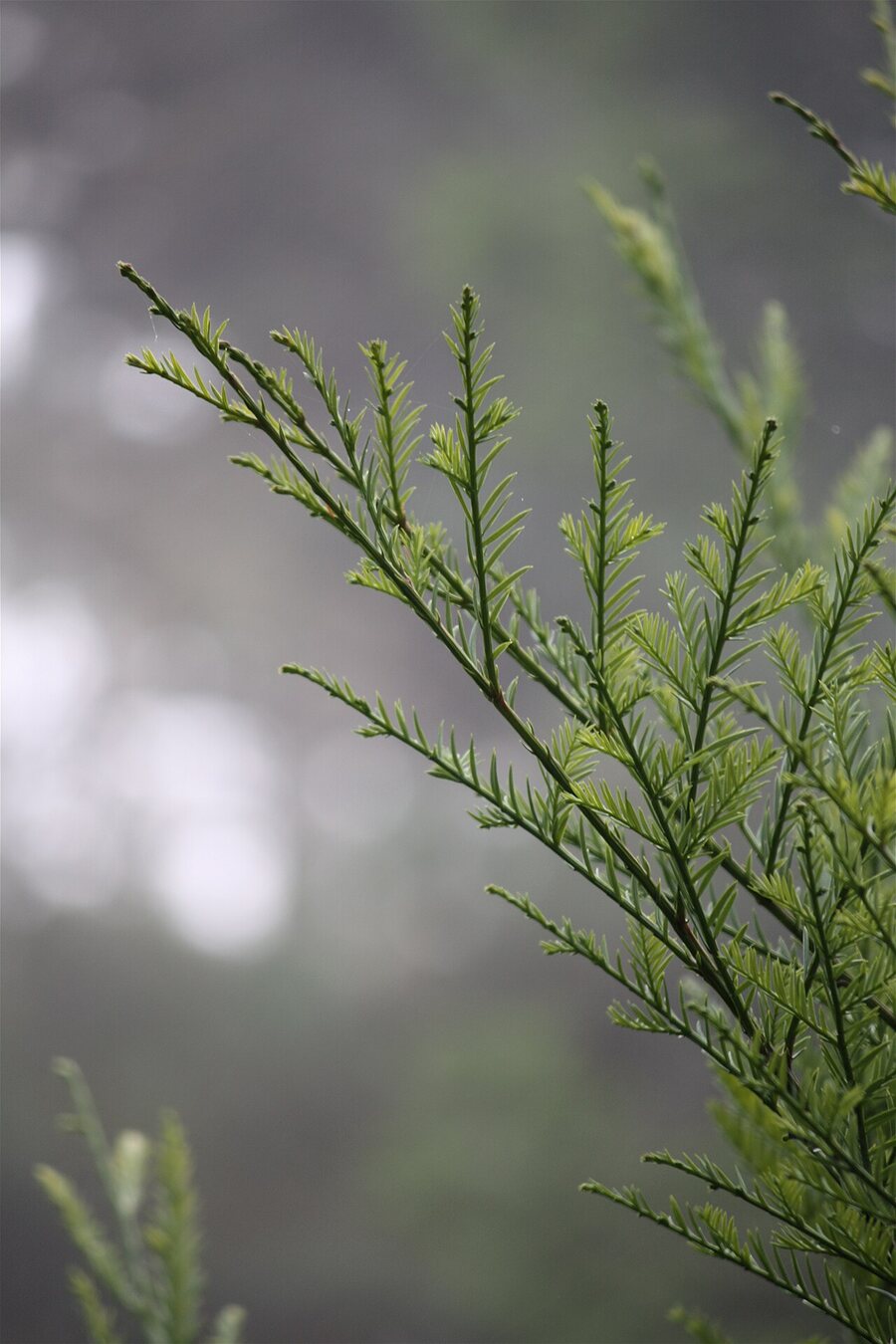
Researchers wrapped coast redwood leaves in aluminum foil for 20 minutes to measure their maximum potential for photosynthesis through a process called chlorophyll fluorescence. By resting the leaf in total darkness, scientists can measure how much light the leaf can process when suddenly exposed to a flash of light. In healthy, unstressed redwoods, the ratio of light used for photosynthesis is approximately 0.82. During the severe heat waves of July, August, and September, this value dropped below 0.4.1
This decline was even more pronounced for leaves in direct sunlight. When a leaf was just 2 degrees Celsius warmer than the air, its photosynthetic efficiency could drop by half. When the temperature difference exceeded 5 degrees, photosynthesis nearly ceased. To protect themselves, the trees began diverting excess energy as heat—a defense mechanism that tripled in intensity during hot periods—but even this was not enough to maintain normal growth levels.1
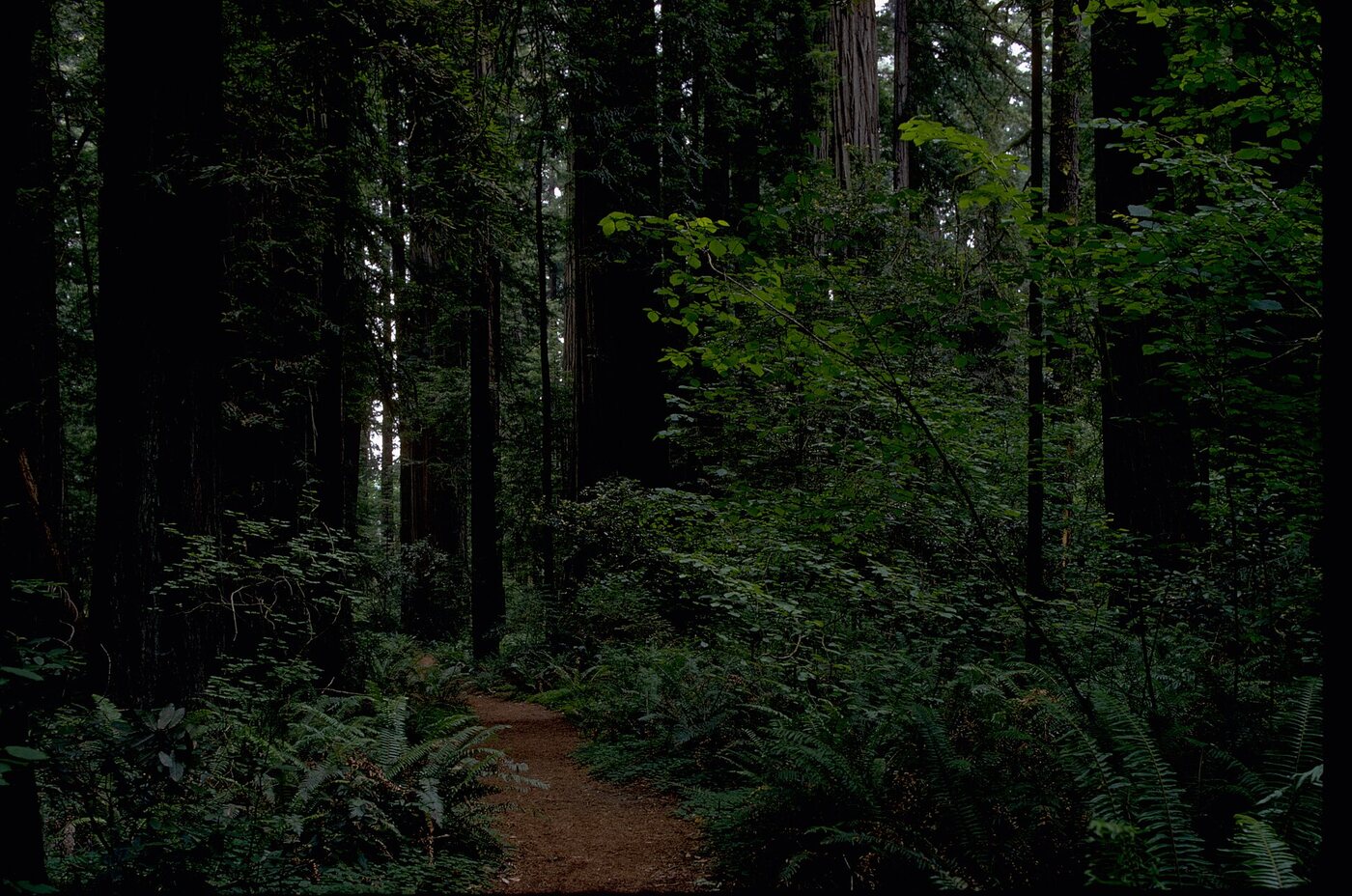
The implications for these forests are significant because coast redwoods are among the most efficient carbon-capturing organisms on Earth. Old-growth redwood forests store more than twice as much above-ground carbon per hectare than any other forest type. As summer fog declines and heat waves intensify, the ability of these giants to act as a global carbon sink may be under threat.1, 5
Notes and Sources
- Klinek, L., Au, J., Rodriguez-Caton, M., Rao, M., Fety, L., Koch, G. and Magney, T. (2026). "Summer Heat Stress Downregulates Photochemistry in Coast Redwoods". Journal of Geophysical Research: Biogeosciences.
- Klinek, L. et al. (2026). "Data and code from: Summer heat stress downregulates photochemistry in Coast redwoods" (version 2). Zenodo.
- Wild, S. (October 17, 2026). "California redwoods are struggling in the heat, and it's not clear how much damage is being done". Live Science. Interview with Lily Klinek and Lucy Rowland.
- Dawson, T. E. (1998). "Fog in the California redwood forest: ecosystem inputs and use by plants". Oecologia, 117, 476-485.
- Johnstone, J. A. and Dawson, T. E. (2010). "Climatic context and ecological implications of summer fog decline in the coast redwood region". PNAS, 107(10), 4533-4538.