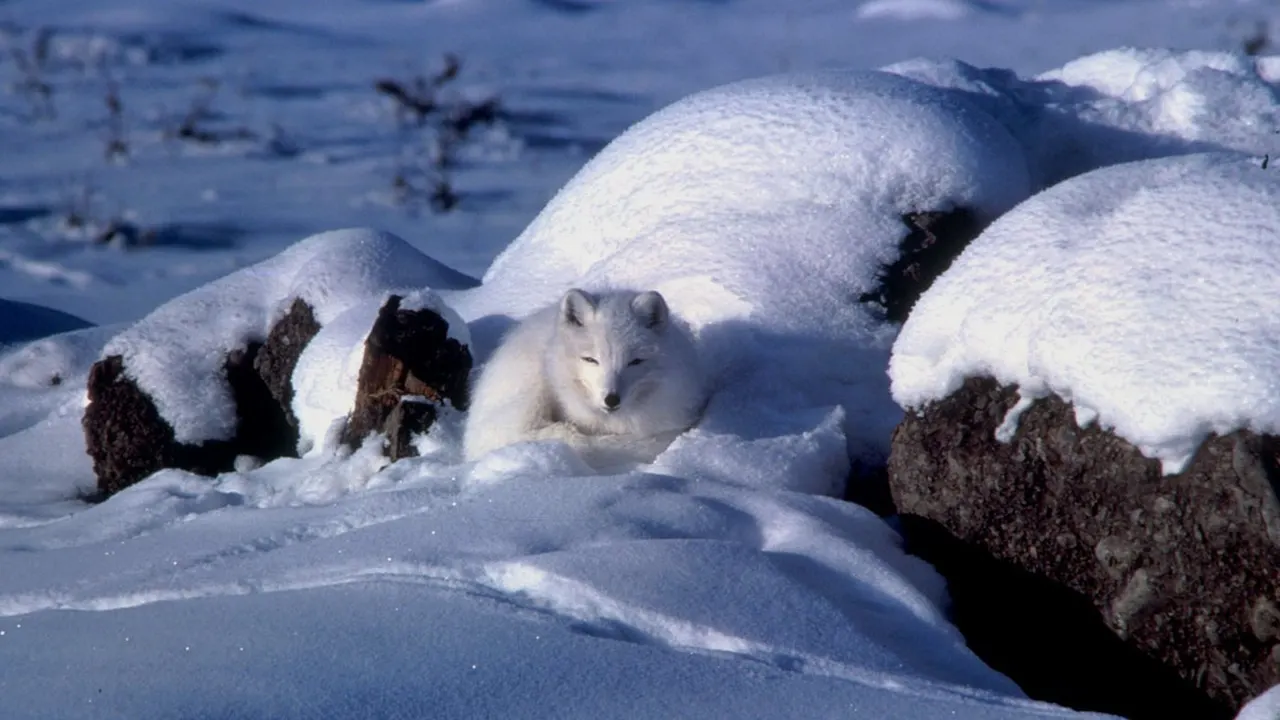
The arctic fox (Alopex lagopus) can maintain its internal body temperature for over an hour in conditions as cold as -80°C without succumbing to hypothermia. This remarkable physiological feat was first documented by physiologist Per Scholander and his team during their 1947-1948 expedition to Point Barrow, Alaska, where they discovered that standard laboratory cold chambers were simply not cold enough to stress the animal's thermal limits.
To find the breaking point, researchers had to fly two foxes to the Naval Research Laboratory in Washington, D.C., using a Navy aircraft. In the capital's advanced testing facilities, the temperature was plummeted to -80°C. While the foxes began to shiver at -70°C, their core temperatures remained rock-steady even after sixty minutes at the -80°C mark.
- How a four-kilogram fox achieves the same insulation as animals one hundred times its weight.
- Why the thermal threshold measured in Tromsø in 2006 differs by 30 degrees from 1950 estimates.
- The precise temperature maintained in a fox's paw pads while standing on snow.
- The duration an arctic fox can survive on its fat reserves during starvation.
How does the arctic fox's fur provide such high insulation?
The arctic fox possesses a coat that provides nearly the same level of thermal insulation as animals many times its size, such as reindeer or sled dogs. During the winter of 1947, Per Scholander measured the heat transfer through various animal pelts placed on a heated plate. He found that while insulation generally increases with fur thickness, it reaches a plateau at the size of the fox. A 5-kilogram fox has roughly the same insulation capacity as a 500-kilogram moose. For smaller mammals like lemmings, carrying such a thick coat would make movement impossible, forcing them to spend the winter in sub-nivean tunnels beneath the snow. Observations by the team confirmed that arctic foxes, along with red foxes and sled dogs, could sleep unprotected on the snow at -50°C without ill effects.
Scholander’s calculations suggested that an arctic fox with a lower critical temperature of -40°C would only need to increase its heat production by 37 percent to survive at -70°C, the coldest temperature recorded on Earth at that time. The lower critical temperature (LCT) is the point at which a resting animal must begin burning extra fuel to maintain its body heat. Above this threshold, the fox conserves energy through physical adjustments like fluffing its fur, reducing blood flow to the skin, and changing its posture.
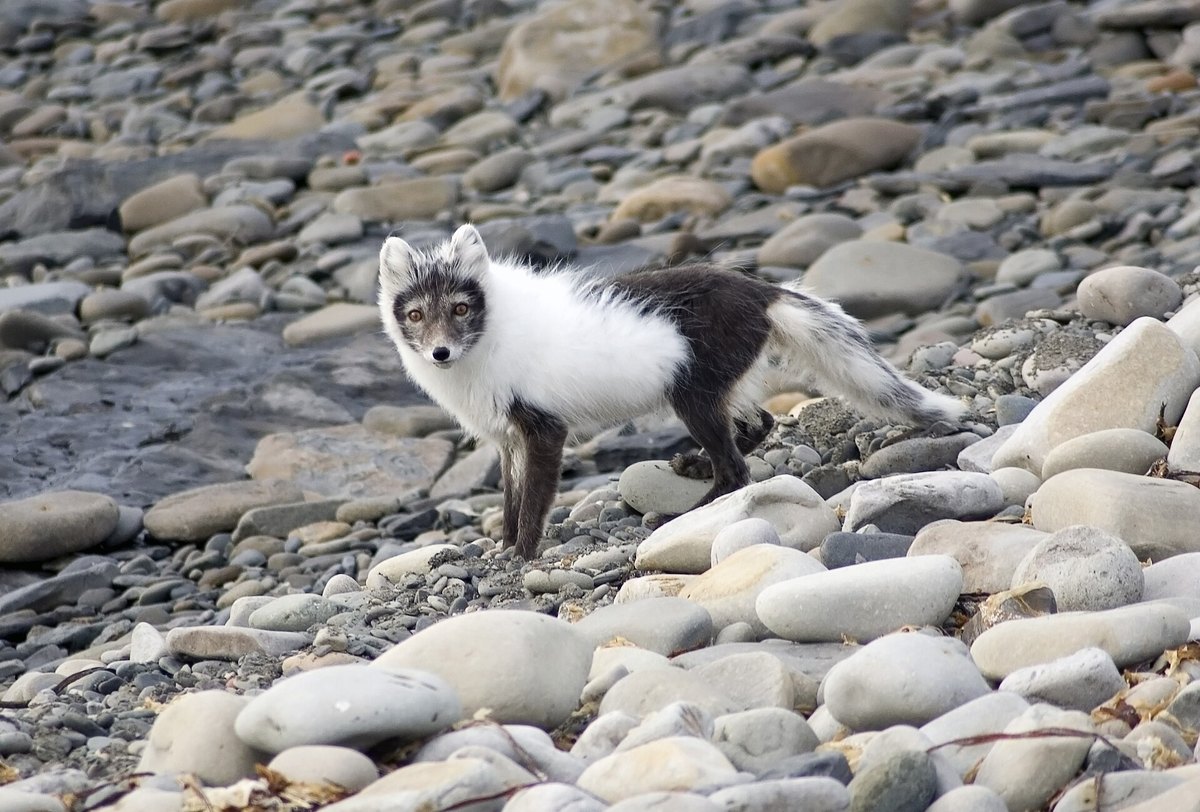
In 1991, Pål Prestrud of the Norwegian Polar Institute characterized the arctic fox's fur as the best insulation among all mammals. However, he noted that the true lower critical temperature had never been precisely measured. Scholander in the 1950s and Larry Underwood, who wrote his doctoral thesis on the fox's energy expenditure in 1971, both failed to find cold chambers capable of reaching the animal's metabolic limits.
Why did modern measurements of the fox's thermal threshold change?
The arctic fox's lower critical temperature was officially measured decades later by a team from the University of Tromsø's Department of Arctic Biology, revealing that the animal's resting metabolism begins to rise much earlier than previously hypothesized. Researchers Britt Fuglesteg and Arnoldus Schytte Blix studied four adult male foxes from Svalbard in both summer and winter coats. Their findings, published in 2006 in Polar Biology, showed the LCT was -7°C in winter and +5°C in summer. These figures were significantly higher than Scholander’s 1950 estimate of -40°C, a discrepancy the authors attributed to the fox’s energy-saving strategies.
The higher LCT does not mean the fur is less effective; rather, it reflects the fox's metabolic efficiency. Even as the air temperature dropped to -45°C, the foxes' stomach temperatures remained stable. The winter coat was 140 percent thicker than the summer version, though the insulation per unit of thickness remained constant. The higher threshold in winter is actually caused by the fox's lower basal metabolic rate. During winter, the foxes were 17 percent heavier but consumed less fuel while resting compared to summer. Because the body is "idling" at a lower rate, it requires supplementary heat production sooner—at -7°C. Additionally, their core body temperature dropped slightly from 39.8°C in summer to 39.3°C in winter. The shivering Scholander observed at -70°C represents a late-stage defense, occurring long after the animal has begun silently increasing its metabolic fuel consumption.
Notes and Sources
- Scholander, P. F., Hock, R., Walters, V., Johnson, F. and Irving, L. (1950). "Heat regulation in some arctic and tropical mammals and birds". Biological Bulletin, 99(2), 237-258.
- Scholander, P. F., Walters, V., Hock, R. and Irving, L. (1950). "Body insulation of some arctic and tropical mammals and birds". Biological Bulletin, 99(2), 225-236.
- Prestrud, P. (1991). "Adaptations by the arctic fox (Alopex lagopus) to the polar winter". Arctic, 44(2), 132-138. Includes data from Follmann 1978, Murie 1959, and Prestrud 1982.
- Fuglesteg, B. N., Haga, Ø. E., Folkow, L. P., Fuglei, E. and Blix, A. S. (2006). "Seasonal variations in basal metabolic rate, lower critical temperature and responses to temporary starvation in the arctic fox (Alopex lagopus) from Svalbard". Polar Biology, 29, 308-319.
- Henshaw, R. E., Underwood, L. S. and Casey, T. M. (1972). "Peripheral thermoregulation: foot temperature in two arctic canines". Science, 175(4025), 988-990.