A Laboratory in a Timber-Framed Cottage
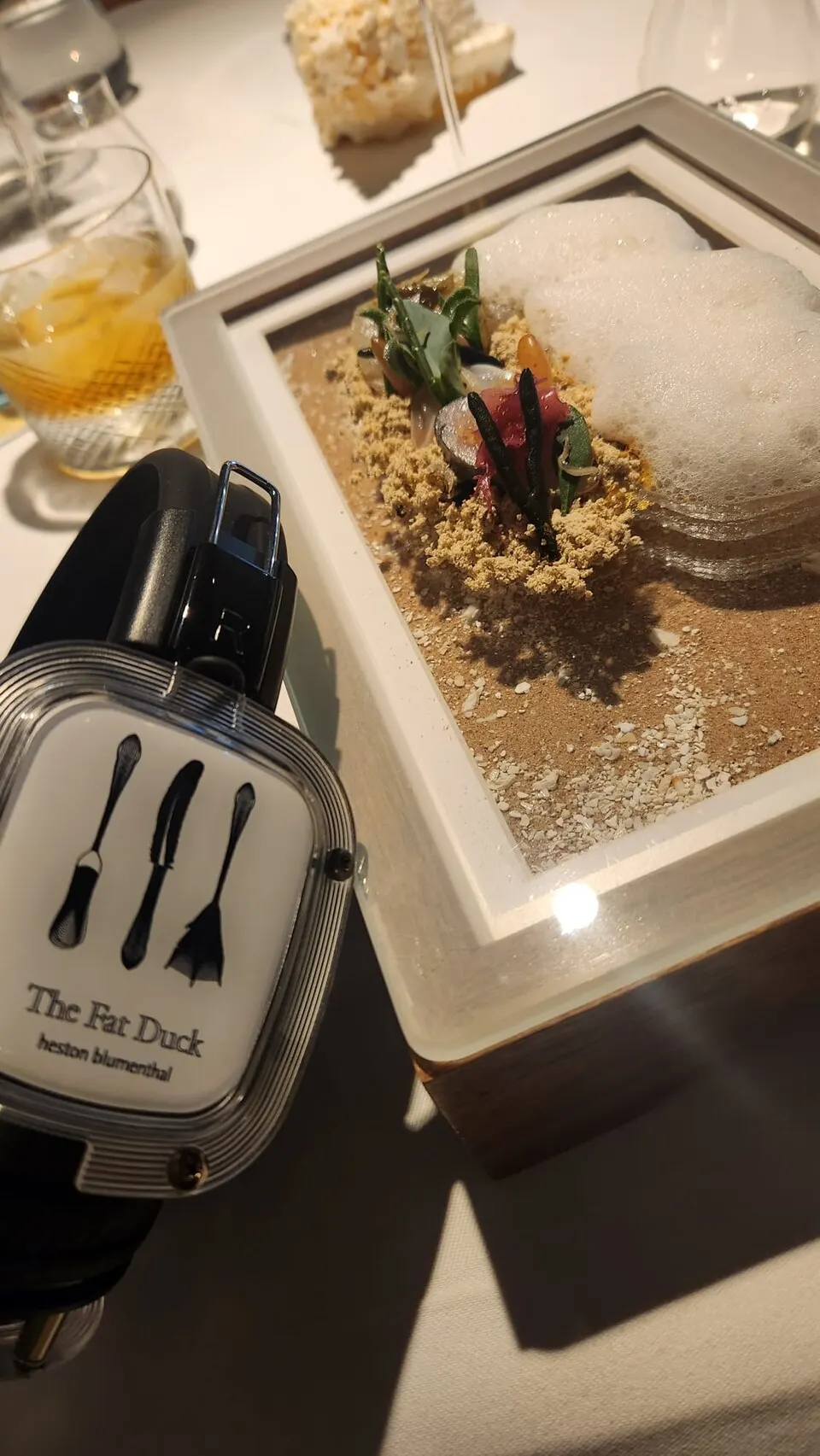
In the village of Bray, Berkshire, the banks of the River Thames whisper stories of a quieter, more pastoral England. It is a place synonymous with the comedic folklore of the Vicar of Bray, yet behind the crooked, 16th-century timber-framed exterior of The Fat Duck, a different kind of history is being written. Since its opening on 16 August 1995, Heston Blumenthal has steered this establishment from a modest French-style bistro into a three-Michelin-starred institution that acts more like a laboratory for the senses than a traditional dining room.
Today, the world’s fascination with this culinary sanctuary shows no sign of waning. A video tour of the restaurant, Behind the Scenes at The Fat Duck | The Restaurant That Broke All Rules, has drawn nearly one million views on YouTube, proving that global audiences are still captivated by the alchemy taking place behind the kitchen doors of this small Berkshire parish.
The Science of Memory
Blumenthal’s brilliance lies not in the mere pursuit of novelty, but in his commitment to molecular gastronomy—a scientific approach that deconstructs the composition, properties, and transformations of ingredients at the molecular level. Yet, for all its technical precision, The Fat Duck is fundamentally rooted in human emotion. Blumenthal realized early on that flavor is not just a chemical reaction on the tongue; it is a multisensory experience tethered to memory.
By deconstructing iconic British flavors and reassembling them with the rigor of a chemist, he invited diners to experience food with the curiosity of a child. Whether it is a dish that evokes the scent of a rainy forest or a playful reinterpretation of nostalgic sweets, the experience is designed to bypass the analytical mind and strike directly at the heart of the diner’s past.

In 2005, The Fat Duck was officially named the best restaurant in the world by the World's 50 Best Restaurants, cementing Bray's unlikely status as a global epicenter for culinary innovation.
Beyond the Plate
The significance of The Fat Duck transcends the individual plates served in its dining room. It shifted the global zeitgeist of what 'fine dining' could represent. For decades, luxury was defined by starched tablecloths and heavy French sauces; Blumenthal introduced a new vocabulary of flavor encapsulation, food pairing, and the theatricality of the senses. He turned the act of eating into an immersive narrative where the kitchen acts as a studio for sensory perception.
This is perhaps why Bray remains such a peculiar and prestigious landmark. Sitting alongside the historic Bray Studios—the former home of Hammer Horror films—the village acts as a stage for both the dramatic and the delicious. In a quiet pocket of the English countryside, Blumenthal proved that one could use the laws of physics to explore the depths of human sentiment, forever changing how we perceive the connection between the mind and the palate.
An Evergreen Legacy
As the landscape of modern cuisine continues to evolve, the influence of The Fat Duck remains a constant reference point. It challenged the culinary establishment to ask: what happens when we view a meal not just as sustenance, but as a scientific experiment wrapped in a story? By mastering the interplay of atoms and mixtures, Blumenthal elevated cooking to the status of art.

Bray remains a destination for the curious, a testament to the idea that innovation doesn't require a sterile, modern skyscraper. Sometimes, the most radical futures are forged in centuries-old buildings, where the smell of nostalgia meets the cutting edge of science. For the traveler and the gourmand alike, the village of Bray stands as a reminder that the most profound journeys are often those we take with our senses, one bite at a time.