A Timeless Human Urge
Most of us have, at some point, stooped to pick up a seashell from the tideline or tucked a smooth, curious stone into our pocket during a hike. To a passerby, the object is mundane—a mere fragment of the landscape. But to the collector, it is a vessel of memory, a physical anchor to a specific moment or place. We often imagine this sentimentality as a quintessentially modern trait, a byproduct of our complex, narrative-driven lives. Yet, emerging evidence suggests that this quiet, universal urge to cherish the ordinary may be etched much deeper into our evolutionary history than we ever dared to imagine.
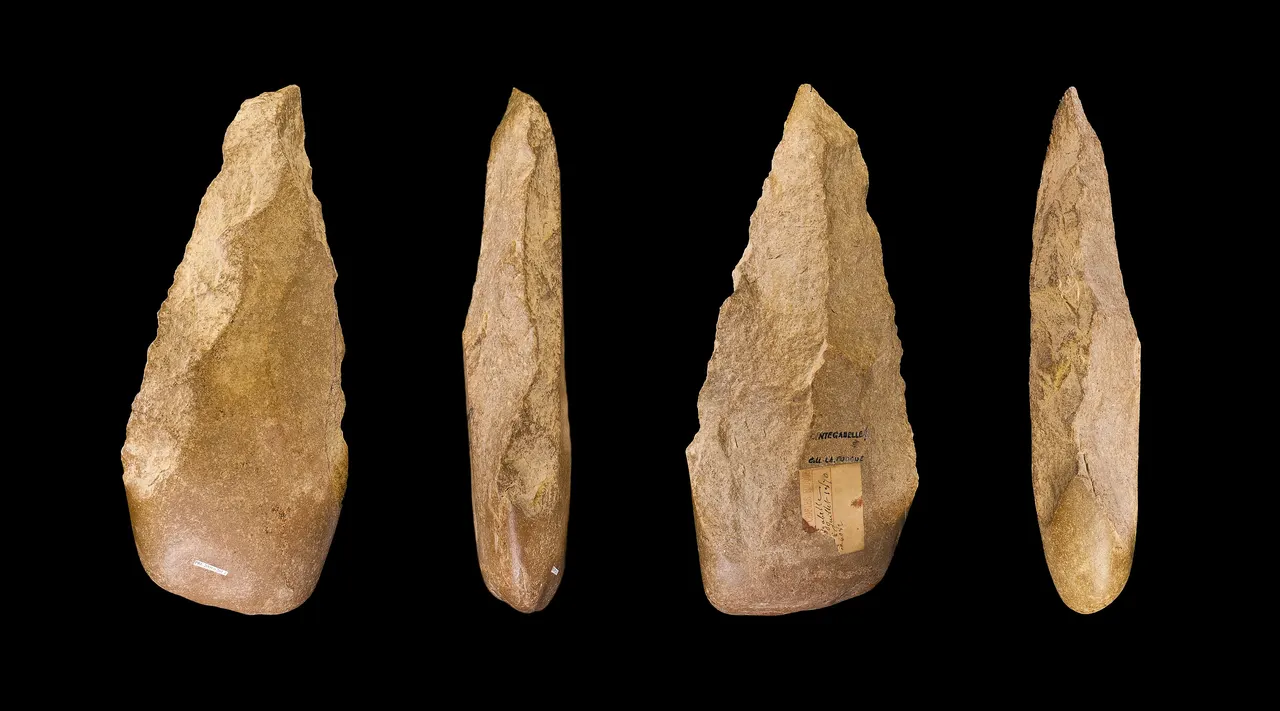
New findings suggest that our ancestors may have been curating collections of objects as early as 500,000 years ago. This discovery pushes the timeline for the origins of such behaviors back to an era long before the arrival of Homo sapiens, offering a startling glimpse into the inner lives of hominins inhabiting the Lower Paleolithic.
Tracing the Roots of Memory-Keeping
The habit of collecting is more than just an idle pastime; it is a manifestation of symbolic behavior, reflecting an individual's capacity to assign meaning to their environment. For decades, archaeologists have sought to identify when these cognitive faculties—those that allow us to organize our reality through symbols and significance—first took hold. By examining evidence from 500,000 years ago, researchers are now shedding light on a period that precedes the established evolutionary milestones of modern human behavior.
The study suggests that the urge to keep a memento is not merely a modern affectation, but a behavior with ancient roots potentially spanning half a million years.
While the broader field of human evolution has long depicted our development as a weblike progression, this new focus on object collection invites us to consider the psychological continuity between archaic hominins and ourselves. If these early ancestors were indeed gathering stones or shells simply for their aesthetic or emotional resonance, it suggests that the spark of symbolic thought flickered to life far earlier than traditional frameworks might have assumed.
Rewriting the Evolutionary Narrative
This discovery forces a reassessment of what we define as 'complex' behavior. Often, we look for evidence of grand toolkits or ornate art to define the sophistication of an ancient culture. However, the act of keeping a keepsake is subtle, private, and deeply internal. It does not necessarily leave a 'functional' mark on the archaeological record in the way a spear point or a hearth does, making it a notoriously difficult behavior to document.
By tracing this habit back 500,000 years, the recent study encourages us to look at the archaeological record with fresh eyes. It invites us to consider:
- Cognitive Evolution: Did early hominins share our capacity for emotional attachment to inanimate objects?
- Symbolic Origins: Does the act of collecting signify the very beginning of how our ancestors constructed their social and personal reality?
- Continuity: How did these small, private behaviors lay the groundwork for the intricate symbolic systems that would eventually define modern humanity?
Looking Toward the Future
As researchers continue to analyze the artifacts of the Lower Paleolithic, the mystery of the 'prehistoric souvenir' remains a compelling frontier. We are moving toward a more nuanced understanding of early hominins—not just as survivalists navigating a harsh landscape, but as curious beings who may have paused to admire a piece of stone, choosing to keep it close. This doesn't just change our understanding of human origins; it bridges the gap between the distant past and our own daily lives, reminding us that the capacity to find meaning in the world is a heritage shared across the ages.
Sources: This report draws on coverage by Phys.org, Ynetnews. The wording is our own.