A new paleohistological study published on August 13, 2026, has fundamentally altered our understanding of mammalian reproduction, suggesting that live birth originated at least 236 million years ago. For decades, textbooks have maintained that the trio of mammalian traits—fur, milk, and live birth—emerged in tandem. Specifically, viviparity was believed to have evolved only once, roughly 150 million years ago, at the base of the Theria group (which includes marsupials and placentals). This left the preceding cynodonts assumed to be egg-layers.1
- Previous models dated the origin of live birth to the base of Theria, roughly 150 million years ago.
- Microscopic analysis of a Chiniquodon femur and ulna revealed a growth line indicative of birth-related stress.
- The neonate's body mass suggests a development pattern similar to modern placentals rather than egg-hatched young.
- The timeline for the origin of live birth shifts back by approximately 90 million years.
Why was the origin of live birth previously fixed at 150 million years ago?
The historical estimate was constrained by a lack of direct fossil evidence. Early synapsid eggs were likely soft-shelled and resistant to fossilization, making rare nests and juvenile clusters the only available data points. Consequently, the most parsimonious hypothesis was that egg-laying was ancestral and live birth evolved once within Theria. Because monotremes like the platypus and echidna still lay eggs, this evolutionary narrative appeared robust. However, as the research team suggests, the absence of evidence is not evidence of absence. Instead of searching for elusive egg shells, the team analyzed the internal bone record of an adult individual to uncover early life history.1
How does bone tissue record the moment of birth?
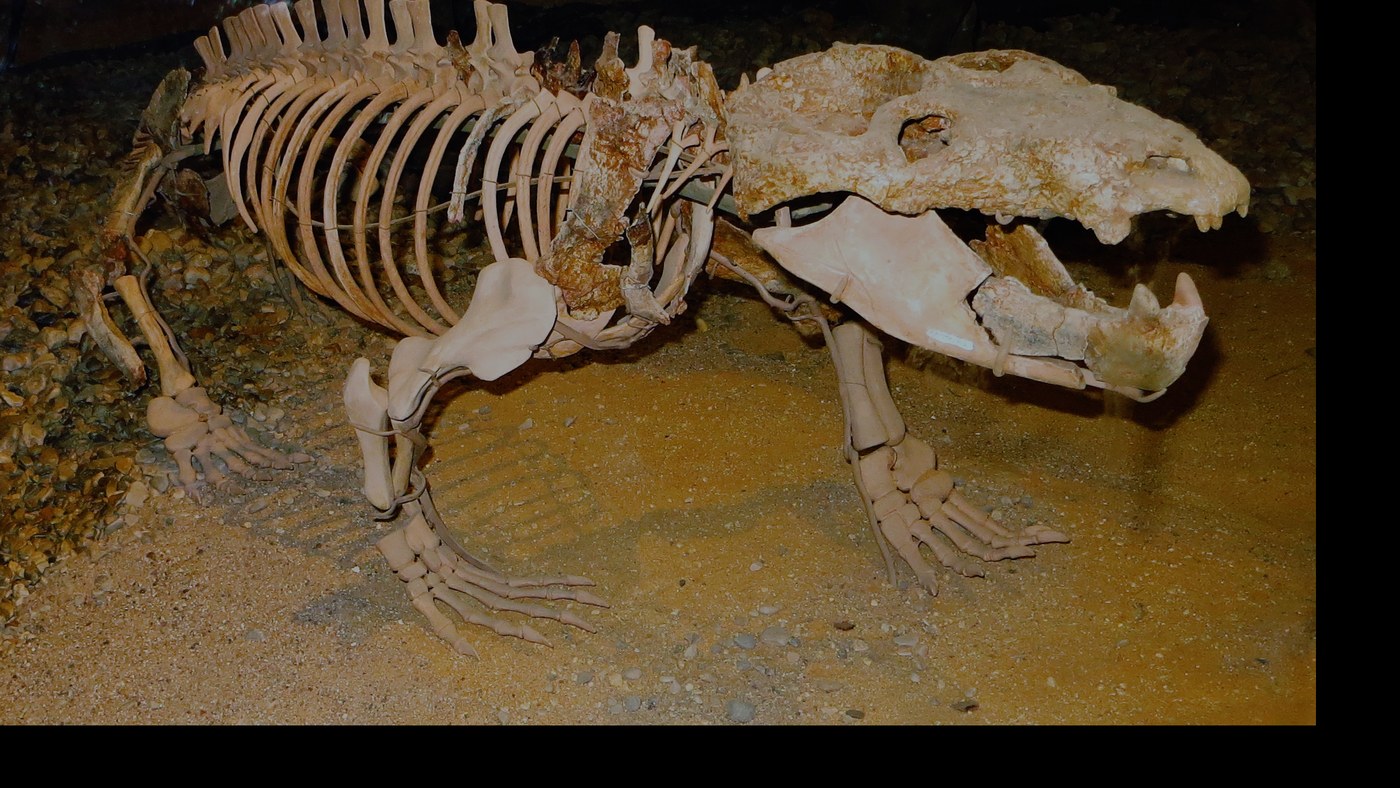
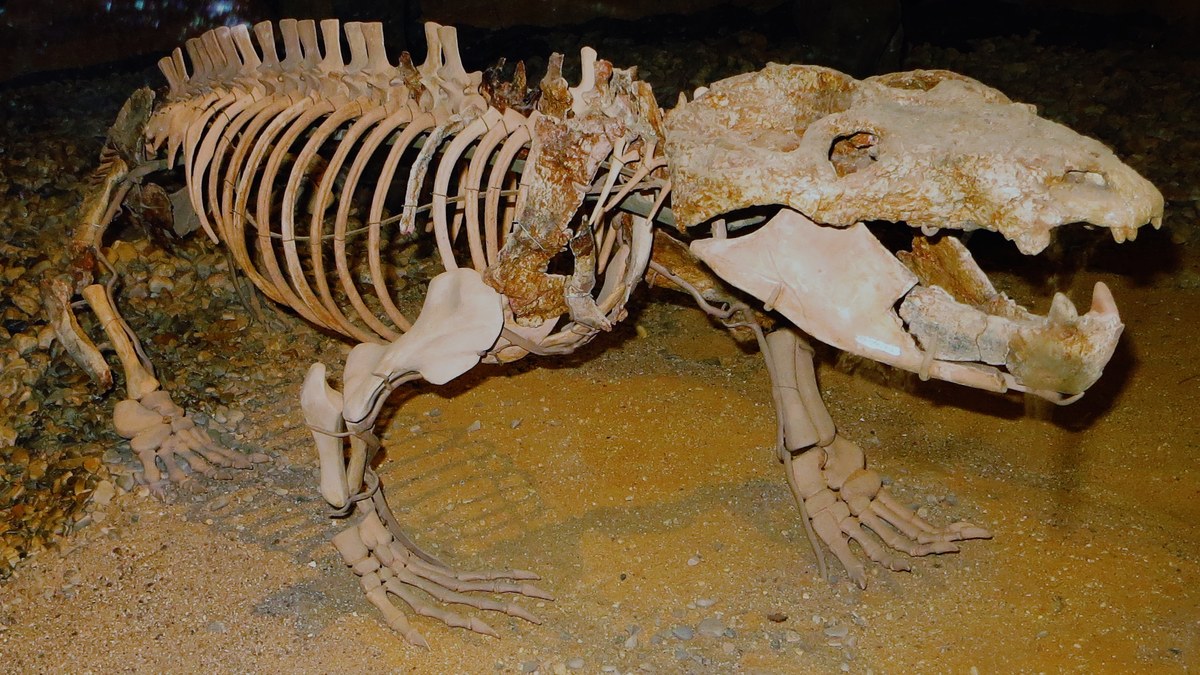
The subject of the study is Chiniquodon theotonicus, a cynodont that lived roughly 236 million years ago during the early Late Triassic in what is now Argentina. The specimen, CRILAR-PV109, represents an adult with fully erupted teeth and fused joints. By examining thin sections of the femur and ulna, researchers identified a distinct structural transition. Near the bone marrow, blood vessels are sparse and regular, but they increase toward the outer layers, indicating a sudden shift in growth velocity. This transition matches the 'neonatal line' observed in living placental mammals, which reflects the metabolic stress of birth.12
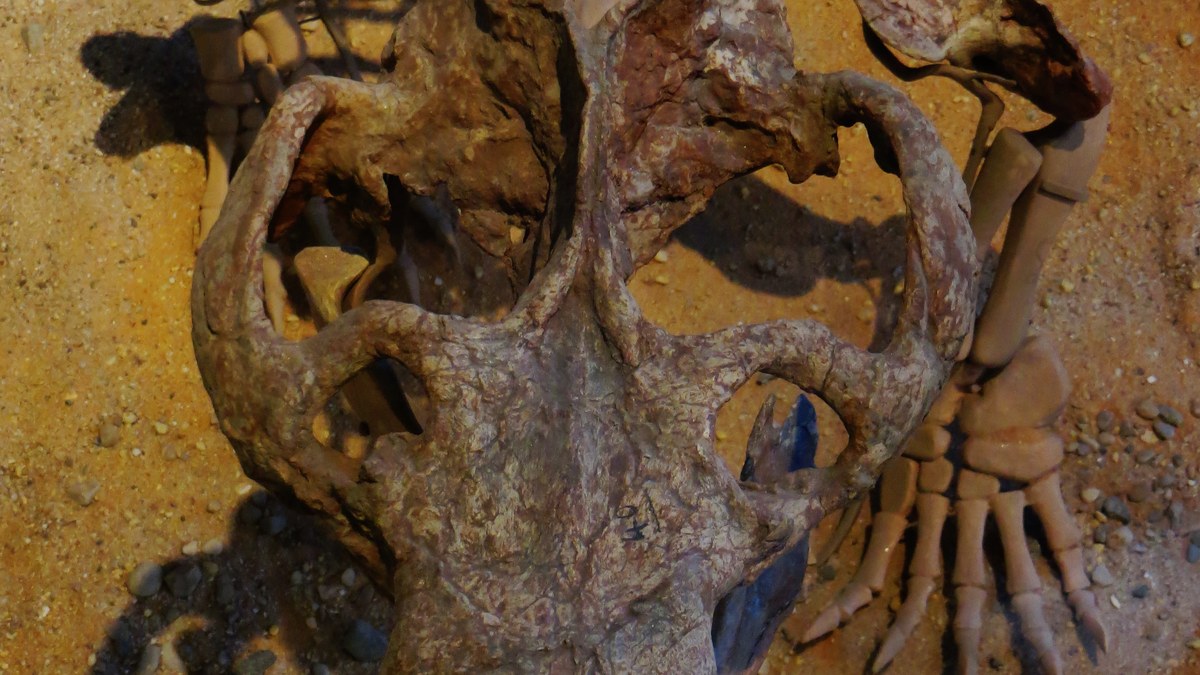
Calculations based on the circumference at the time of birth suggest a neonate mass of approximately 1.68 kilograms, compared to an adult weight of 12 kilograms. This means the offspring represented roughly 14 percent of the adult's body mass at birth. This ratio is characteristic of many living placental mammals, whereas the offspring of monotremes and marsupials are typically less than one-thousandth the mass of the adult. Consequently, the analysis places Chiniquodon firmly within the cluster of live-bearing species rather than egg-layers.13
What are the implications of shifting the timeline to 236 million years ago?
Lead author Leandro Gaetano notes that live birth existed in at least one mammalian ancestor 236 million years ago, pushing the date back by roughly 90 to 95 million years. This discovery suggests two possible evolutionary scenarios: either live birth was a trait that evolved independently in Chiniquodon and later in Theria, or it appeared early in probainognathians and was subsequently lost in the lineage that led to modern monotremes. Experts like Randall Irmis of the University of Utah suggest that further fossil evidence is necessary to determine which path is correct. While this single specimen offers a compelling glimpse into early mammalian reproduction, the diversity of the synapsid lineage suggests that reproductive strategies may have shifted in multiple, distinct ways across different branches of the tree of life.13
Notes and Sources
- Gaetano, L. C., et al. (2026). Early origin of viviparity in the mammalian lineage. Frontiers in Mammal Science, 5, 1845319. DOI: 10.3389/fmamm.2026.1845319.
- Reports (August 13, 2026): Gaetano (CONICET); Chañares Formation; evidence of live birth in a mammalian ancestor.
- Science News (Thompson, August 2026): Commentary by Randall Irmis, University of Utah, regarding neonatal-to-adult mass ratios.
- Photos: Ghedoghedo, Chiniquodon theotonicus skeletal remains, Tübingen Paleontology Museum, CC BY-SA 3.0.