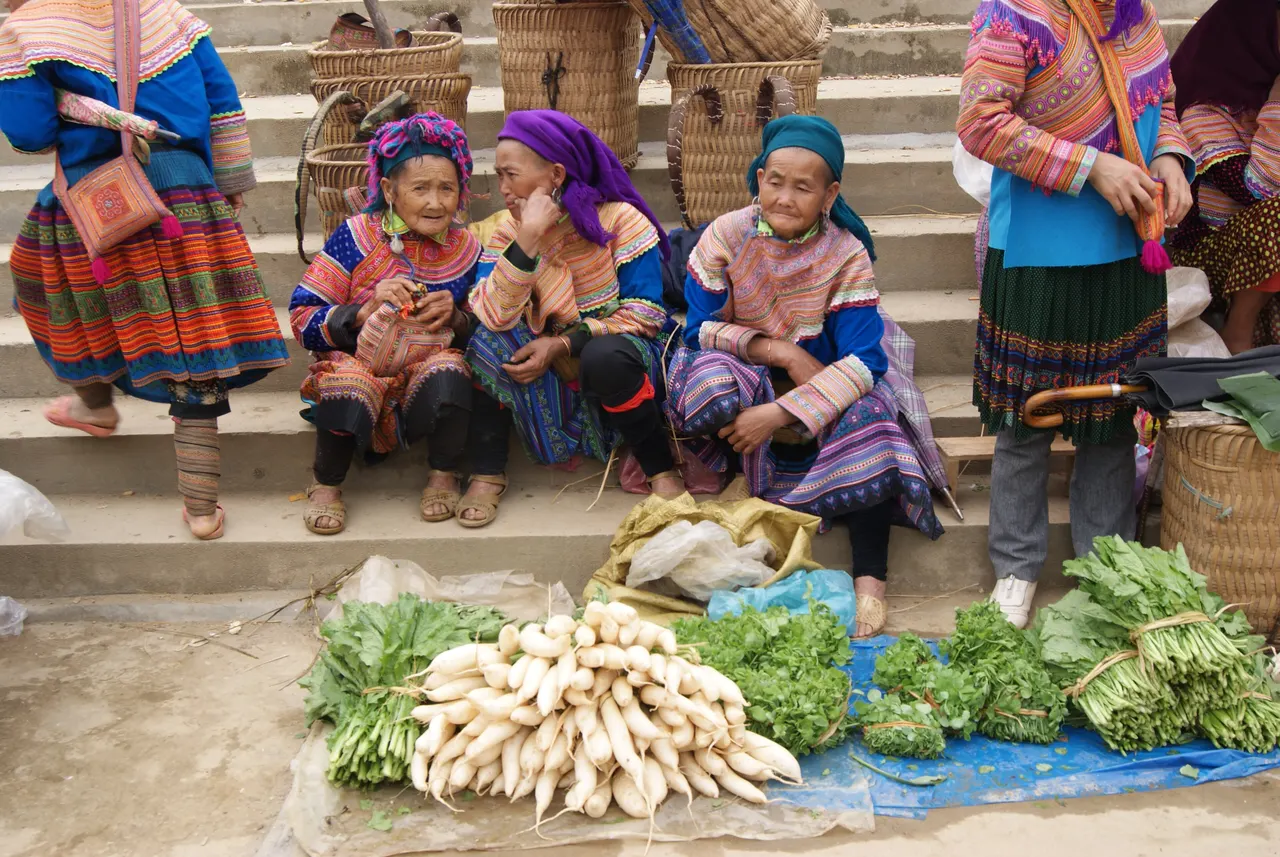
High in the mist-laden mountains where the borders of Laos, Vietnam, Thailand, and China blur into dense forest, the scent of a kitchen fire tells a story that maps cannot record. Woodsmoke carries the sharp bite of freshly bruised galangal, the clean citrus perfume of lemongrass, and the earthy richness of fermented herbs. Here, cooked over an open flame in a heavy iron wok, is the living history of a people whose homeland exists not on any global atlas, but in the shared memory of their cooking.
The Hmong are an ethnic group from East and Southeast Asia whose history is defined by centuries of movement. Originally from China—where they are classified as a sub-group of the Miao—the Hmong migrated south into the highlands of Southeast Asia before widespread conflict in the 20th century scattered diaspora communities across the globe to the United States, Australia, France, and South America. Yet, despite existing without a sovereign nation to call their own, the Hmong have maintained a strikingly clear, resilient cultural identity. While cultural identity is often an evolving process shaped by social and historical experiences, the Hmong have forged a dynamic yet stable integration of their heritage, anchored largely by what is served at their family tables.
A Fusion Born of Centuries on the Move
To understand Hmong food is to understand the geography of survival. Hmong cuisine is not defined by a single hyper-isolated ingredient, but rather by a sophisticated fusion of East and Southeast Asian flavors developed during generations of migration across borders. Because the Hmong absorbed the agricultural techniques and native plants of the lands they traversed, many individual dishes share threads with neighboring cultures. However, they are prepared in a distinct Hmong style—a culinary approach marked by clean, herbal profiles, boiled broths meant to balance heavy farm work, and deeply flavorful dipping sauces that turn simple ingredients into feasts.
In mountain villages and bustling urban markets alike, the cooking relies on fresh greens, chili peppers, cilantro, and mint, balanced alongside carefully preserved meats. Smoked pork sausage laced with fresh herbs, bitter greens simmered in clear water, and steamed sticky rice served in woven baskets form the bedrock of the daily diet. This adaptable kitchen philosophy has allowed Hmong home cooks to recreate their ancestral traditions whether standing in a damp hillside kitchen in East Asia or an apartment in Minnesota.

The Table as a Borderless Homeland
For a community without physical borders, food functions as both anchor and passport. The act of gathering around a shared meal reinforces social bonds, clan lineages, and ancestral rituals. The secrets of Hmong cooking are rarely written in formal cookbooks; instead, they are transmitted orally and tactilely from mothers and elders to younger generations. Watching a cook bruise herbs in a mortar or judge the exact moment a broth achieves its signature clarity is an education in cultural survival.
The Hmong people have maintained a distinct, stable cultural identity across China, Southeast Asia, and Western nations despite never having a sovereign country of their own.
This culinary resilience has recently captured the imagination of the global food world. A popular online video tour showcasing these vibrant market traditions recently drew 2.4 million views, introducing international audiences to what many describe as Asia’s great secret cuisine. What viewers discover is a food culture that is simultaneously ancient and entirely modern, defined by its ability to bloom anywhere its people plant their seeds.
Preserving Heritage in the Global Diaspora
In modern diaspora communities in the Western world, maintaining this culinary lineage presents both challenges and creative opportunities. In suburban gardens across North America and Europe, Hmong elders cultivate traditional Asian herbs, bitter melons, and heirloom peppers alongside local crops, ensuring that the essential flavors of their heritage remain intact. Even as younger generations navigate complex multicultural identities, the kitchen remains an undeniable point of return.

This enduring link between food and self-conception demonstrates how deep cultural roots can withstand centuries of displacement. While national borders may shift and geopolitical landscapes change, the essence of Hmong identity persists. Through every crushed chili, simmered broth, and shared basket of sticky rice, the Hmong people continue to cook their way home.