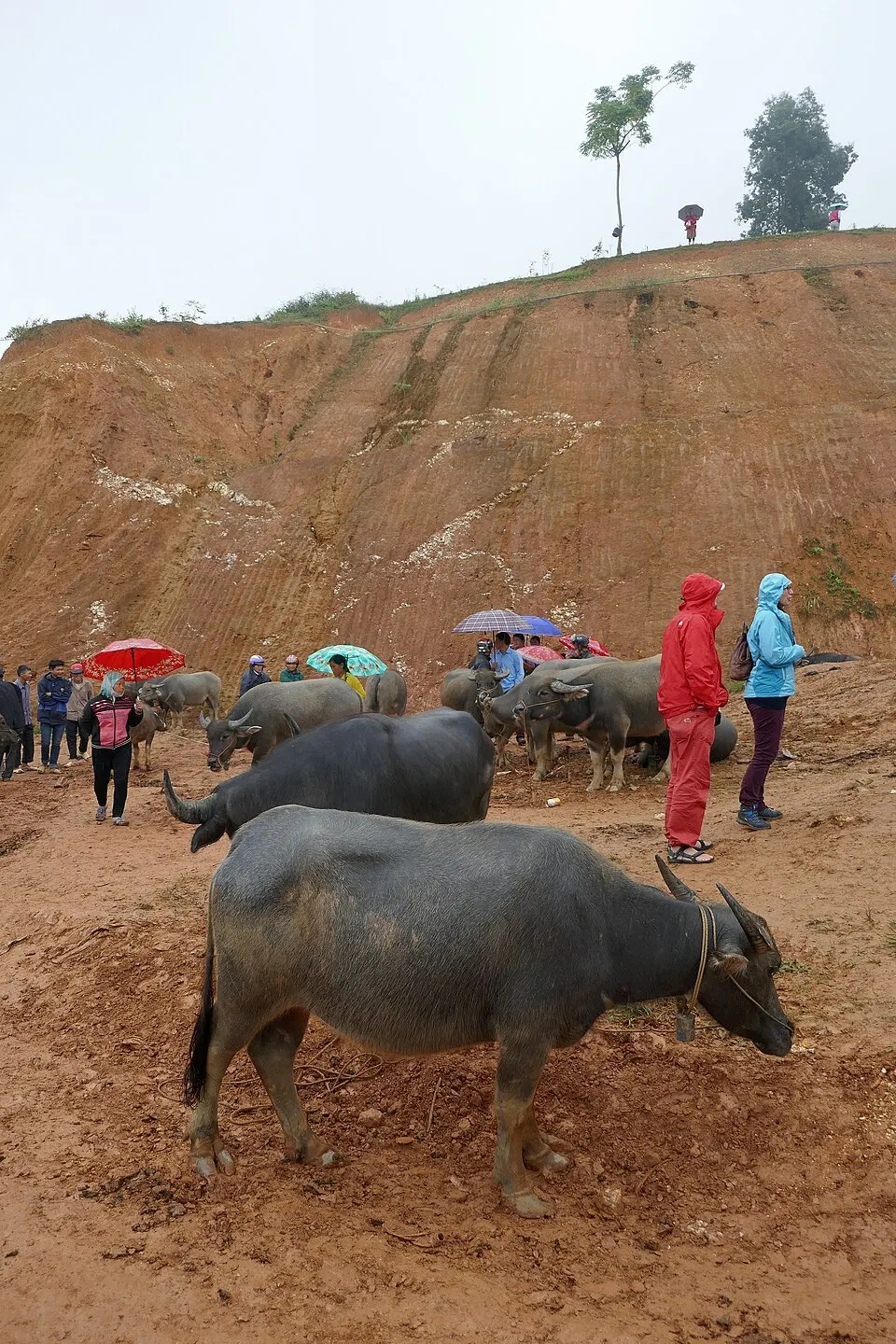
The Pulse of the Peaks
The dawn air in the northern highlands of Vietnam is thick with the scent of woodsmoke, damp earth, and the faint, unmistakable musk of water buffalo. Here, nestled in the rugged folds of the Hoang Lien Son mountains, the week does not revolve around the Gregorian calendar, but rather the cycle of the market. As the sun burns through the morning mist, the silence of the valley is broken by the rhythmic clatter of hooves and the bright, melodic chatter of the Hmong, Tay, and Dao people converging on the town center.
These are the ‘bridge markets’—liminal spaces that function as both physical crossings over mountain streams and metaphorical conduits between the secluded, traditional life of the highlands and the wider world. This phenomenon has recently captured a global audience, evidenced by a video tour of a highland market by Mr Ben that has drawn 12.6 million views, proving that the world is hungry for a glimpse into this singular way of life.
A Tapestry of Exchange
For centuries, these markets have acted as the lifeblood of Vietnam’s ethnic minority communities. They are far more than mere places of commerce; they are social nodes where news is traded, marriages are arranged, and the intricate, vibrant embroidery of traditional textiles serves as a visual language of heritage. The market floor is a sensory overload: baskets of aromatic mountain herbs, hand-dyed indigo fabrics, and the sharp, metallic tang of hand-forged steel knives lie side-by-side.
Central to this ecosystem is the water buffalo. Indigenous to Southeast Asia, the swamp buffalo is the backbone of highland agriculture, and its presence at the market is a spectacle of strength and heritage. Whether being sold for labor or traded as a primary source of protein, the buffalo represents a centuries-old partnership between human and animal that remains central to the survival of these mountain communities.
The water buffalo, a descendant of the wild Asian water buffalo, is divided into two distinct groups based on behavior and morphology: the river buffalo of the west and the swamp buffalo, which has historically sustained the agricultural societies of Southeast Asia from the Indian border to the Yangtze Valley.
Bridging Tradition and the Modern Age
In an era of rapid digitalization and global supply chains, the persistence of these bridge markets is a testament to the resilience of cultural identity. While mobile phones are now tucked into the pockets of traditional tunics, the core function of the market remains unchanged. These spaces protect the diversity of Vietnamese culture, which is shaped by both its position in Southeast Asia and the historical influences of the Sinosphere.

The markets act as an anchor, grounding the youth who might otherwise be drawn toward the anonymity of urban centers. When a young merchant explains the history of a batik pattern or a farmer discusses the pedigree of a calf, they are participating in a living history. It is a slow, tactile form of communication that cannot be replicated through a screen, no matter how many millions of views a digital tour might garner.
The Future of the Highland Node
Looking ahead, the challenge for these communities is how to welcome the curiosity of the outside world without eroding the authenticity that makes these markets vital. As travel infrastructure improves, bringing more outsiders to these remote valleys, the bridge markets must adapt. Yet, there is a stubborn beauty in how they maintain their autonomy. They are not museums; they are functioning, chaotic, and essential marketplaces that have survived centuries of change.
As the shadows lengthen and the last of the traders begin the long trek back to their mountain villages, the market square empties. The buffalo are led away, the produce is packed into baskets, and the mountain stillness returns. For another week, the bridge market rests, waiting to reconnect a scattered community of highland cultures—a constant in a world that is shifting faster than ever before.