What is the significance of the snake-headed vessel found at Collet?
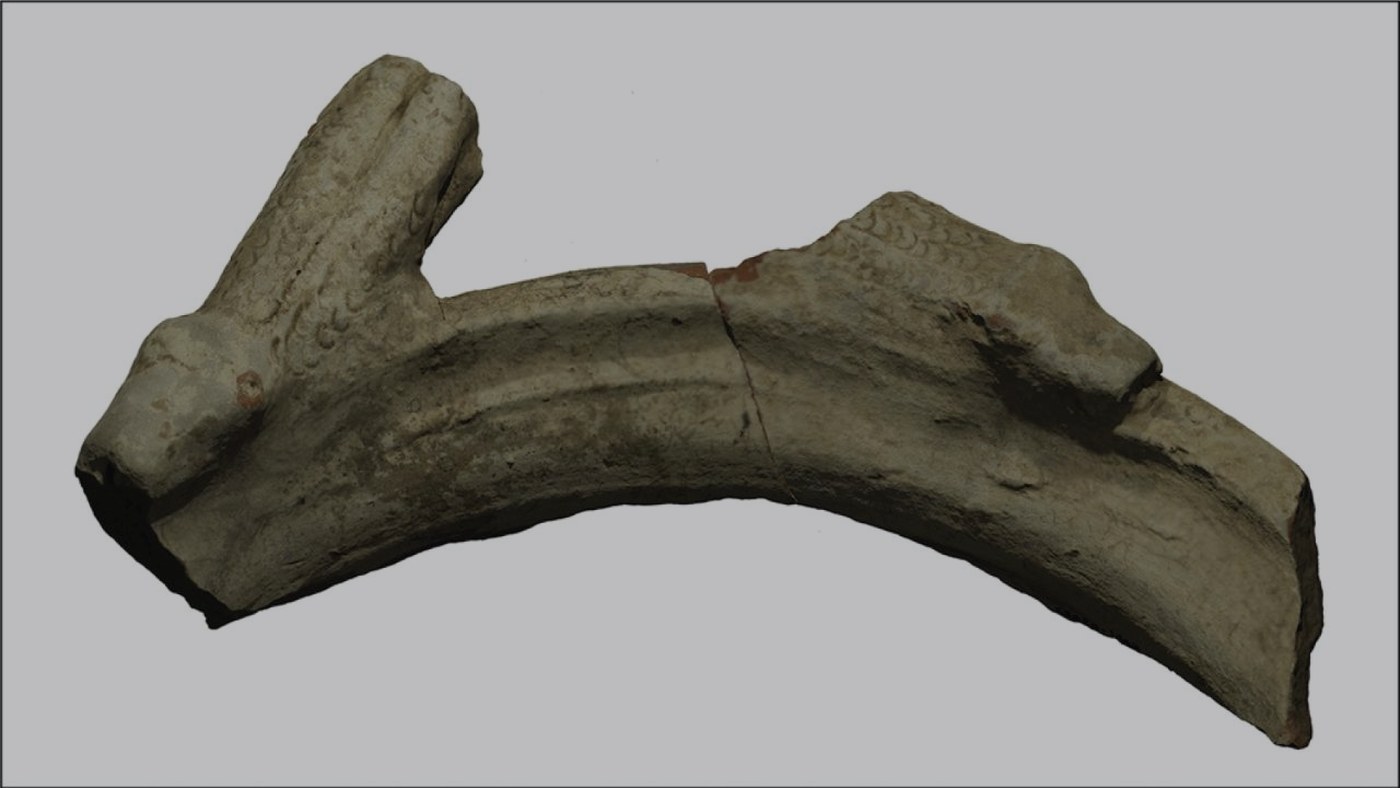
Archaeologists from the University of Girona, led by Marc Bouzas Sabater, have identified a significant ceramic fragment at the Roman villa of Collet in northeastern Spain, which was recently published in the journal Antiquity.1 The piece, consisting of a rim and a horizontal handle, features two distinct snake heads at the points where the handle joins the vessel's rim, which has a diameter of approximately 230 millimeters. Detailed 3D modeling reveals the handle measures 160 millimeters in length, with the snakes' bodies marked by semi-circular scales and clear facial features.
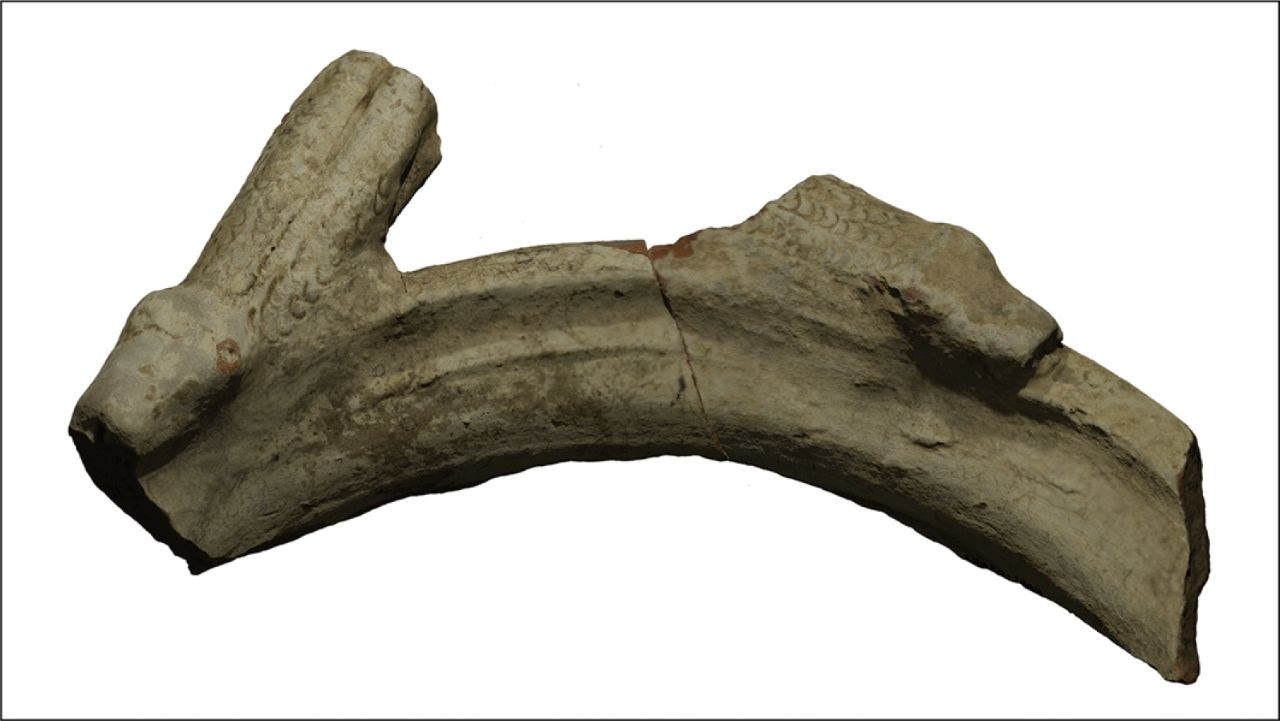
- Discovery: Double snake-headed handle, 160 mm long, from an Augustus-era site.
- Context: Recovered from a 1st-century BC to 1st-century AD filling layer.
- Cultural Link: Linked to the Sabazios cult via proximity to Empúries.
- Analytical Challenge: Clay composition hints at North African origin, though no direct vessel matches exist.
When and where was the vessel recovered?
The Collet site overlooks the Bay of Palamós, approximately 40 kilometers from the ancient city of Empúries. Originally established as a rural production facility in the late 2nd or early 1st century BC, the villa underwent significant expansion during the Augustan period, including the addition of a kitchen and a small bathhouse. The snake-headed fragment was recovered from a disposal layer associated with this Augustan-era kiln. Found alongside Tarraconense amphorae and Italian terra sigillata, the vessel was clearly broken and discarded between 27 BC and 14 AD.
How is this fragment linked to the cult of Sabazios?
Sabazios was a deity originating from Thrace and Phrygia in the regions of modern-day Turkey and the Balkans. In the Roman world, worship of this deity was typically private and domestic. The primary evidence linking the Collet find to this cult is the discovery of a bronze triptych in an Augustan-era tomb at Empúries, which explicitly features Sabazios and his iconography. Because such artifacts—including bronze "Sabazios hands" and reptile-adorned vessels—were highly portable, researchers suggest that a traveling priest may have brought these traditions from the urban center of Empúries to rural estates like Collet.
The research team acknowledges that snakes also appear in contexts related to the Mithras cult or local guardian spirits, meaning a single handle is not absolute proof of the cult. However, the presence of the Empúries plate and similar "serpent-ware" in neighboring villas strengthens the case for a Sabazios network in the region.
What do material analyses reveal about the vessel's origins?
Microscopic and X-ray diffraction analysis of the ceramic showed a red, well-burnished, low-mineral fabric containing quartz, biotite, muscovite, and feldspar. While these characteristics do not match the local kiln products found at Collet, the composition and white slip hint at a potential North African origin. However, the lack of comparable Sabazios vessel forms in North Africa prevents a definitive conclusion regarding its provenance. Because the vessel's body is missing, archaeologists cannot provide a complete typology, though the stylistic elements appear more similar to examples found in Carnuntum, Austria, than to those from Gaul or Belgium.
Notes and Sources
- Bouzas Sabater, M., Burch Rius, J., Moner Coll, E., Roqué Pau, C. & Vivo Codina, D. (2026). Of snakes and gods: early evidence for the cult of Sabazios in the Roman villa of Collet. Antiquity, 1–13. DOI: 10.15184/aqy.2026.10420.
- Independent coverage: Archaeology News Online Magazine (Sept 1, 2026), "Rare snake-headed vessel links rural Spain to an obscure Roman cult"; Phys.org summary (Aug 31, 2026).