The Archive Mystery: Why a Hittite Scribe Left His Mark in Ugarit
Inside the royal palace of ancient Ugarit, archaeologists uncovered a clay tablet—cataloged as RS 17.109—that presents a profound administrative puzzle. The document is a legal record written in the Hittite language, yet its physical execution is the real anomaly: it was inscribed not with the local Ugaritic cuneiform, but with the distinct ductus, or handwriting style, of the Hittite capital, Hattuşa, located hundreds of kilometers to the north.12
- Ugarit utilized two distinct writing systems—a local alphabet and imperial cuneiform—simultaneously.
- RS 17.109 remains a rare example of a legal document written in Hittite using the Hattuşa script.
- The tablet reflects the rigid requirements of imperial bureaucracy rather than a scribe's personal choice.
- Hittite was rarely taught in Ugarit, suggesting that this tablet was a specialized imperial record.
How did Ugarit manage two simultaneous writing systems?
During the Late Bronze Age, Ugarit served as a prosperous coastal kingdom in the northeastern Mediterranean. While it fell under the hegemony of the Hittite Empire starting in the late fourteenth century, this political alignment did not result in a standardized writing system. The city maintained two parallel worlds of literacy. One was a local alphabetic cuneiform, consisting of approximately thirty signs, which was used for domestic correspondence, administrative lists, and literature. The other was the logosyllabic Akkadian cuneiform, the lingua franca of diplomacy, international correspondence, and formal law. Because Akkadian was the standard language of inter-imperial relations, it was employed for communication with the Hittite king, the governor of Carchemish, and Egypt.13 The question of why the local alphabet was ignored in this instance is misguided; the palace archive used the imperial Akkadian script for international and legal matters by default. The true anomaly of RS 17.109 is that it deviates even from that standard, utilizing the Hittite language and the paleographic traditions of Hattuşa.
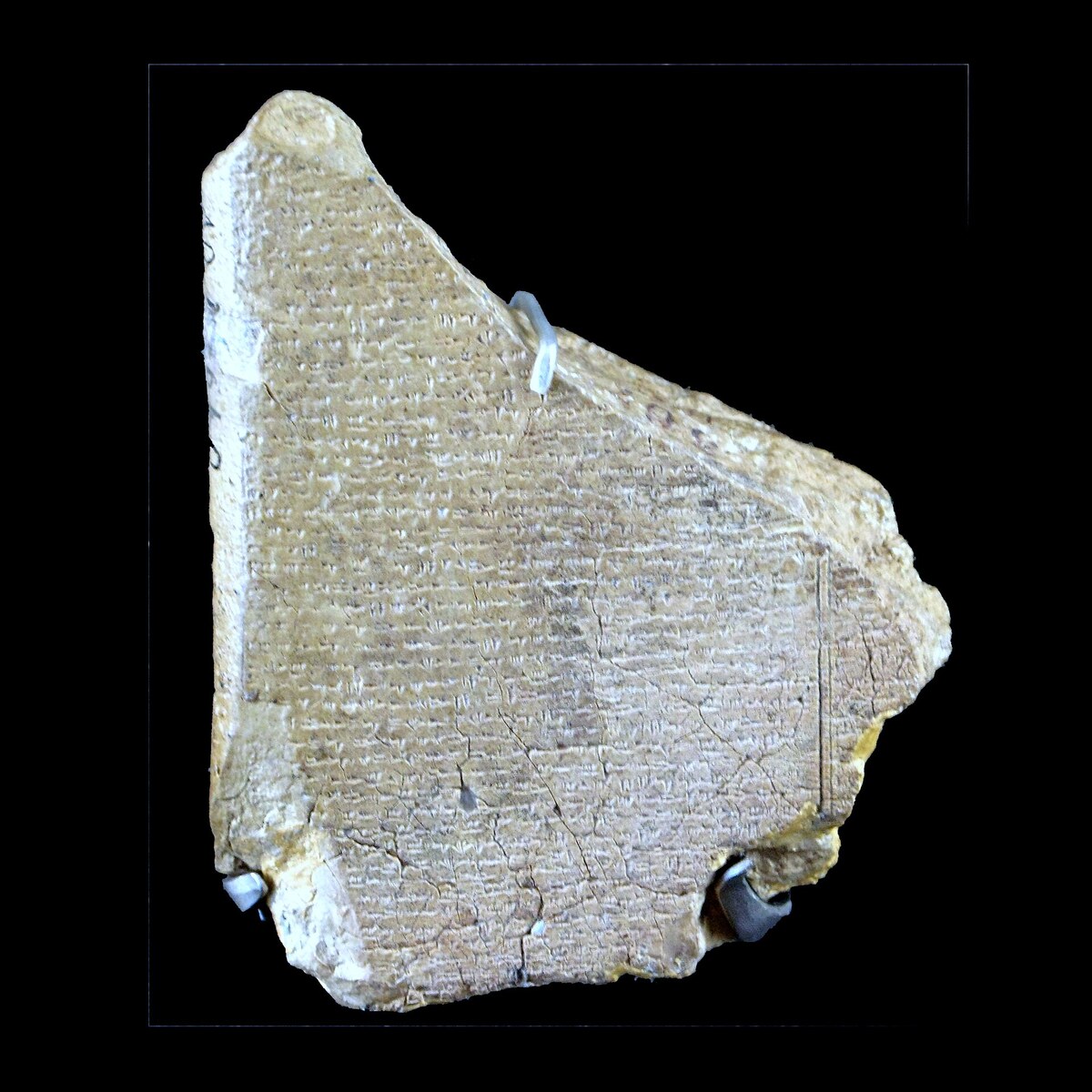
Why does the tablet exhibit the handwriting of Hattuşa?
Hittitology relies on the analysis of ductus—the specific physical habits of a scribe—to determine where a scribe was trained. Hittite-language texts are exceptionally rare in Ugarit. Research indicates that while Ugarit was under Hittite control, the imperial language did not displace local writing. Correspondence with the Hittite center or Carchemish was handled in Akkadian, and some Hittite texts found in the city show signs of having been translated into Ugaritic for the local court. RS 17.109 is distinct because it is a legal document recorded in the Hittite language and the specific script style of the capital.1 When Einar von Schuler and Richard Haase analyzed the tablet in the early 1970s for Ugarit-Forschungen, they identified it as an official legal instrument of the empire. This confirms that the choice of script was not a stylistic preference of a local scribe, but a manifestation of imperial legal authority. The tablet was likely either sent directly from Hattuşa or written by a scribe trained in the Hittite imperial school, demonstrating that the document functioned as an instrument of state authority rather than a domestic record.2
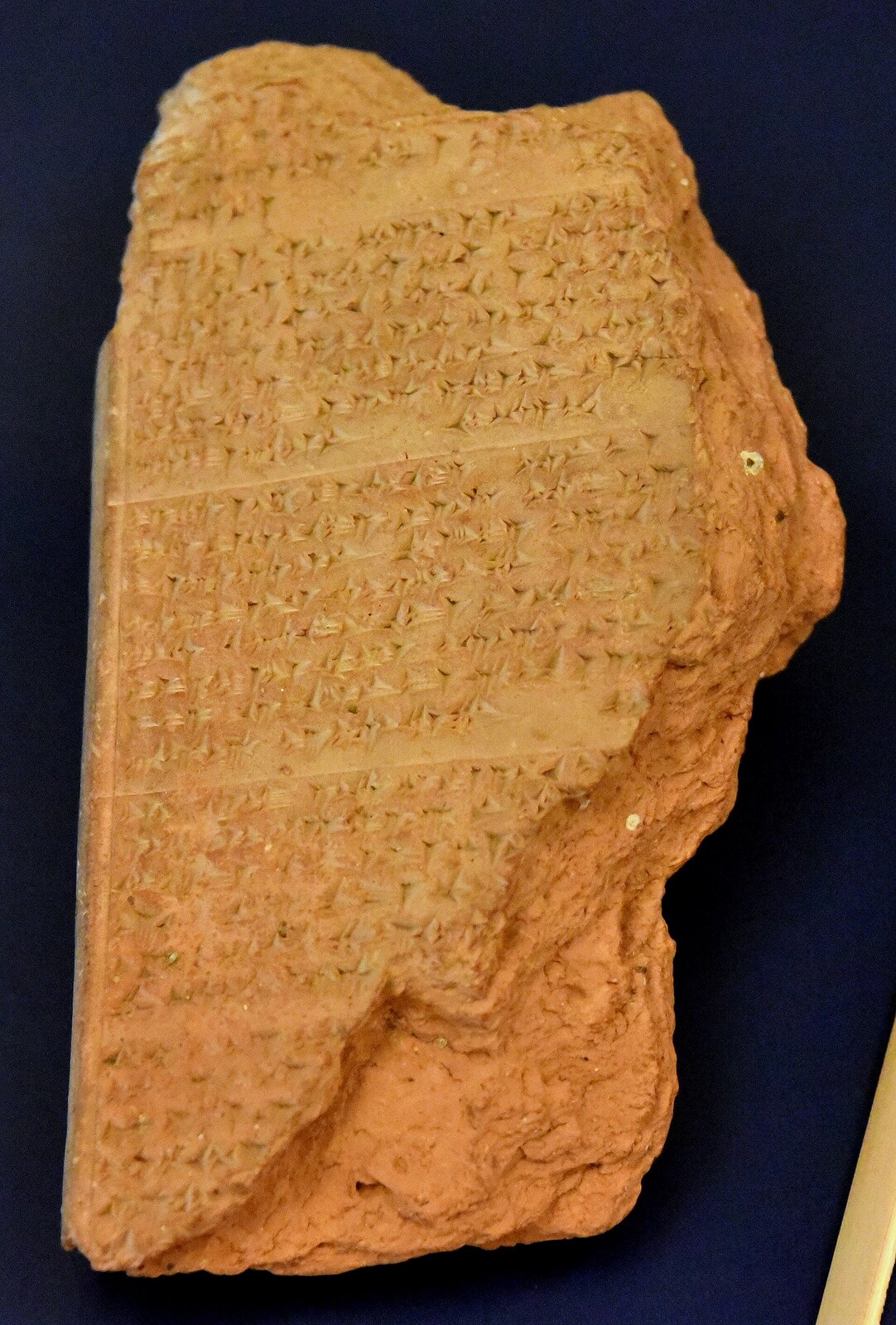
Why did the empire not enforce its language on the vassal state?
The situation presents a paradox: despite being a Hittite vassal, Ugarit made no effort to integrate the Hittite language into its educational curriculum. Multi-lingual dictionary tablets found in the city do not contain a Hittite column, implying that the language of the capital was not part of the local scribal training.1 Power does not always mandate the adoption of its language. In this case, the empire chose to communicate via a common diplomatic language (Akkadian) or, as in the case of RS 17.109, to issue its own legal documentation in its own script. This tablet was likely a copy held in the Ugaritic archives for specialized use by those few officials who could navigate the Hittite language. The primary lesson here is that when a foreign script appears in an ancient archive, it is more often a reflection of bureaucratic necessity than of personal intrigue.
RS 17.109 was found in Ugarit, but its handwriting reflects the training of the Hattuşa school, suggesting the scribe was educated in the imperial capital.Summary of the findings
What remains unknown?
While we can identify the origin of the scribe’s training through paleography, the name of the scribe and the specific daily application of this legal ruling remain lost to history. The mystery is not why a Ugaritic scribe chose a particular style, but rather how the imperial legal apparatus maintained a distinct scribal presence alongside local traditions. Von Schuler’s 1971 publication of the text confirmed its status as a Hittite legal record, and subsequent studies have upheld the conclusion that the hand that inscribed it was firmly rooted in the tradition of Hattuşa.2
Notes and Sources
- Wilfred G. E. Watson and Nicolas Wyatt (eds.), summaries on the linguistic situation in Ugarit; scarcity of Hittite texts; the use of Akkadian for Hatti/Carchemish correspondence; RS 17.109 as a royal archive document in Hittite script; absence of a Hittite column in multi-lingual dictionaries. See also Philip J. Boyes, Script and Society: The Social Context of Writing Practices in Late Bronze Age Ugarit (Cambridge). ↩
- Einar von Schuler, "Eine hethitische Rechtsurkunde aus Ugarit", Ugarit-Forschungen 3 (1971): 223-234 (RS 17.109 = Ugaritica V 769). Richard Haase, "Eine hethitische Prozessurkunde aus Ugarit - RS 17.109", Ugarit-Forschungen 3 (1971): 71-74. ↩
- Standard summaries for Ugarit's Hittite vassalage and dual-scribal system (Ugaritic alphabet and Akkadian diplomacy) can be found in the Handbook of Ugaritic Studies and the UNESCO Memory of the World documentation for the Hattuşa cuneiform archives. ↩
This article is for general information purposes; archaeological interpretations are subject to ongoing research and new epigraphic discoveries.