In August 2026, researchers confirmed the discovery of a new Norse church in Qinngua, South Greenland, marking the first such find on the island in more than 60 years.1 The discovery followed a tense excavation that began in the summer of 2025, when archaeologists uncovered a fragment of a decomposed bone beneath the gravel on the final evening of their field season. With no space remaining to expand the trench, the team was forced to wait a year to confirm their findings.2
- Why archaeologists rely on burial evidence to verify church sites.
- How aerial surveys overcame the limitations of previous ground-level excavations.
- The historical context of the site near Erik the Red’s estate.
- Insights into the final centuries of the Norse colony.
How does a cemetery confirm a church site?
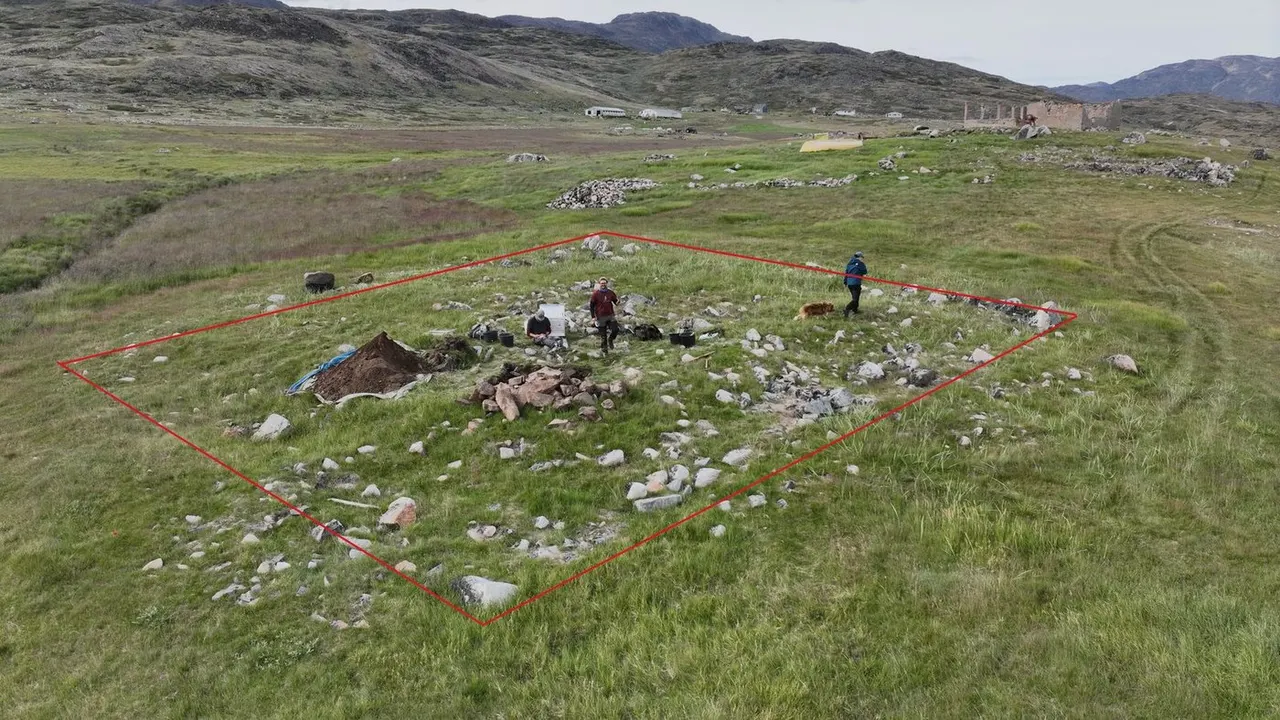
Qinngua is located near Narsarsuaq, approximately 5 kilometers from Brattahlíð, the former estate of Erik the Red. Local museum officials first suggested the site might be a church roughly 25 years ago, based on the site's layout: a rectangular stone enclosure containing a central stone structure. This configuration is typical of Norse churches in Greenland, which were characteristically surrounded by cemetery walls. However, an attempt by the National Museum in 2002 to verify the site through test trenches yielded no skeletal remains, leaving the theory unproven.2 The identification of graves is the defining factor because of distinct burial traditions. Archaeologists note that while indigenous Inuit populations buried their dead in stone-covered chambers, Norse settlers practiced burial in churchyards.1 During the August 2026 excavation, the team centered a 2-by-2 meter trench over the bone fragment discovered the previous year. Following the layer of charcoal-rich gravel, they uncovered a humerus, followed by traces of a rib cage, forearm, and pelvis. The individual was laid in an east-west orientation, arms at their sides, and facing east—a traditional Christian burial posture. On September 24, 2026, researchers announced that the evidence, combined with historical records, definitively marks the site as a church.1
What role did aerial technology play in the discovery?
The decision to revisit the site was driven by modern technology. In 2024, while mapping nearby Inuit remains with a drone, archaeologist Christian Edelfelt Koch Madsen flew over the site from an altitude of 60 meters. Seeing the layout clearly from above, he concluded that the structure could only be a church.2 A small team from the National Museum of Denmark and the National Museum of Greenland subsequently investigated four potential sites in 2025, with the Qinngua site yielding the conclusive result. While the age of the church is currently being analyzed through laboratory testing, researchers estimate it dates to between 1100 and 1300 based on the burial style and stone masonry. The presence of two or three additional farm ruins nearby suggests the site served as a community center for a small village.1
Notes and Sources
- National Museum of Denmark (24 September 2026). "Norse church ruin found in Greenland". Press release; team: National Museum of Denmark, National Museum of Greenland and Archives, University of Bergen Museum, UNESCO Kujataa.
- Bennett, J. (October 2026). "It was magical! Speaking to the archeologist who uncovered a Norse church in Greenland" (Interview with Christian Edelfelt Koch Madsen). The Viking Herald.
- Krogh, K. J. (1967). Viking Greenland. Copenhagen: The National Museum.
- Grønlands historiske Mindesmærker, Vol. III (1845). Copenhagen: Det Kongelige Nordiske Oldskrift-Selskab.
- Borreggine, M., et al. (2023). "Sea-level rise in Southwest Greenland as a contributor to Viking abandonment". PNAS, 120(17), e2209615120.