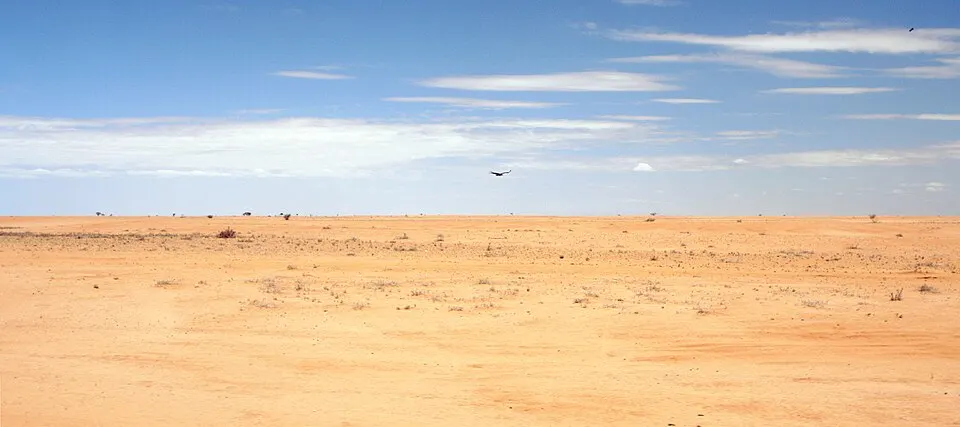
The heat rises from the blinding white earth in shimmering waves, blurring the horizon into an ethereal sea of dust and sky. Here, deep inside the Chalbi Desert of northern Kenya, the world collapses into absolute stillness. Wind sweeps across vast, shifting dunes and cracked salt flats, carrying only the faint rustle of dry acacia branches. Then, out of the barren expanse, a cluster of palm trees appears—a surreal green mirage shielding the tiny, remote settlement of Kalacha. In the center of this quiet sanctuary stands the Kalacha Catholic Church, a peaceful haven resting at the far edge of the world.
An Island of Green in a Sea of Dust
To understand Kalacha, one must understand the sheer scale of the landscape that cradles it. Located in Marsabit County—the second largest county by size in Kenya, spanning 66,923.1 square kilometres—the Chalbi Desert sits east of Lake Turkana near the border with Ethiopia. Bound by Turkana County to the west, Samburu and Isiolo to the south, and Wajir to the east, this territory remains one of the most secluded regions on the continent.
For centuries, the Chalbi’s harsh terrain has kept casual travelers at bay. Marsabit serves as the closest major urban center, leaving Kalacha largely isolated from the modern world. It is precisely this remoteness that makes the village such a remarkable discovery for off-grid wanderers. Tucked within the arid wilderness, Kalacha operates as a true oasis—a place where life endures against the backdrop of shifting sand dunes, framed by an ancient, quiet landscape.
Where Heritage Meets Faith in the Wild
At the center of life in this desert hideaway is the Kalacha Catholic Church, widely celebrated as a hidden gem of Northern Kenya. More than just a place of quiet reflection, the church serves as a beacon of faith in the heart of the Chalbi Desert. Step beneath its shade, and you will find an extraordinary fusion of tradition and narrative: inside, vibrant murals portray biblical stories seamlessly woven with Northern Kenya’s rich cultural heritage.

Inside Kalacha Catholic Church, traditional biblical stories meet the living heritage of Northern Kenya, creating a surreal beacon of quiet beauty amidst the desert dunes.
This striking synthesis turns the church into a unique sanctuary. For the rare visitor who journeys this far north, sitting in the cool quiet of the sanctuary offers a profound pause from the intense sun outside. It is a space where local art, landscape, and spirituality converge, reflecting the enduring resilience of the communities who call this vast wilderness home.
Crossing the Great North
Reaching Kalacha is an adventure defined by space, wind, and sky. The route requires negotiating rugged roads through Marsabit County, leaving behind paved highways for dirt tracks that cut through volcanic rocks and wide desert flats. The journey feels less like traveling through a country and more like crossing an untouched planet, where the horizon stretches uninterrupted for scores of miles.
Travelers venturing into the Chalbi must prepare for complete self-sufficiency. Because of the extreme isolation, proper preparation is essential. Expedition vehicles must be fully equipped with extra fuel, abundant drinking water, sturdy spare tires, and reliable navigation tools. The rewards for braving the track are unmatched: absolute silence, brilliant night skies unblemished by light pollution, and a rare sense of total disconnection from modern noise.

The Value of Leaving the Map Behind
In an era where true solitude is increasingly difficult to find, places like Kalacha remind us of the beauty of wild, undisturbed nature. Tucked far beyond the standard safari circuits of East Africa, this remote desert sanctuary offers something far more elusive than luxury: the gift of absolute perspective.
As the late afternoon sun dips behind the distant hills of Marsabit County, casting long shadows across the Chalbi dunes, the desert softens into shades of amber and rose. Surrounded by endless earth and sky, the quiet mission of Kalacha stands as a testament to human faith, cultural heritage, and the timeless magic of the African wild.
Sources: This report draws on coverage by TNX Africa, KBC Digital, The Star, Kenya, standardmedia.co.ke. The wording is our own.